


Richest 1 percent put climate goals at risk: study
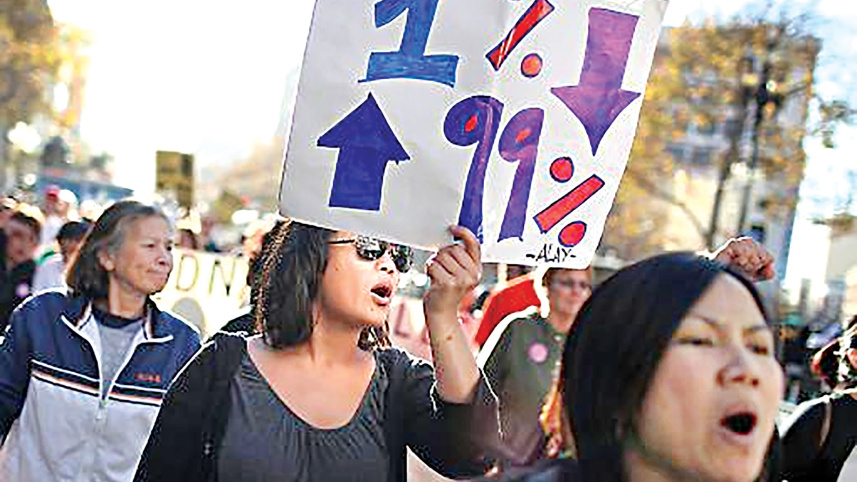
The carbon footprint of the world's richest 1 percent is on track to be 30 times higher than what's needed to limit global warming to 1.5C, a study says.
But emissions of the poorest 50 percent will continue to be below climate goals.

The research, carried out by two European environmental agencies, comes as world leaders meet at the COP26 climate conference in Glasgow.
"A tiny elite appear to have a free pass to pollute," says Naftoke Dabi at Oxfam.
The charity commissioned the study from the Stockholm Environment Institute and the Institute for European Environmental Policy.
"Their over-sized emissions are fuelling extreme weather around the world and jeopardising the international goal of limiting global heating."
Climate scientists warn that there is a finite amount of greenhouse gases that we can continue to release into the atmosphere before the planet warms to more than 1.5C from pre-industrial levels. By 2030, they say, we need to only emit as much carbon as the planet can absorb.
If this amount were split evenly and every adult on the planet had a share, by 2030 we could each emit 2.3 tonnes of carbon every year.
The super-rich - many of whom have multiple homes, private jets and superyachts - emit a lot more than others. A recent study that tracked the air travel of celebrities via their social media accounts found some emitted over a thousand tonnes a year.
But the global 1 percent are not just billionaires, or even millionaires - it includes anyone earning over $172,000.
This study also looked at the world's richest 10 percent - anyone earning over $55,000 - and found emissions were still high. The richest 10% will emit nine times more carbon than their share.
Oxfam's report found that it's the 40 percent in the middle doing the most to curb emissions.
While their carbon footprint rose significantly between 1990 and 2015, it is set to drop, thanks to changes being made at government level in sectors like transport and energy since the Paris climate agreement in 2015.
But governments need to do more, Oxfam's Naftoke Dabi says, calling for bans and taxes on "carbon-intensive luxury goods, such as mega-mansions, SUVs or space tourism".
"They need to tackle the emissions of the richest because they're hugely responsible for the climate crisis, and it's the poorest that are paying the highest price," she says.
 For all latest news, follow The Daily Star's Google News channel.
Comments