


Pandemic prognosis 2022: Where does it go from here?
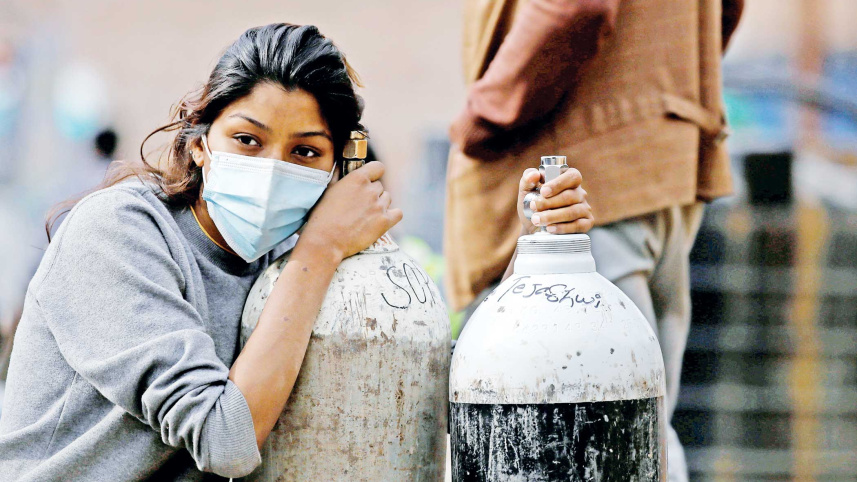
Two years in, as the now Omicron-fuelled Covid crisis rages, there is still hope the pandemic could begin fading in 2022 -- though experts say gaping vaccine inequalities must be addressed.
It may seem like a far-off reality, as countries impose fresh restrictions to address the fast-spreading new variant and surging cases and a depressing feeling of deja vu sets in.

"We're facing another very hard winter," World Health Organization chief Tedros Adhanom Ghebreyesus said last week.
But health experts say we are far better equipped now than a year ago to tame the pandemic, with ballooning stocks of safe and largely effective vaccines and new treatments available.
"We have the tools that can bring (the pandemic) to its knees," Maria Van Kerkhove, the top WHO expert on the Covid crisis, told reporters this month.
"We have the power to end it in 2022," she insisted. But, she added, they must be used correctly.
A year after the first vaccines came to market, around 8.5 billion doses have been administered globally.
And the world is on track to produce around 24 billion doses by June -- more than enough for everyone on the planet.
But glaringly unequal vaccine access has meant that as many wealthy nations roll out additional doses to the already vaccinated, vulnerable people and health workers in many poorer nations are still waiting for a first jab.
About 67 percent of people in high-income countries have had at least one vaccine dose, but not even 10 percent in low-income countries have, UN numbers show.
That imbalance, which the WHO has branded a moral outrage, risks deepening further as many countries rush to roll out additional doses to respond to Omicron.
Early data indicates that the heavily-mutated variant, which has made a lightning dash around the globe since it was first detected in southern Africa last month, is more resistant to vaccines than previous strains.
While boosters do seem to push protection levels back up, the priority must remain getting first doses to vulnerable people everywhere.
Allowing Covid to spread unabated in some places dramatically increases the chance of new, more dangerous variants emerging, experts warn.
So even as wealthy countries roll out third shots, the world is not safe until everyone has some degree of immunity.
"No country can boost its way out of the pandemic," Tedros said last week. "Blanket booster programmes are likely to prolong the pandemic, rather than ending it."
The emergence of Omicron is evidence of that, WHO emergencies chief Michael Ryan told AFP. "The virus has taken the opportunity to evolve."
Ryan warns that if the world fails to address the imbalance in vaccine access, the worst could still lie ahead.
One nightmare scenario envisions the Covid pandemic left to rage out of control amid a steady barrage of new variants, even as a separate strain sparks a parallel pandemic.
Confusion and disinformation would shrink trust in authorities and science, as health systems collapse and political turmoil ensues.
 For all latest news, follow The Daily Star's Google News channel.
 But better global vaccine coverage could mean that Covid -- though not likely to fully disappear -- will become a largely controlled endemic disease, experts say.
But we're not yet there.
Experts caution against too much optimism around early indications that Omicron causes less severe disease than previous strains, pointing out that it is spreading so fast it could still overwhelm health systems.
That is a depressing prospect two years after the virus first surfaced in China.
Officially, nearly 5.5 million people have died worldwide, although the actual toll is likely several times higher. All vaccine hesitancy could increase that toll.
Comments