


Decades of Nuke testing in french Polynesia
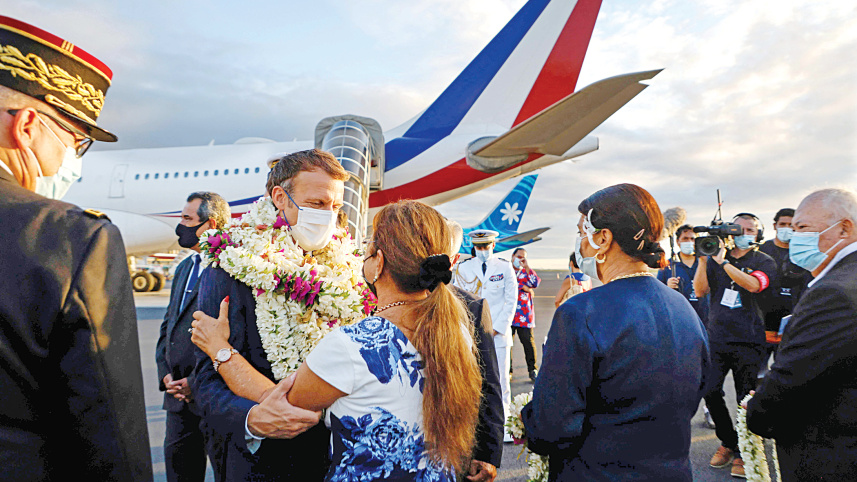
French President Emmanuel Macron faced pressure to apologise for the devastating impact of decades of nuclear testing as he kicked off his first official trip to French Polynesia.
During his four-day visit, Macron plans to address the legacy of nuclear testing from 1966 to 1996 as France developed atomic weapons, as well as discuss the South Pacific territory's strategic role and the existential risk of rising seas posed by global warming.

Residents in the sprawling archipelago of more than 100 islands located midway between Mexico and Australia are hoping Macron apologises and confirms compensation for radiation victims.
The tests remain a source of deep resentment, seen as evidence of racist colonial attitudes that disregarded the lives of islanders.
French officials denied any cover-up of radiation exposure at a meeting earlier this month with delegates from the semi-autonomous territory led by President Edouard Fritch.
The meeting came after French investigative website Disclose reported in March that the impact from the fallout was far more extensive than authorities had acknowledged, citing declassified French military documents on the 193 tests.
Only 63 Polynesian civilians have been compensated for radiation exposure since the tests ended in 1996, Disclose said, estimating that more than 100,000 people may have been contaminated in total, with leukaemia, lymphoma and other cancers rife.
"We're expecting an apology from the president," said Auguste Uebe-Carlson, head of the 193 Association of victims of nuclear tests.
Patrick Galenon, the former chairman of the territory's CPS social security system, said female Polynesians aged 40 to 50 "have the highest thyroid cancer rates in the world."
 For all latest news, follow The Daily Star's Google News channel.
Comments