


You can’t write your way out of grief
Back in college, while attending a swimming class with my mum, I almost drowned in the deep end of the pool. I remember, as I clawed at the water and felt chlorine sting my eyes, a distant part of me thought, desperately, “Note this feeling so you can write it down later.” Even as my lungs compressed and the blue light above the surface rippled and retreated, some cool, administrative fragment of my brain had opened a ledger. That split self — one drowning, one filing the incident report — has never entirely left me.
The compulsion to catalogue is older than therapy, older than literature, and arguably older than language itself. Prehistoric humans pressed handprints into cave walls. Mediaeval monks copied their own suffering into the margins of illuminated texts. Samuel Pepys wrote by candlelight about his fears, his jealousies, and his plague-haunted city, encoding it all in a private cypher. We are a species that seems to believe, with tremendous stubbornness, that if we can get a feeling outside of ourselves — shaped into sentences — we will somehow be free of it.

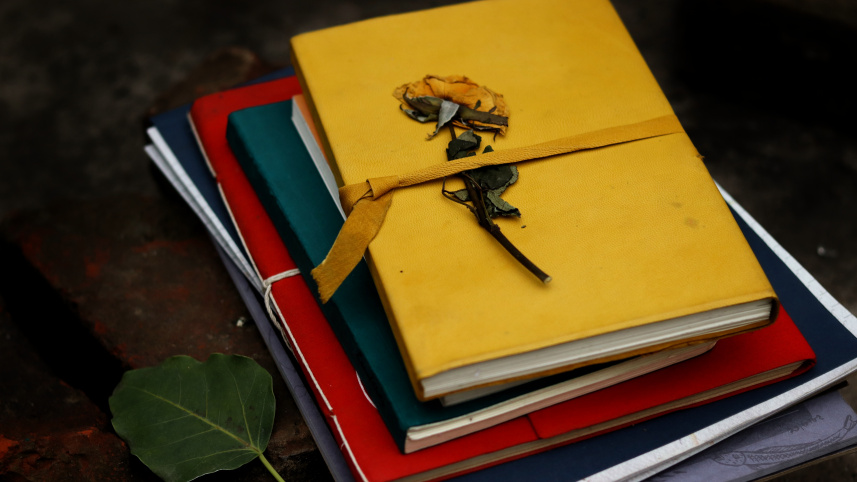
The diary, in particular, has been elevated into a kind of sacrament. Therapists assign them. Self-help culture treats the blank journal as a portal: write your way through. And writing can be genuinely transformative — research on expressive writing, notably the work of psychologist James Pennebaker, has shown that putting difficult experiences into words can reduce stress markers and improve immune function. The science is real but partial.
However, there is a form of diary-keeping that is not processing at all, but rumination masquerading as productivity: you sit down, you describe the wound in loving detail, you give it a name, and then you do it again the next day. The entry becomes a ritual of return rather than departure. Psychologists call this co-rumination when it happens between two people, but it happens just as readily between a person and their own notebook. The act of writing begins to feel like progress because it requires effort and produces an artefact. But the feeling being documented has not shifted; it has simply been given a permanent address.
What the compulsion to catalogue often obscures is a more uncomfortable truth: that some emotions are not puzzles to be solved through sufficient description but weather to be endured. Trauma, in particular, can be hard to contain in language. For some, a diary kept in acute grief functions less as a record of healing and more as a mausoleum.
I have spent evenings crying less from sadness than from a kind of writer’s anxiety — the fear that I wasn’t going to find the right words for what I was feeling and that the feeling would escape before I could get it down. But some things need to be felt in the body before they're fit for the page.
What actually moves emotion through the body is messy and less publishable. It’s crying without knowing exactly why. It’s sitting in a feeling long enough that it becomes boring. These processes resist documentation because they happen below — or above — the level of language. Rilke, in his Letters to a Young Poet, wrote about living the questions rather than forcing answers. The swimmers who don't drown are usually the ones who stop fighting the water and let it hold them — who stop trying to climb out of the experience and instead go still within it. I know this now. I knew it then, technically. But there I was, clawing and making mental notes.
I did eventually make it out of the pool. A lifeguard pulled me to the edge, and as I sat on the tile, coughing, while my mother floated idly somewhere on the other side of the water, I remember thinking, "The tile is cold and rough like pumice." I remember thinking, "This is the kind of detail that makes a scene real.” I didn't write it down. And I remember it more clearly than almost anything I ever have.
Nuzhat is a compulsive doodler and connoisseur of bad early aughts television. Send her recommendations at nuzhat.tahiya@gmail.com
Reference:
- Idyll Arbor. (2014). Expressive Writing: Words That Heal.
 For all latest news, follow The Daily Star's Google News channel.
Comments