


BEGINNING A NEW CHAPTER

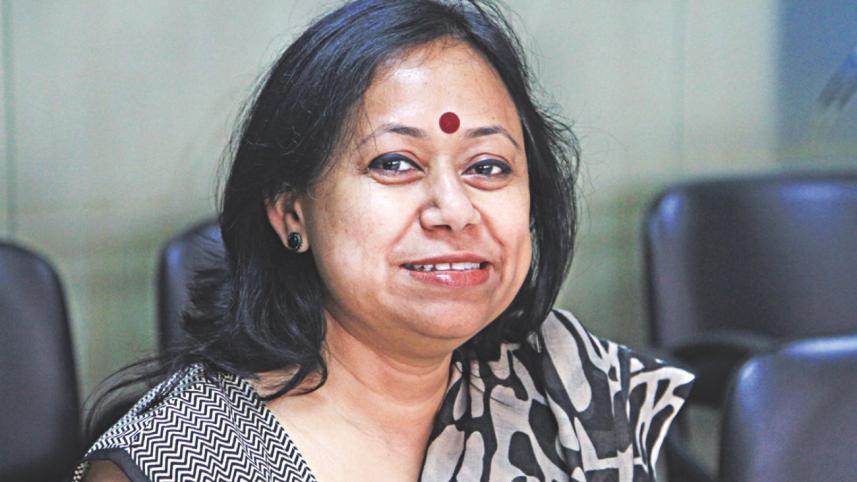
Supriti Dhar is a journalist by profession, activist by choice and editor of an award winning blog - Women Chapter.
She grew up in a political and journalistic atmosphere, though she never planned on being a journalist herself. Her schooling was done all around the country due to having a working mother. "My father died in the war of '71, and since then my mother has been taking care of my brothers, sisters and myself," says Supriti. "Since I was the youngest, I would travel everywhere with my mother and thus, my schools shifted a lot."

In 2014, Deutsche Welle, Germany's International Broadcaster, contacted Supriti and told her that Women Chapter was selected in the 'blog category' for The Bobs International Award - Best of Online Activism. "Websites and New Portals of 16 different languages were selected," she says. "At the final stages, we were to gather votes, and with the help of my friends who campaigned for me, clinched the first position," she says.
Supriti worked in many different media houses- print, radio and broadcast. "While I was at Maasranga, in 2011, the tragic car accident that killed Tarek Masud and Mishuk Munier stirred something quite powerful inside me," she says. Supriti held a protest against such tragic deaths titled, 'Shabhabik Mrittyu'r Nishchoyota' - literally meaning assuring a natural death as opposed to peculiar accidental and political deaths. That's when she became an activist.
In May 2013, Supriti started Women Chapter, which she runs on her own. "Women Chapter, contrary to popular belief, is not just a news portal for women. It is a movement towards change," she says. In Women Chapter, women are allowed to speak out about the changes they want to see in society, share news and experiences.
"After the Pahela Baishakh incident, Women Chapter was and still is used as a platform for women in distress all over the country," she says. Supriti and Women Chapter hope to break the norms and be a part of the revolution that may change the lives of women in Bangladesh.
Many women's rights organisations have been working avidly for the cause- but human chains and protests will not work anymore, according to Supriti. "It is time for us women to come together and create a pressure group. If need be, we will form an all-woman brigade to protect each other during such events," she says.
Supriti believes that the only time we can see the shift in the patriarchal social norms that we live in is if all the women of the nation stand together to speak out- victim or not.
 For all latest news, follow The Daily Star's Google News channel.
Comments