


The un-glory of Bangladesh cricket
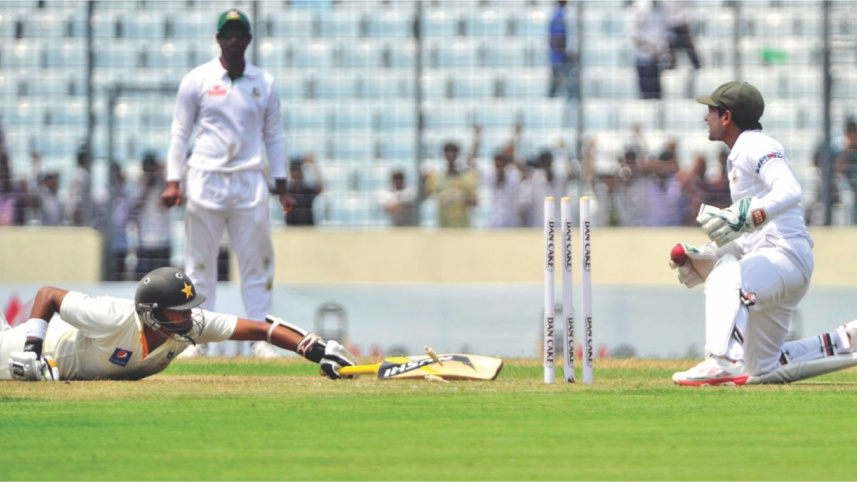
This article is not about the glory of our cricket. It is about the glory Bangladesh has yet to achieve. It can be argued that to achieve that unfulfilled glory Bangladesh need to play as a unit – not just a match-playing team but a team that remains hungry for learning. It can also be argued that it would require humility and reflexivity from the players and administrators.
The series against Pakistan has had everything we expected and everything we wanted to become – a respected cricketing nation with a dominant and an uncompromising valour for winning. After a convincing 4-0 victory against Pakistan, a country that has a superior tradition of cricket and a higher test ranking, our levels of euphoria went through the roof. It is well-deserved for our fans and it is particularly important for the international cricket administrators to take notice of.

There is more. In Khulna, from the face of an imminent defeat, the Bangladesh cricket team fought back with courage, tenacity, and determination to draw the first test.
But was it enough? What I mean is the intended outcome – a draw – of the match that could have tested without being conceded. We should have pressed for the win. After taking close to a 300-run lead, we should have firmly invited our opponent to bat. And if I am not mistaken there were 30 or so overs left. It would have been a risk, but a calculated one to win the game.
Instead, we shook hands with our opponent, turned our backs to the pitch, and returned to the pavilion, feeling euphoric and accomplished, which did not last long. Pakistan convincingly beat us by more than 300 runs in the following test in Dhaka. The social media outlets were swarmed with 'well done' and 'great knock'.
What we achieved in the 2015 World Cup cannot be underestimated. But it can be argued that we may have underachieved. Our history is abound with decisions that we made which were insufficient to put pressure on the opponents at the critical juncture of the match.
However, Bangladesh needs to stay focused and continue to improve to become a dominant team. Off the pitch, the cricket board ought to ensure that there is a harmony and selflessness among players, administrators, and coaching staff. We need to learn to give credits where they are due, with respect and humility. We need to be reflexive.
To shake the grounds of Oval and Lords, Sydney and Melbourne, Christ Church and Galle, or the Ellis Park and The Wanderers, we also need attention, collaboration, and fairness from the international cricketing communities. Turning a blind eye to the weaker cricketing nations hardly promotes a healthy culture of cricket. It infects the integrity of cricket with indifference and indiscretion.
The Tigers are playing good cricket. But the road to becoming a dominant cricketing nation is anything but the glory of the shots of boundaries and over boundaries.
We need to see more than just the face of a thick willow.
The writer is a PhD student at University of Leeds, UK. He can be contacted at gyia@leeds.ac.uk.
 For all latest news, follow The Daily Star's Google News channel.
Comments