


War, wealth and a World Cup in Trumpland

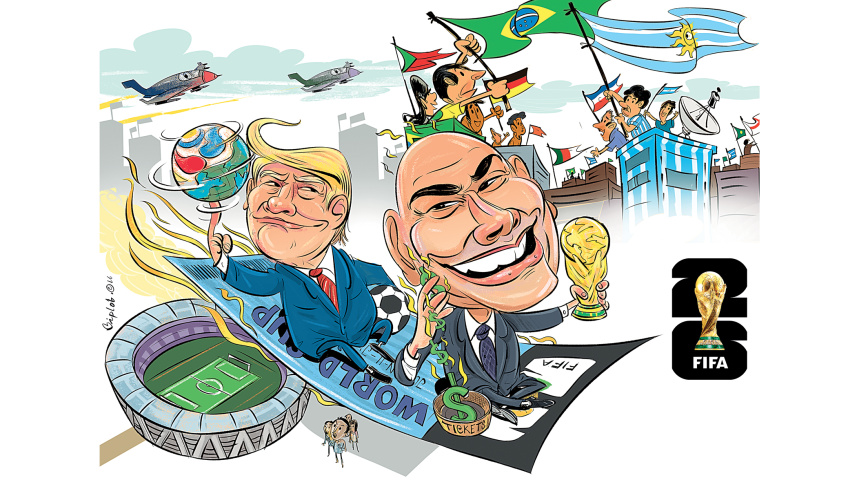
The 2026 FIFA World Cup is historic in more ways than one. It is the first to be hosted by three countries – the United States, Canada and Mexico – and the first to feature an expanded 48-team, 104-match format stretching across 39 days.
But long before a ball was kicked, this tournament had already become one of the most politically charged in World Cup history.

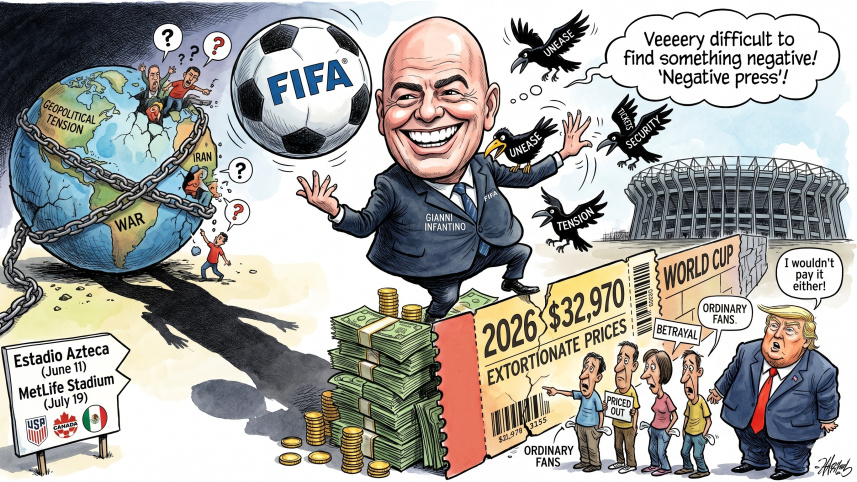
One host nation, the United States, is directly involved in an armed conflict with one of the tournament's participants, Iran. While the USA hosts the World Cup despite its war on Iran, Russia continues to remain a pariah in international football for its war on Ukraine.
As the tournament gathers pace and moves towards the business end, FIFA has found itself under fresh scrutiny after overturning the suspension of United States forward Folarin Balogun following an intervention by President Donald Trump, a decision that has fuelled debate over whether football's governing body is becoming increasingly susceptible to political influence.
Whether it is geopolitical conflict, presidential intervention or the ever-growing commercialisation of the game, the 2026 World Cup has repeatedly demonstrated that football's biggest tournament no longer merely exists alongside politics. It is increasingly intertwined with it.
FIFA continues to market the tournament as a festival of unity capable of transcending borders and ideology. Yet the events surrounding this World Cup suggest something rather different. Instead of standing apart from global politics, football increasingly appears to mirror it.
Football has always been political
Football has never truly existed outside politics. The World Cup, in particular, has long served as a stage for power projection, propaganda and ideological theatre.
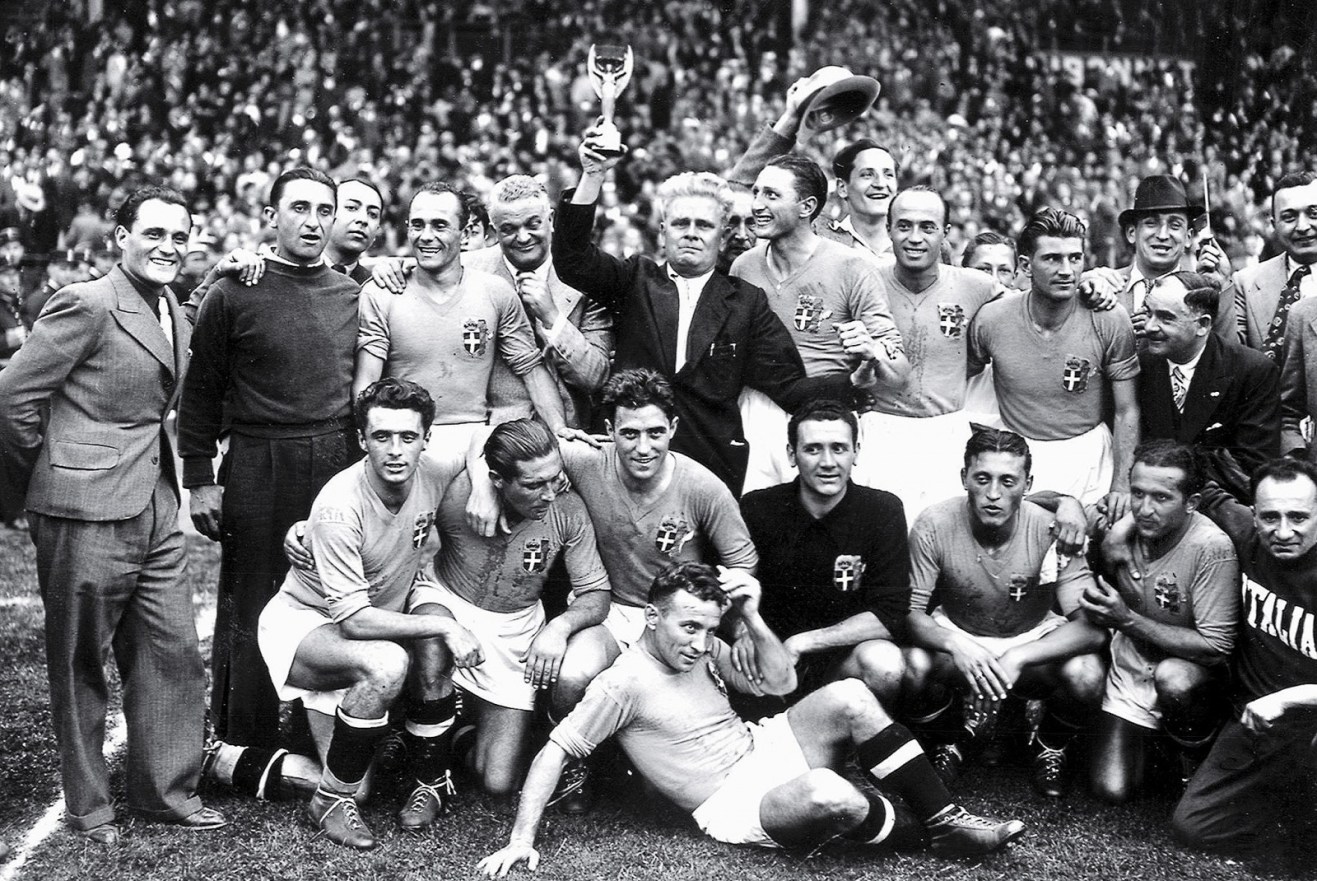
The 1934 FIFA World Cup remains perhaps the clearest early example. Hosted by Italy under Benito Mussolini’s fascist regime, the tournament was deeply entangled with political manoeuvring from the outset. Even before hosting rights were secured, officials from the Italian football federation reportedly lobbied aggressively on behalf of the regime, assuring FIFA that the government would absorb any financial losses. That promise, more than sporting merit, helped Italy defeat rival bidder Sweden.
Rumours have persisted for decades that Mussolini’s regime pressured referees to favour the hosts during the tournament. Whether myth or reality, the symbolism was unmistakable. Italy’s triumph became a propaganda victory for fascism itself. Four years later, Italy defended the title in France amid reports that Mussolini had sent players the infamous message: “Win or die.”
The Italian team performed fascist salutes wearing black shirts before matches, turning football into political theatre.
More than four decades later, the 1978 FIFA World Cup unfolded under similarly dark circumstances. Argentina’s military dictator Jorge Rafael Videla used the tournament as a propaganda tool while thousands of dissidents were being tortured, imprisoned and “disappeared” by the regime.
And yet, amid that climate of fear and brutality, the World Cup proceeded in celebratory fashion. Argentina’s eventual triumph has remained controversial ever since, particularly the suspicious 6-0 victory over Peru that sent the hosts into the final. Stories persist that Videla himself visited the Peruvian dressing room before the match. Whether by coincidence or coercion, the tournament became inseparable from the dictatorship that staged it.
From propaganda to sportswashing
Modern World Cups have increasingly become exercises in sportswashing – attempts by states to improve international image and legitimacy through sport.
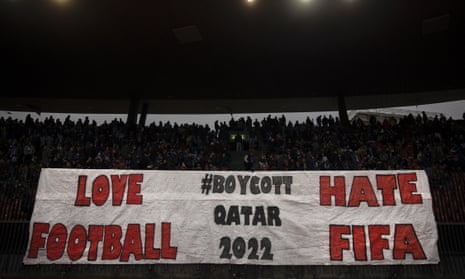
The 2018 World Cup in Russia and the 2022 one in Qatar were both heavily criticised over issues surrounding human rights, freedom of expression and labour conditions. Yet FIFA showed little willingness to confront those questions seriously as long as the tournaments delivered commercial success.
 For all latest news, follow The Daily Star's Google News channel.
 In earlier eras, FIFA could perhaps claim vulnerability to political pressure from powerful regimes. Today, that excuse feels far less convincing. FIFA is by far the wealthiest and most influential sporting institution on earth, yet it continues to align itself closely with political strongmen, corporate interests and authoritarian governments whenever financial opportunity presents itself.
That uneasy relationship between football, money and political power now arrives in North America.
World Cup lands in Trumpland
FIFA has hardly been blessed with morally spotless leadership over the decades, but Gianni Infantino’s increasingly overt proximity to political power has drawn criticism even within football circles.
At a World Cup-related event last Demenber, Infantino awarded US President Donald Trump a newly created “FIFA Peace Prize” – an award nobody seemed to know existed beforehand, including some members of FIFA’s own council. There was no clear nomination process, no published criteria and no explanation beyond vague references to “uniting people across the world”.
The symbolism was difficult to ignore.
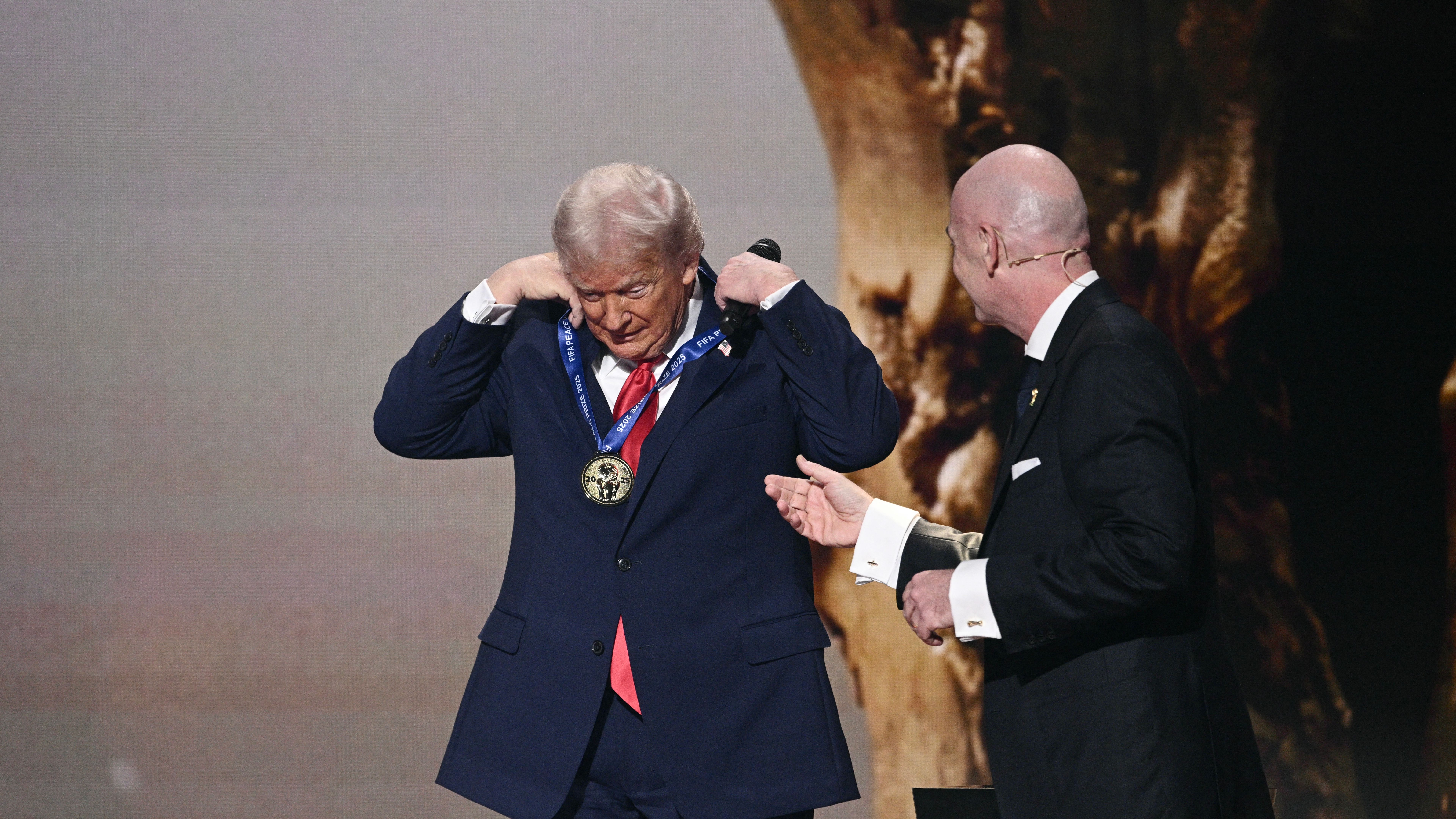
Back in 2017, when the United States, Canada and Mexico launched their joint bid under the slogan “United As One”, the message sounded hopeful. Nearly a decade later, the political climate surrounding the hosts looks very different.
Trump has repeatedly antagonised both neighbouring co-hosts, joking about Canada becoming the “51st state” while threatening unilateral military action inside Mexico against drug cartels.
And yet FIFA appears perfectly comfortable operating within that atmosphere.
Infantino has already overseen World Cups in Russia and Qatar, while Saudi Arabia is set to host the 2034 edition. Increasingly, FIFA seems less interested in keeping politics away from football than in maintaining close relationships with powerful political actors.
That perception has only intensified in recent days. FIFA's decision to rescind the suspension of United States forward Folarin Balogun after Trump publicly intervened has prompted fresh questions over the governing body's independence. Regardless of FIFA's reasoning, the optics were uncomfortable. At a tournament already defined by political symbolism, the episode reinforced the impression that football's most powerful institution remains willing to accommodate political power rather than keep it at arm's length.
Pricing out the people
If geopolitics forms one shadow over the 2026 World Cup, rampant commercialisation forms another.
FIFA is projected to generate roughly three billion dollars from ticket sales and hospitality alone during the tournament – more than triple the revenue earned from the previous World Cup. While the expanded format partly explains the increase, much of the controversy centres on FIFA’s embrace of aggressive American-style market economics.
Dynamic pricing and official resale platforms will be used extensively for the first time in World Cup history. Ticket prices can now fluctuate according to demand, much like concerts or airline seats. FIFA’s official resale system also allows supporters to sell tickets at self-determined prices, with FIFA reportedly taking a percentage of every transaction.
The consequences have already alarmed supporters. Even travel and accommodation costs around host cities have reportedly surged.
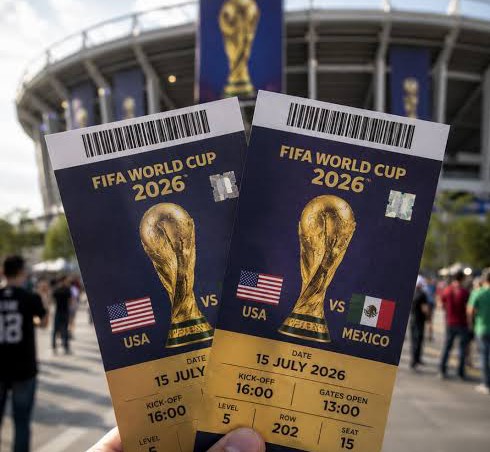
In attempting to position the World Cup as a premium entertainment product tailored for the American market, FIFA risks alienating the ordinary supporters who have traditionally defined football culture. Increasingly, there are fears that stadiums – especially across the United States, which will host 78 of the tournament’s 104 matches – may become dominated by corporate clients, tourists and wealthy spectators rather than genuine football fans.
A tournament reflecting the world
The 2026 World Cup is unfolding at a time of growing political tension, economic uncertainty and widening global divisions. In many ways, it feels less like an escape from the world than a reflection of it.
War has reached the tournament's doorstep. Politics continues to shape its narrative. The Balogun controversy has only deepened questions over FIFA's independence, while commercial priorities increasingly threaten to price ordinary supporters out of football's greatest celebration.
Yet that is also the enduring contradiction of the World Cup. For all the politics surrounding it, the tournament still possesses a unique ability to unite billions of people around the same spectacle. For little over a month, goals, drama and shared emotion continue to transcend borders.
Perhaps that is why the World Cup remains so compelling. Not because it rises above the world, but because it reveals it in all its contradictions. Football may promise unity, but every four years it also reflects the politics, inequalities and power struggles of the age in which it is played.
Comments