


The goal that made Mario Gotze immortal

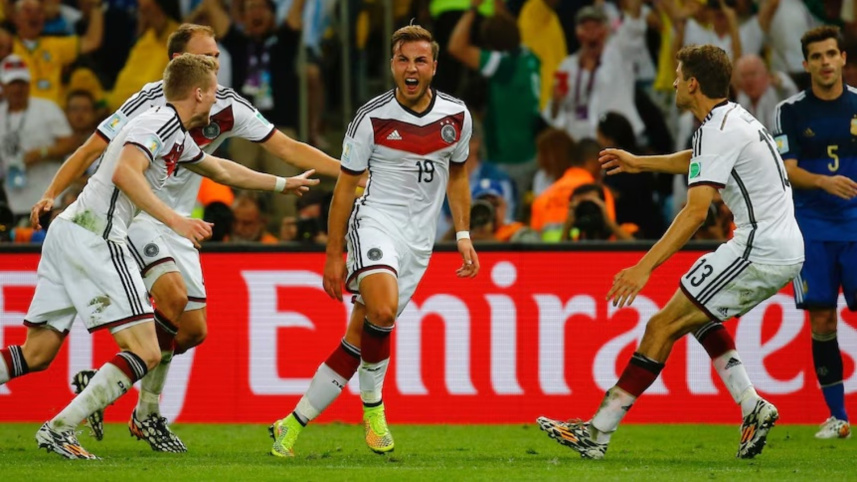
Sometimes a single goal changes an entire life. It becomes more than a strike into the net – it turns into a man’s identity, the essence of who he is. For Mario Gotze, there was one such moment. Just one. But one was enough.
Gotze was part of Germany’s squad for the 2014 World Cup, though not as a regular starter. With players like Thomas Muller, Mesut Ozil and Toni Kroos dominating the side, he spent much of the tournament on the bench. Young, talented, and attending his first World Cup, he seemed destined to remain a supporting character. Many believed he would leave Brazil as little more than a spectator to history.

But coach Joachim Low trusted him.
Throughout the tournament, Low had used Gotze as a substitute in both the group stage and the knockout rounds. Each time, the youngster tried to offer something to the team. Yet the greatest opportunity of his career arrived on football’s greatest stage.
13 July 2014. Rio de Janeiro. Maracana Stadium. Nearly 74,000 spectators inside the stadium and hundreds of millions watching around the world.
On one side stood Germany. On the other, Argentinal team led by Lionel Messi.
The match unfolded under suffocating tension. Ninety minutes were almost over, and extra time loomed. By then, the pitch had begun to resemble a battlefield rather than a football field. Blood trickled down Bastian Schweinsteiger’s face.
Gonzalo Higuaín had missed a glorious chance. Messi’s long-range efforts had drifted agonisingly wide. Exhaustion weighed heavily on every player. Even the two managers on the touchline looked drained, haunted by the fear of what might come next.
Then came the 88th minute.
Low made a decision that would become immortal.
He summoned Gotze from the bench. A 22-year-old with the face of a boy, carrying suddenly upon his shoulders the weight of an entire nation. Walking off the pitch was Miroslav Klose, the greatest goalscorer in World Cup history. Replacing him was Gotze. It was more than a substitution; it felt like a silent handshake between generations.
As Gotze stood beside the touchline, Low placed a hand on his shoulder and leaned in close. He was not merely giving tactical instructions. He was planting belief.
“Go out there and show the world you are better than Messi. Show that you can decide this match on your own.”
Gotze nodded.
Then he stepped onto the sweat-soaked grass of the Maracana carrying a dream and an almost eerie calmness. The second half of extra time had begun.
113th minute.
Andre Schurrle burst down the left flank as Argentina’s defenders scrambled in confusion. Schürrle lifted a looping cross into the area – high, curling, dangerous. Most players might have headed it. Others might have rushed the shot and lost control entirely.
Gotze did something else.
 For all latest news, follow The Daily Star's Google News channel.
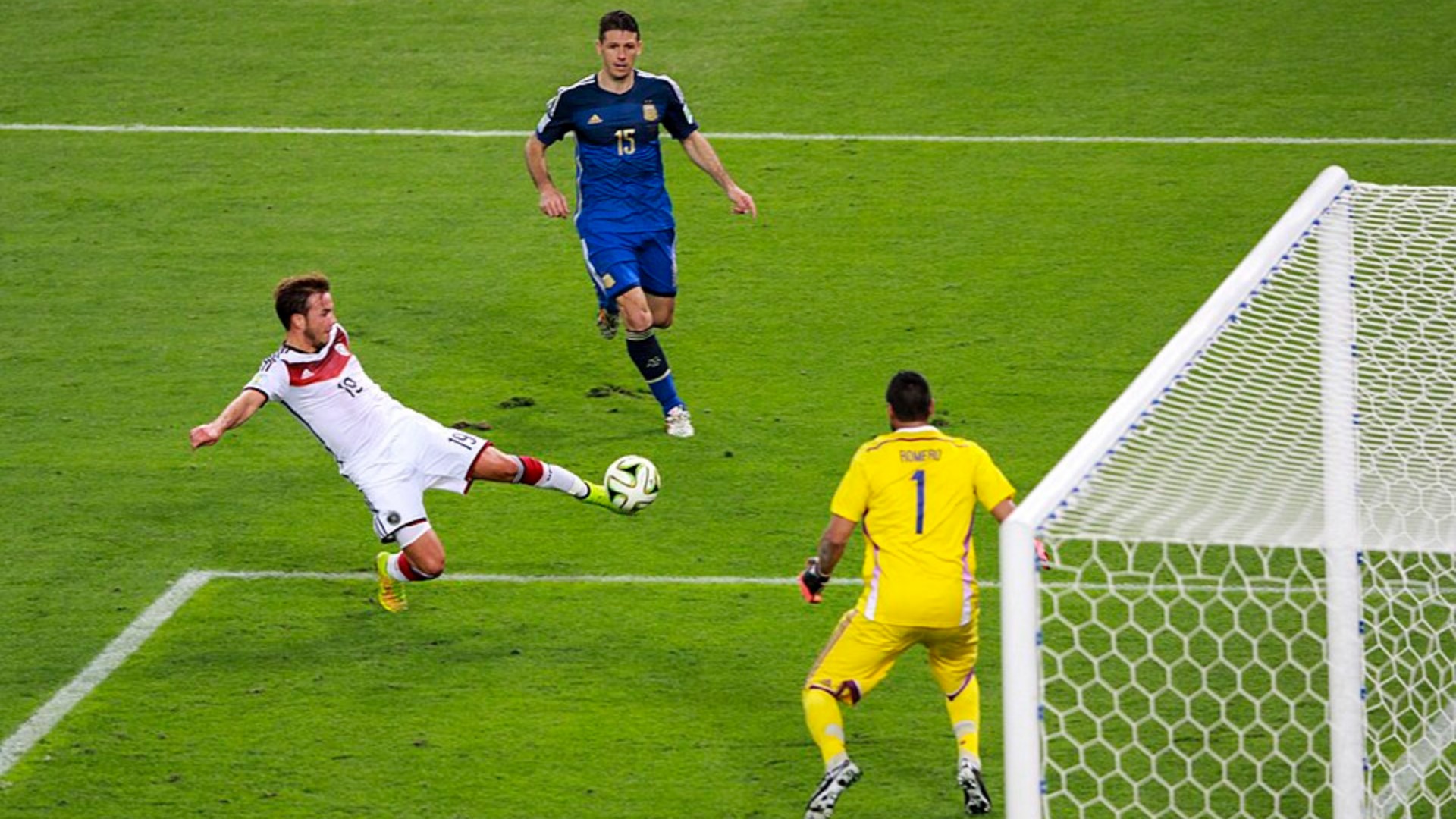
 He cushioned the ball on his chest. One perfect touch. Before the ball could even hit the ground, his body twisted with geometric precision. Then, for a split second, time itself seemed to stop.
Left-footed volley.
Sergio Romero produced what may have been the finest dive of his life, but there was no saving that strike. The ball flew into the corner of the net, and the snap of the netting felt like the sound of an entire nation falling silent – from Buenos Aires to every corner of Argentina.
For a brief moment, Gotze simply stood there.
Arms outstretched. A face suspended somewhere between disbelief and destiny.
Then he sprinted towards the corner flag, punching the air in celebration of the greatest moment of his life. Within seconds, teammates engulfed him – Klose, Philipp Lahm, Muller, everyone. The image remains etched forever in football memory.
Technically, the goal was extraordinary. To chest the ball down and volley it under such pressure, from that angle, on that stage — even many seasoned players would have failed. Yet Gotze executed it with such purity that, for an instant, it felt as though nobody else existed on the pitch.
Only him and the ball.
Germany won 1–0, claiming their fourth World Cup title and their first since 1990. It was also the first time a European nation had ever won a World Cup hosted in South America.
At the trophy ceremony, Messi received the Golden Ball award as the tournament’s best player.
But on that night, all eyes belonged to Gotze.
He entered the match as a substitute.
He left it as a legend.
Comments