


Should Nico's goal have stood?: VAR, Argentina and the questions that won't go away


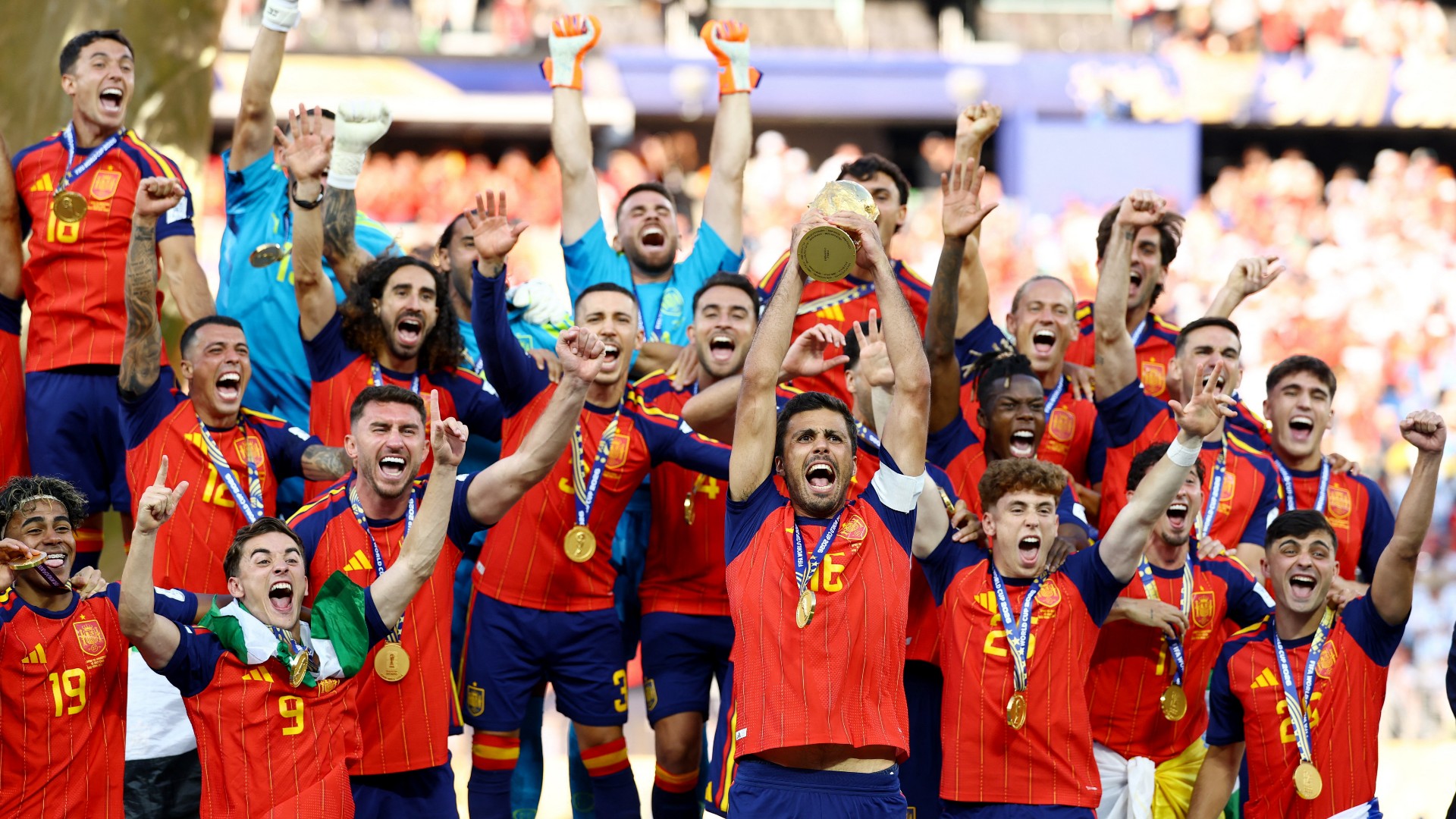
The dust has settled. Spain lifted their second World Cup title with a 1-0 victory over an Argentina side that never truly showed up in the all-important final at New York-New Jersey Stadium today.
What has not settled, however, is why Nico Williams' goal in the 96th minute of extra time was ruled out.

Despite controlling the match from start to finish, Spain struggled to find the breakthrough until Williams slid a low finish into the net early in extra time. But referee Slavko Vincic blew for what was seemingly a marginal contact on Nicolas Otamendi.
A perfectly weighted through ball from Lamine Yamal found Mikel Merino inside the Argentine penalty area. Merino appeared to win the ball from his marker, Otamendi, before the ball fell kindly to Williams, who calmly finished underneath the advancing Emiliano Martinez.
Merino's offence? A seemingly light step on Otamendi's foot -- a type of offence for which referees usually do not even call a penalty as they look for harsher contacts inside the penalty area for it to be deemed a foul. In fact, replays appeared to show that it was Otamendi who had his arm around Merino.
Even the commentators on the Bangladesh broadcast sounded unconvinced.
"The Spain players are bemused. Even I am bemused."
Yet the decision itself was not the most puzzling aspect. The bigger question was why VAR, which had intervened on several similar incidents throughout the tournament, did not appear to review the challenge at all.
To understand why that has become such a talking point, it is worth going back a few days.
In the Round of 16, Egypt thought they had doubled their lead through Mostafa Zico after a brilliant solo run from Haissem Hassan that began deep inside Argentina's half. The goal was eventually ruled out after VAR spotted a foul on Argentina defender Lisandro Martinez much earlier in the move and way deeper in Argentina’s half.
As social media debates inevitably followed, it became widely noted that VAR has the authority to review the entire attacking phase leading to a goal and disallow it if a foul is identified anywhere during that sequence.
By the letter of the law, that decision was correct. VAR applied the protocol as intended, and the referee was fully entitled to cancel the goal, even if football experts remained divided over whether the initial challenge should have been considered a foul.
However, what stood as a stark contrast was the fact that a similar incident involving Mohamed Salah late in that game was never called in to be inspected by VAR.
As the tournament progressed, one concern became increasingly difficult to ignore. As several pundits pointed out, VAR often appeared to be "picking and choosing" when to intervene, and many of those moments seemed to favour Argentina.
Another similar incident occurred during Argentina's group-stage victory over Austria. Alexis Mac Allister seemingly barged into Austria's Nicolas Seiwald from the back, resulting in a loss of possession for Austria. From the same attacking move, Lionel Messi scored.
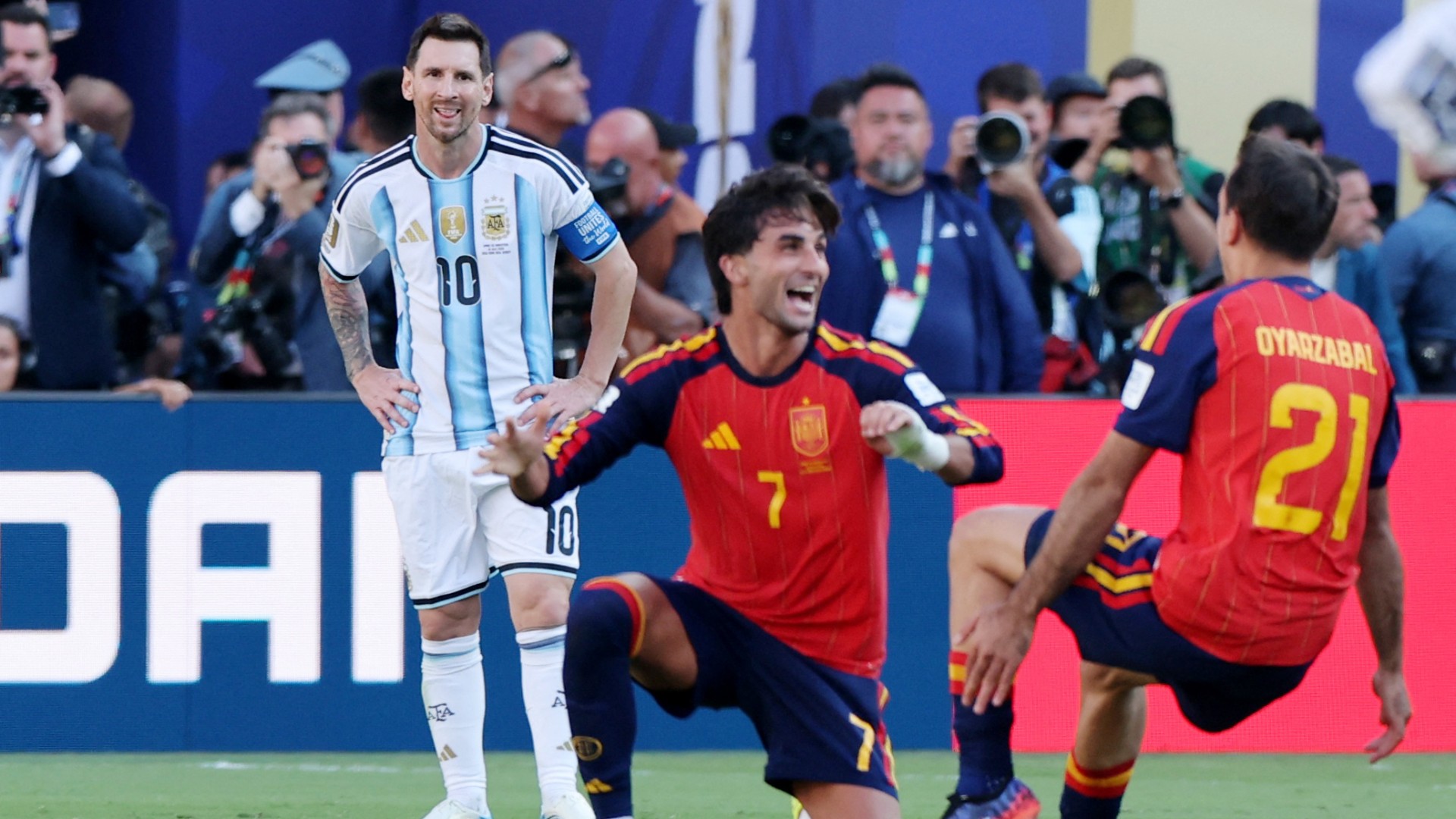
The referee may simply have judged the challenge not to be a foul. That is a matter of interpretation. What was surprising, however, was that VAR did not even recommend an on-field review, allowing the goal to stand without further scrutiny. Argentina went on to win 2-0.
There were several other instances in which marginal and even black-and-white decisions appeared to fall Argentina's way, with the all-seeing VAR often turning a blind eye.
The final provided another example. Leandro Paredes received a yellow card shortly after coming on in the second half. He then committed three more fouls, including a heavy challenge on Rodri.
 For all latest news, follow The Daily Star's Google News channel.
 Replays suggested Rodri had reached the ball first before Paredes made clear contact with the Spanish midfielder during his attempted clearance. It was a clear kick on an opponent -- an offence for which Lucas Digne had conceded a penalty just a few days earlier after catching Lamine Yamal during Spain's semifinal victory over France. Yet in a remarkably similar incident in the final, despite the contact being clearly visible on replay, VAR did not intervene.
It is equally important to acknowledge that not every controversial decision went in Argentina's favour.
Even in the final, replays appeared to show Dani Olmo catching Messi's shin while attempting to clear the ball. Neither the referee nor VAR took further action. Had the incident been reviewed, some could argue it might even be a bookable offence.
Similarly, Enzo Fernandez's second yellow card, which resulted in his dismissal in the 93rd minute, could reasonably be viewed as a 50-50 decision. Attempting to reach the ball before Pau Cubarsi, Fernandez made slight contact with the defender's foot. Cubarsi went down rather dramatically, and the referee issued a second yellow, reducing Argentina to 10 men during the closing moments of a World Cup final.
The broader point is not that controversial decisions only affected Argentina. There were numerous examples of inconsistent refereeing throughout the tournament involving several teams.
What stood out, however, was that Argentina benefited from a significant number of the marginal calls. Ironically, raising that point often seemed to invite fierce criticism, particularly from supporters of the three-time world champions.
A few statistics only add to the discussion.
In a tournament that began with three players being sent off in the opening match between South Africa and Mexico, Argentina were the only team not to have a single on-field decision overturned following a VAR intervention.
The disciplinary numbers were equally striking. Argentina received a yellow or red card only once every 19.6 fouls committed leading up to the final.
When viewed alongside the absence of VAR reversals and a series of decisions that appeared to fall Argentina's way, it inevitably fuels questions about whether the tournament's officiating was applied consistently, especially in Argentina’s case.
Before the final, if these statistics were only viewed as mere numbers, it would have given the impression that Argentina were the cleanest of the teams among the 48 that came to compete in the showpiece event.
That, however, seems far from the case when viewed from a neutral vantage point.
None of this suggests Argentina were responsible for the officiating. They played the game as every elite side would, pushing the limits of what was permitted, and refereeing decisions are ultimately beyond any team's control.
But when most 50-50 decisions appear to favour one side, when that side goes through an entire World Cup without a single VAR-triggered reversal, and when they are carded only once every 19.6 fouls committed, it is only natural that questions will be asked.
Throughout the competition, Argentina consistently maintained that the referees had always made the correct decisions. While every team is entitled to defend its own interests, expecting officials to be flawless throughout an entire World Cup is unrealistic.
Ironically, Argentina coach Lionel Scaloni himself was shown a yellow card in the final for protesting the referee's decisions from the technical area. Apparently, it took Scaloni experiencing the other side of the coin to finally realise that referees, too, are capable of making mistakes. The difference this time was that some decisions went against his side in a game they ultimately lost.
Spain, meanwhile, deservedly leave as world champions. Their performances throughout the tournament, capped by a dominant display in the final, earned them football's biggest prize.
Yet once the celebrations fade, this World Cup may be remembered for more than Spain's triumph. It will also be remembered for the persistent debate over the consistency of officiating, the application of VAR, and whether football's most important tournament applied its own standards equally to every team.
Those are questions that, like the final score, are unlikely to disappear anytime soon.
Comments