


Another scar, or the start of Brazil's revival?
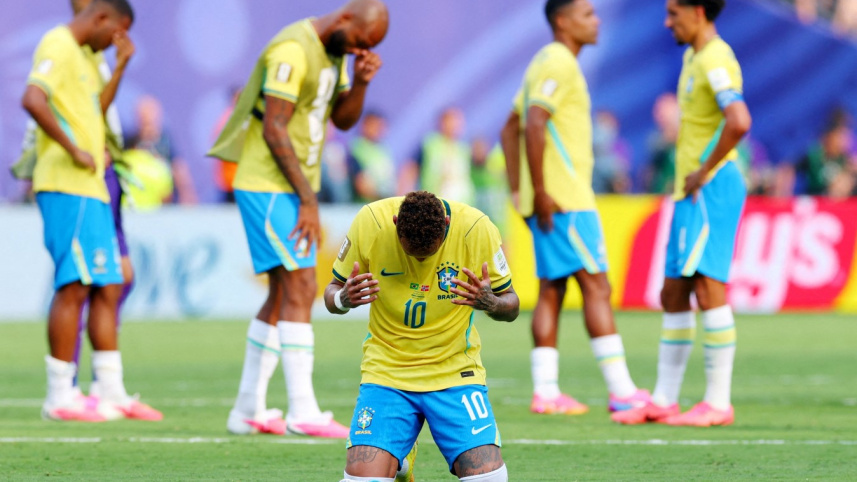
Brazil have become accustomed to measuring heartbreak in four-year instalments. Yet this latest wound feels heavier, deeper and perhaps more revealing than those that came before.
A 2-1 defeat to Norway in the World Cup last-16, inspired by two clinical strikes from Erling Haaland, has ensured that the five-time champions will wait at least 28 years for a sixth crown. For a nation that once treated World Cups as an almost cyclical affirmation of its footballing identity, such a drought is no longer an anomaly. It is becoming a reality.

The immediate reaction was predictable. Carlo Ancelotti's tactical choices came under scrutiny, Bruno Guimaraes' missed penalty was dissected, Neymar's cameo generated criticism, while Brazil's reliance on ageing figures such as Casemiro and Danilo raised uncomfortable questions about succession planning.
But perhaps the most important verdict arrived not from television studios or newspaper columns, but from within the Brazilian Football Confederation itself.
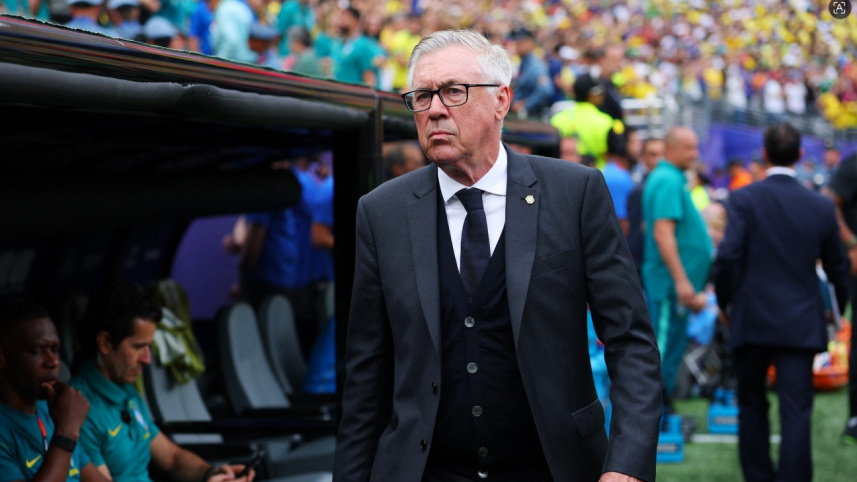
Football director Rodrigo Caetano's insistence that Ancelotti will remain in charge through the 2030 World Cup cycle signals an acknowledgement of a truth Brazilian football has spent years avoiding: there are no quick fixes.
Brazil have changed coaches, altered systems and searched endlessly for culprits since lifting the trophy in 2002. Three interim managers preceded Ancelotti's arrival, while administrative uncertainty consumed valuable years. Stability, long regarded as a luxury rather than a necessity in Brazilian football, suddenly appears indispensable.
"One of the main reasons we failed in this World Cup was not to have proper, stable guidance long term," Caetano admitted.
That admission may prove more significant than any tactical adjustment.
Ancelotti inherited a team in transition and a federation in turmoil. As Cafu aptly observed, the Italian did not inherit a well-constructed project; he inherited a fire to extinguish. Asked to guide Brazil through football's biggest stage with barely a year to reshape a drifting squad, the veteran coach was always attempting repairs while the ship was already at sea.
Now, for the first time, Brazil appear willing to let someone steer from the harbour.
Yet the deeper concerns stretch beyond coaching appointments and formation boards. Cafu's reflections on youth development strike at the heart of Brazil's identity crisis. The country that once produced footballers defined by imagination and spontaneity now risks producing athletes conditioned solely to compete.
"We're not developing players, we're developing competitors," Cafu warned.
Perhaps that observation explains why Brazil often appear technically gifted but emotionally burdened. Young footballers are increasingly expected to carry the weight of a nation before they are old enough to enjoy the game itself.
The romance of barefoot street football belongs largely to another era, but Cafu's broader point remains relevant. Creativity cannot thrive under constant pressure. Talent rarely flourishes when fear of failure overshadows joy.
For decades, Brazil's footballing mythology was built on freedom -- children improvising in neighbourhood streets, discovering skills before they discovered expectations. In an age of academies, data and relentless demands for immediate success, preserving even a fragment of that spirit may be the country's greatest challenge.
The temptation, as always, will be to search for another scapegoat. Brazil have become experts at post-mortems. Coaches come and go, stars are elevated and discarded, and every elimination is treated as a national reckoning.
But after 28 years without a World Cup triumph, perhaps Brazilian football must finally accept that revival is not born from panic.
It is built patiently, piece by piece, much like the Lego metaphor Cafu offered in New York.
Brazil's World Cup wound is open once again. The pain is familiar. The frustration is undeniable.
The real question, however, is whether this defeat becomes merely another scar on a fading football empire, or the moment Brazil finally decides to rebuild itself properly and waits for its Hexa mission with purpose rather than desperation.
 For all latest news, follow The Daily Star's Google News channel.
Comments