


From 6 ft 9 in to 5 ft 3 in: World Cup’s tallest and shortest players
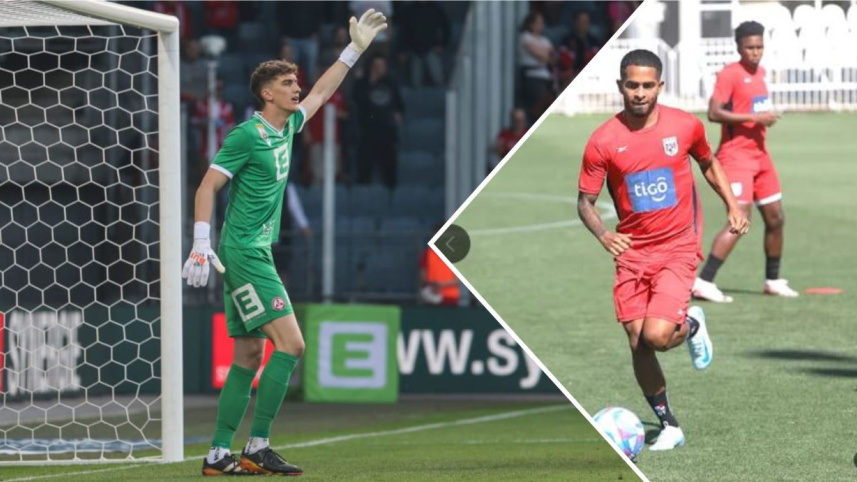
There are no shortage of interesting stats when it comes to the 2026 FIFA World Cup, and human scale is one of the most fascinating among them.
At the very top of that scale stands Austria’s goalkeeper Florian Wiegele, who reaches an extraordinary 2.05 metres (approx. six feet nine inches). That height doesn’t just make him imposing -- it makes him the tallest player ever named in a World Cup squad. He edges past the previous record-holder, Netherlands goalkeeper Andries Noppert, who stood at 2.03 metres during Qatar 2022.

Just behind them is a group of towering figures shaping the tournament’s defensive lines: England defender Dan Burn at 2.01 metres, Colombia goalkeeper Álvaro Montero also at 2.01 metres, and Bosnia and Herzegovina centre-back Stjepan Radeljic, matching them step for step in height. In a tournament often defined by fine margins, these players quite literally bring a different level to aerial battles.
But the World Cup is just as remarkable at the other end of the spectrum.
Panama’s creative midfielder Cesar Yanis, standing at just 1.60 metres (approx. five feet three inches), is the shortest player at the finals. Close behind him is Curaçao attacker Jeremy Antonisse at 1.64 metres -- players who rely not on reach, but on agility, balance, and sharpness in tight spaces.
Put those extremes together, and the contrast becomes almost surreal: there is a 41-centimetre difference between England’s Dan Burn and Panama’s Cesar Yanis. And fate adds an extra layer of drama—Panama and England are scheduled to meet in their final Group L match, meaning those two physical extremes could share the pitch in the same game.
It’s not the biggest gap the World Cup has ever seen, though. That record belongs to Germany 2006, when Serbia and Montenegro’s towering Nikola Zigic and Cote d’Ivoire’s Bakary Kone were separated by 39 centimetres on the field at the same time.
From Wiegele’s record-breaking height to Yanis’s rapid low centre of gravity, the 2026 tournament quietly reminds us of something simple but striking: football is one game, but it’s played by bodies that can be built in radically different ways -- and still compete on equal terms.
 For all latest news, follow The Daily Star's Google News channel.
Comments