


The birth of the FIFA World Cup

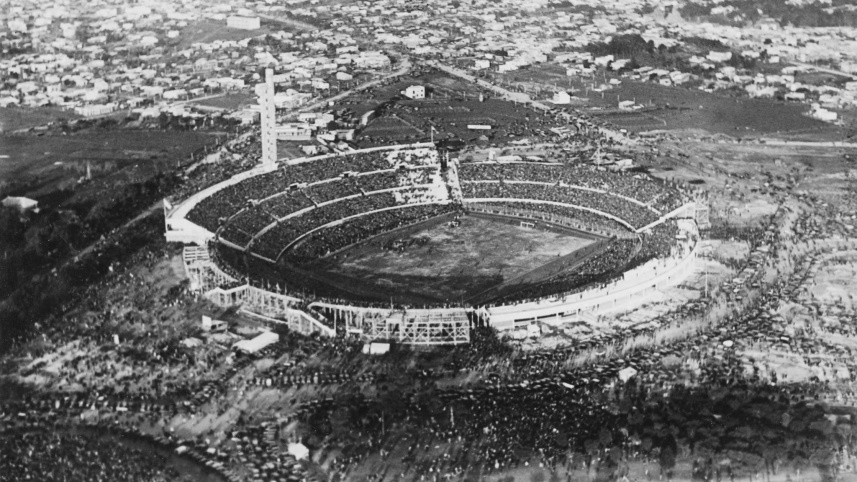
Today, the FIFA World Cup is more than a sporting contest. It is emotion, identity and a global celebration that grips billions. Yet the story of its birth is one of doubt, resistance and an unyielding dream that refused to fade.
In the early 20th century, football was already popular but lacked a stage of its own. The sport grew under the shadow of the Olympic Games, constrained by strict amateur rules and regulations that often prioritised ideology over competition. Football was searching for its own identity -- and a platform worthy of its passion.

A turning point arrived at the 1908 London Olympics, when only national teams were permitted to compete. That small shift gave the sport a new dimension. Playing under a national flag ignited a deeper emotional connection. Before that, nations could send multiple teams, including domestic clubs to the Olympics. The tournaments of 1924 and 1928 confirmed what many already sensed -- football had the power to stir hearts like few other sports.
It was at this crucial moment that a visionary emerged. Jules Rimet who served as FIFA third president from 1921 to 1954. More than an administrator, Rimet believed football could transcend borders, cultures and politics. To him, the game was a universal language capable of uniting the world.
Even before his FIFA presidency, efforts had been made to globalise the sport. The 1909 Thomas Lipton Trophy in Turin was one such attempt. But without true national representation, the tournament failed to capture the imagination. Football still lacked a stage where national pride and elite competition could coexist.
Rimet understood that for football to flourish, it needed independence from the Olympics. But the path was far from easy. The International Olympic Committee resisted the idea of a separate global tournament, insisting the Olympics were sufficient. Negotiations dragged on without resolution.
The standoff reached its peak when football was excluded from the 1932 Los Angeles Olympics. That decision proved decisive. If football was to survive and grow, it would have to carve its own path.
Thus began the true journey of the FIFA World Cup.
Rimet announced plans for an independent global tournament -- free from amateur restrictions and designed purely around competition and glory. The trophy would bear his name: the Jules Rimet Trophy.
Yet dreaming was one thing; delivering was another.
The first question was where to host this unprecedented event. European powers including Italy, Spain, the Netherlands, Sweden and Hungary expressed interest. But from across the Atlantic came a bold proposal from Uruguay.
A small nation with grand ambition, Uruguay was preparing to celebrate its centenary of independence in 1930. It offered not only to host the tournament but to cover travel and accommodation expenses for participating teams. Backed by strong support from other Latin American nations, the decision went in Uruguay’s favour.
Europe, however, was far from pleased.
Transatlantic travel in 1930 was long, costly and uncertain. Many European nations withdrew despite Uruguay’s financial guarantees. The fledgling tournament faced a crisis before it had even begun.
At this critical juncture, key figures stepped forward. Among them was Carol II, who personally ensured Romania’s participation by guaranteeing players’ financial security and employment. His intervention, along with others, helped secure European representation.
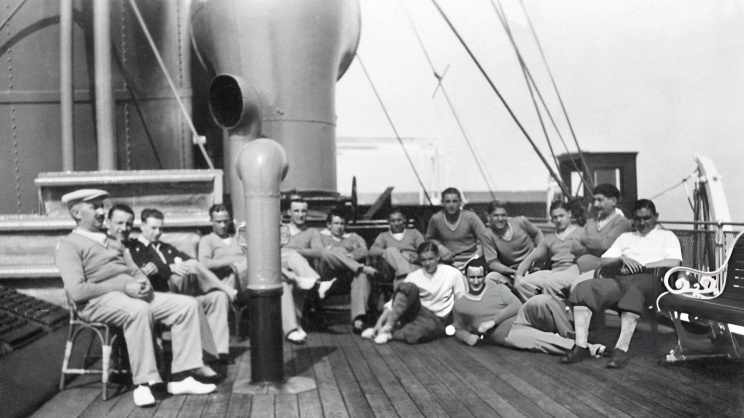
In the end, four European teams -- France, Belgium, Yugoslavia and Romania -- embarked on the historic voyage aboard the SS Conte Verde. Along the way, they were joined by Brazil. The journey across the Atlantic became symbolic, not merely a trip to a tournament, but a passage into a new era.
Their destination was Montevideo. The modest city prepared three stadiums with limited resources but boundless enthusiasm.
Thirteen teams. Eighteen days of competition. And in July 1930, the first chapter of the FIFA World Cup was written.
Behind today’s glittering spectacle lies that quiet, determined beginning -- a tournament born not of certainty, but conviction. It was more than the creation of a competition; it was the fulfilment of a belief that football could unite the world.
Nearly a century later, that belief still pulses in the hearts of millions.
 For all latest news, follow The Daily Star's Google News channel.
Comments