


Asia’s finest gather as Bangladesh prepare for historic debut
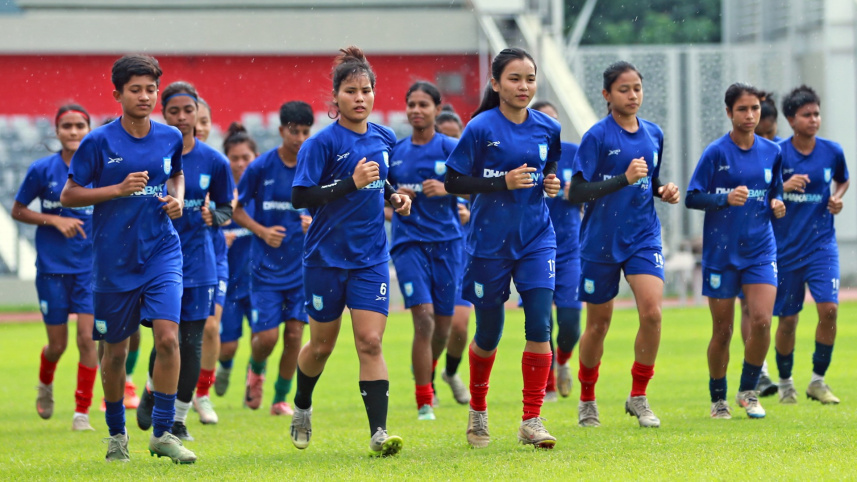
What started with a modest South Asian Games fixture against Nepal in 2010 has grown into one of the proudest journeys in Bangladesh sport, with the Bangladesh Women's football team now preparing for their maiden appearance at the AFC Women's Asian Cup in Australia – a historic milestone for the country’s women’s football programme.
The rise to this stage has been built on persistence and collective effort. From players and their families to administrators, sponsors and supporters, many have contributed to a journey that transformed modest ambitions into genuine conviction. Qualification last July confirmed the steady progress of the programme and secured Bangladesh a place among Asia’s elite for the first time.


The tournament, which begins on March 1 and runs across Perth, Gold Coast and Sydney, will feature 12 of Asia’s strongest sides. Returning to Australia for the first time since 2006, the competition will use several venues that staged matches during the 2023 FIFA Women’s World Cup, providing Bangladesh’s young squad with a rare opportunity to perform on some of the biggest stages in the region.
Drawn in a difficult Group B alongside defending champions China, former champions North Korea and Uzbekistan, Bangladesh face a daunting introduction to top-level continental football. Their opening match against China in Sydney on March 3 will be followed by equally demanding encounters against North Korea and Uzbekistan – fixtures that will test both the team’s resilience and its readiness.
The scale of the challenge has led head coach Peter Butler to temper expectations and emphasise discipline over adventure, particularly with a squad in which many players are still under 20.
“We will have to modify our approach,” Butler recently said. “If you go there with a cavalier mindset thinking you can just press and attack these teams, you are in for the shock of your lives. When you play top teams and make mistakes, you get severely punished.”

Rather than focusing solely on results, Butler views the tournament as part of a longer journey – an opportunity to help a young group mature through exposure to the highest level of competition.
“This is an opportunity for these players to showcase their talents on a much larger stage,” he said. “We are not coming in expecting to win the tournament, but the main aim is to lay the foundations, to build something that enables Bangladesh to qualify again and again.”
Beyond the immediate challenge, the tournament carries additional significance as it offers a pathway to the 2027 FIFA Women’s World Cup, giving Bangladesh further motivation to compete as strongly as possible.
Hosts Australia will kick off the tournament against the Philippines in Perth, while the continent’s established powers once again line up as title contenders.
For Bangladesh, the Asian Cup represents both an arrival and a beginning – a chance to measure themselves against Asia’s best while laying the groundwork for the future. The experience gained in Australia may ultimately prove as valuable as the results themselves, shaping the next phase of a journey that continues to gather momentum.
 For all latest news, follow The Daily Star's Google News channel.
Comments