


‘Lot of room to improve’ in Bangladesh batting
Bangladesh’s middle-order issues have been laid bare over the past year, with several players rotating through the role without making a lasting impression. Thus, apart from top-order issues, partnerships down the order and their impact remain a cause for concern in the 50-over setup.
One of the players brought back into the mix to address that gap is Afif Hossain. Dropped after the 2023 Asia Cup, Afif spent a year out of the ODI side. His fortunes improved with a hundred in the Bangladesh Cricket League -- coming in at No. 4, where he mostly batted in the competition -- earning him a recall for last month’s Pakistan series. However, his ODI record since being sidelined after the Asia Cup, yielded 124 runs without a fifty at an average of just over 24, has yet to ease concerns over his comfort and adaptability in a middle-order role.

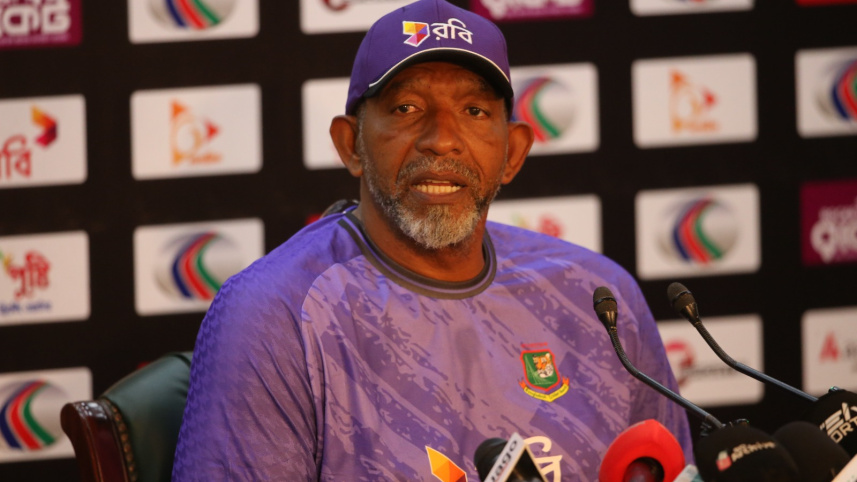
Those concerns were echoed in Phil Simmons’s press conference yesterday ahead of the home ODI series against New Zealand, beginning on Friday, as the Bangladesh head coach surmised why the middle order continues to be an issue following the departure of Mushfiqur Rahim and Mahmudullah Riyad.
“It seems like all our batsmen bat in the top order in domestic cricket. It is the same for [Mehidy Hasan] Miraz and everyone else down the order,” Simmons said when asked how difficult it is for a top-order batter to adapt to number six.
“Everybody seems to bat in the top order domestically, but when they come here, they have to fit into different positions. So far, the guys have been trying very hard to adapt to those positions. One of the big aspects of international cricket is that you have to adapt to what is in front of you, not just what you have done in domestic cricket,” Simmons added.
The message seemed to be clear: do the job that is being asked of you. Yet, the roles do not always fit the profile. The highest middle-order partnership -- four to six in the batting order -- in the last 12 months is 101 between Miraz and Tawhid Hridoy, which came in a losing cause. The duo have played six innings together in this period, scoring 172 runs at a run-rate of 4.41, clearly lacking the middle-overs acceleration required in ODIs.
Meanwhile, Jaker Ali, Shamim Hossain and Mahidul Islam Ankon have either failed to get a foothold or made little impact despite being carried in the squad, prompting a shift that sees Litton Das preferred in the middle order, while Hridoy has adjusted to greater responsibility. Simmons noted Hridoy is “accepting that responsibility” and backed his domestic form to translate.
Concerns extend to the lower middle order as well, especially when quick runs are required. Among Afif, Miraz and Rishad, only the latter has shown glimpses of big hitting, but without consistency.
Simmons admitted Bangladesh have “a lot of room to improve… from the top down to numbers five, six, seven and eight,” underlining the scale of the batting challenge.
 For all latest news, follow The Daily Star's Google News channel.
Comments