Waiting out the Iran war: Doha diary II

(Renowned historian, Rila Mukherjee, was stranded in Doha as a transit passenger while returning from the US to India. She stayed there from the night of February 27 until March 12, when she was put on a Qatar Airways [QA] evacuation flight to Delhi and then sent on to Kolkata by Air India, reaching the night of the same day.)
***
The circumstances leading up to my getting stuck in Doha and my account of the early days of the war were published in The Daily Star of March 15, 2026.
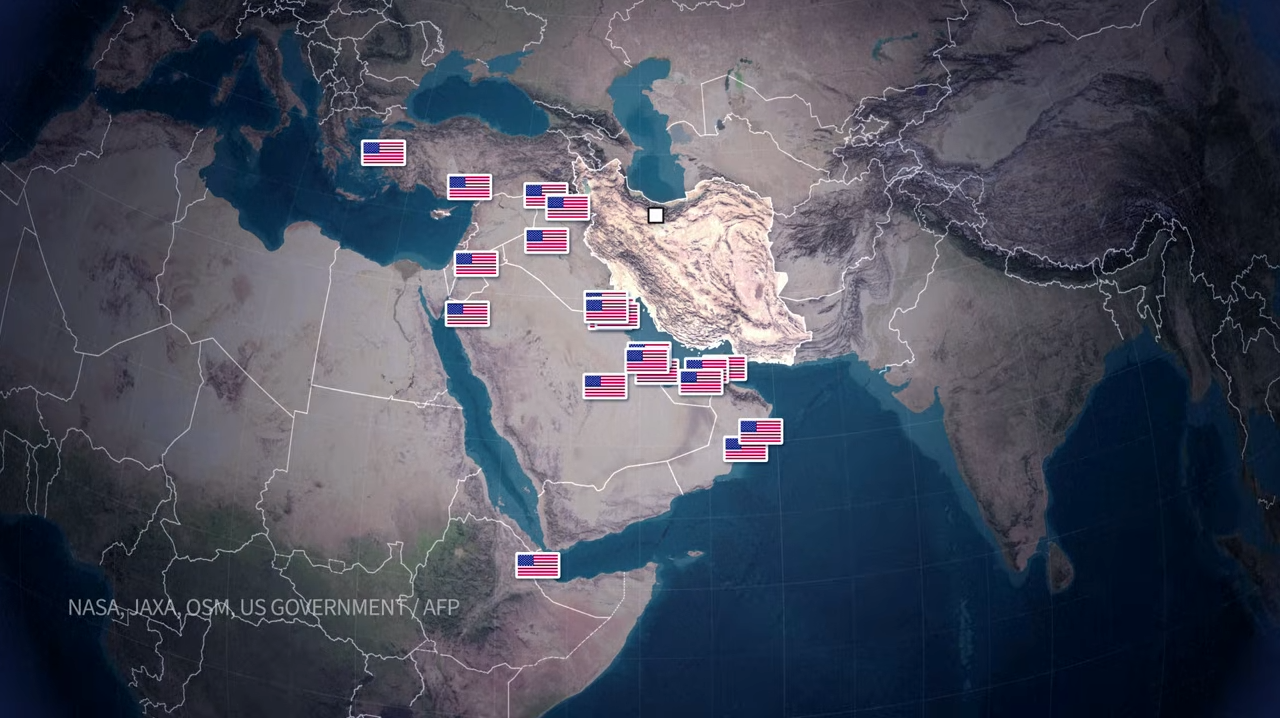
On 12 March I was put on a QA repatriation flight to Delhi, and now that I am back in Kolkata, I want to tell you of my impressions not just of the war itself, but of Doha and some anecdotes of my stay there.
This was my second stay in Doha and this time it lasted two weeks!
Throughout my stay I did not step out of my hotel, although the younger transit passengers became quite restless during their incarceration. Some ventured out at least once daily. They explored Doha and shopped for clothes because our checked-in bags came to the hotel many days later. Most of us had nothing but the clothes we were standing in when the US-Israel war on Iran abruptly halted all flights. As we were effectively marooned, many of the passengers stocked up on essentials for a prolonged stay. Elderly passengers, whose medicines ran out, went off to replenish supplies; families with small children needed other things.
***
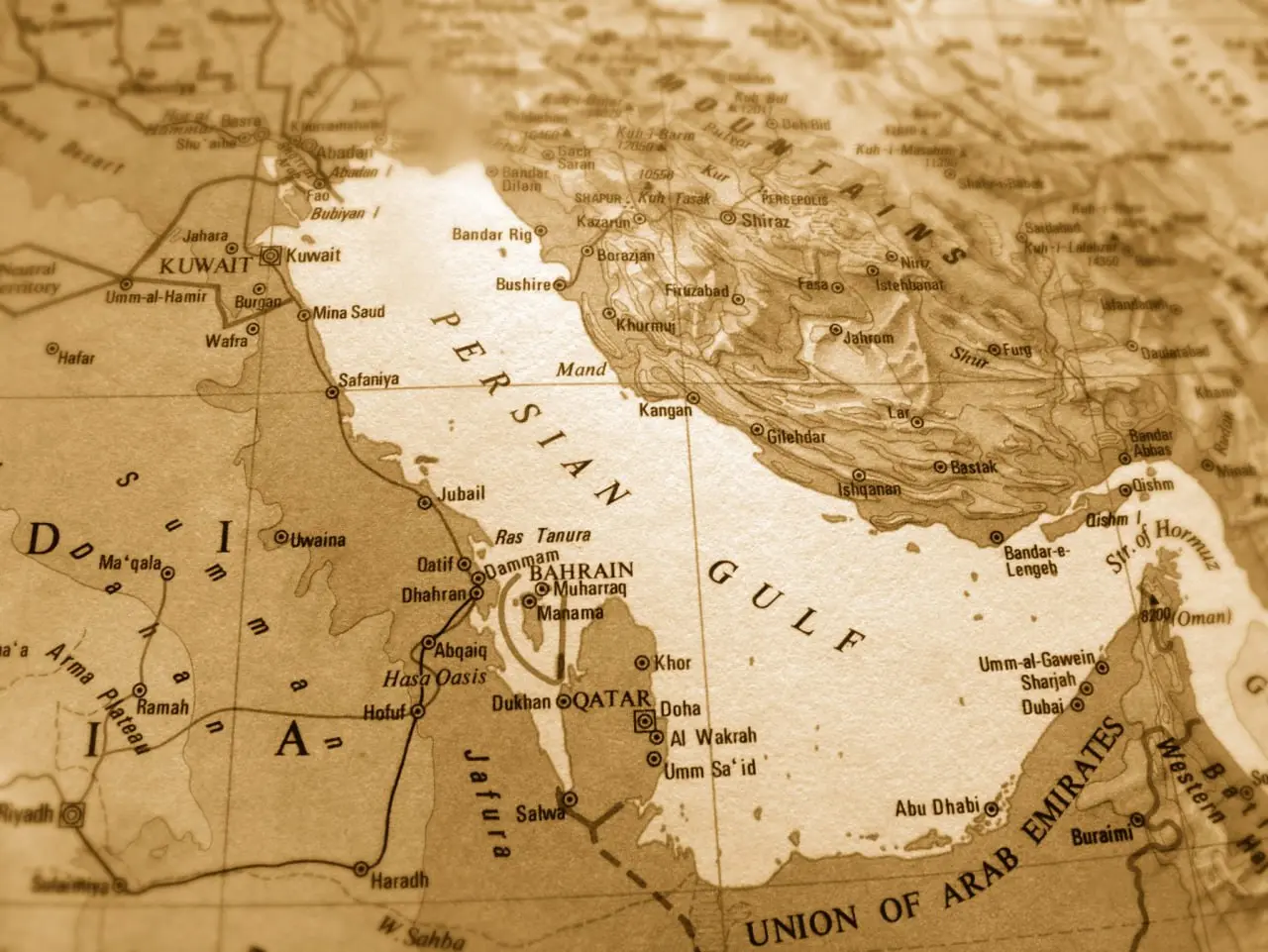
My last days in Doha rushed by in a blur. The weather was pleasant, never going beyond 24 degrees Celsius, and at any other time sightseeing would have been enjoyable, although Doha does not really have much to offer other than its physical location, with all the obvious advantages of a port city. The strand along the seashore, which it calls the Corniche, contains most of Qatar’s iconic architecture, but none of it is especially stunning. Doha’s skyline is still quite modest, just about comparable to that of Mumbai. It does not have the plastic glitter of Dubai. But although not as flashy as Dubai, Doha does not feel authentic. Abu Dhabi, where I was once invited for an NYU Abu Dhabi Institute conference, felt more genuine, much more organic as a city.
***
Doha is a cruise port, but the southern shore of the Persian Gulf where Doha is situated is not particularly exciting for those interested in immersive travel, and I do not know what cruisers can expect to do or see when they step off their cruise ships, even at the best of times. Right now, a couple of cruise ships are docked at port. They cannot move as the Hormuz Strait is closed to all non-essential shipping, despite Mr. Trump’s braggadocio.
***
As in most of the Gulf states, Doha’s antiquity is carefully crafted. Unlike West Asia, which abounds in archaeological sites and historic monuments, the Gulf, and Qatar in particular, has far less to offer in the way of attractions. Unlike Oman, it has no ancient markets, harbours, lighthouses or caravanserais, no historic battlegrounds, and its few mosques date from the late medieval period. Qatar’s oldest mosque, the Al Ruwais Mosque, is of the seventeenth century. Doha’s oldest mosques in the Souq Waqif area date from the late nineteenth and early twentieth centuries!
There are signals that the Gulf states are seriously reconsidering the political and human costs of remaining under American protection. Pitting regional interests against illusory offers of security speaks of a political maturity that was rarely seen earlier.
The Al Jassasiya Rock Art Site has petroglyphs dating, not from prehistoric times as in other parts of the globe, but from the late seventeenth century (Al Jassasiya Rock Art Site; accessed 10 March 2026). According to the quasi-official Qatar Information Guide Marhaba, Qatar’s historic sites date from the nineteenth century. Some quite unimposing nineteenth-century forts have been judiciously restored. Clearly, Qatar is keen to promote itself as a historical destination; equally clearly, a lot of money has been spent in manufacturing a past. This is an epic failure, in my opinion.
The lack (or erasure?) of history in this region merits investigation.
***
As of late 2025, Qatar’s non-hydrocarbon activities grew by 4.4%, this is 65.5% of the real GDP. It is the world’s leading exporter of Liquefied Natural Gas, with major expansion projects set to increase production by 46% by 2027. This gives it a unique opportunity to become a high-income, rapid-growth system driven by its vast natural gas and oil reserves, with significant expansion in non-hydrocarbon sectors like finance, hospitality and tourism. Its unemployment rate is almost 0%, and it boasts one of the highest GDP per capita rates globally.
Qatar’s financial clout enables it to market Doha as a cultural hub that runs on steroids. It holds sporting events like horse and camel races, football matches and the Formula 1 Qatar Grand Prix. These come with heavy-duty sponsorship from Longines, Qatar Airways, and QNB. International and Arabic films are showcased at the Tribeca Film Festival, and the Qatar International Art Festival is a week-long mega event with cultural evenings, fashion shows, conferences and interactive workshops. World class museums, Bollywood spectacles, concert recitals, ballets and musicals draw crowds. The Qatar Philharmonic Orchestra which came up in 2007 is staging a Richard Strauss opera cycle with Der Rosenkavalier, Don Quixote and Don Juan this year. While Doha’s built heritage is decidedly underwhelming, these aspirational ventures seem marginally more appealing.
Qatar celebrates Arab life-style with food festivals, artificially rendered traditional villages, carefully reconstructed souks and dhow cruises. The Katara Cultural Village hosts a traditional Dhow Festival from 2010. Maritime art performances, traditional Gulf music, demonstrations of regional marine arts, and operas marking historic sailings are part of the festival. Several countries participate, and visitors attend symposia on pearl diving, nautical traditions, as well as workshops in boatbuilding, fishing gear etc.
The GCC’s unified stance not to let its territories be used by the US and Israel for offensives against Iran (despite Iran’s drone and missile strikes in the region; for instance, Qatari defence intercepted 17 missile strikes from Iran on 9 March) shows political pragmatism. It also portends the GCC’s move away from the US orbit.
Qatar promotes its maritime culture in a soft diplomatic outreach. The ‘Fath Al Khair’ dhow toured the various GCC (Gulf Cooperation Council) ports in 2013, it sailed to India (2015), to Oman and Kuwait (2017), to ports in Greece, Albania, Croatia and Malta (2019) and finally to ports in Italy, France and Spain (2022). Its objective was to introduce Qatar’s maritime heritage to the world and, for the journey of 2022, to promote the FIFA World Cup that was held in Qatar that year. The dhow is now permanently stationed at Old Doha Port as ‘a shining symbol of the loyalty of the people of Qatar to their cultural and civilisational heritage’.Subjecthood and citizenship are thereby tied to a carefully constructed (and perhaps imagined) history!
***
Despite the festivities and commemorations, I felt that life in Doha would be mind-numbingly boring, but those whom I spoke with assured me they liked Doha. Never mind that its history and cultural heritage are totally synthetic; this absence (and the manufacturing) of a past does not bother them. Working conditions and educational facilities (several foreign universities have set up shop in Doha) are excellent. Healthcare is good but expensive, as it largely caters to expat standards. The government operates like a well-oiled machine, traffic flows easily, people work hard, and discipline is strictly enforced. Would many of these expats try for jobs elsewhere now that the much-vaunted security and financial stability of the Gulf states are under threat? The mood will certainly be less upbeat.
***
Qatar’s economy runs on its natural gas reserves, and not so much on oil as in the other Gulf states. This sets it apart from the other GCC member states and its reliance on natural gas as primary export item has caused frictions with members in the past.
The GCC’s unified stance not to let its territories be used by the US and Israel for offensives against Iran (despite Iran’s drone and missile strikes in the region; for instance, Qatari defence intercepted 17 missile strikes from Iran on 9 March) shows political pragmatism. It also portends the GCC’s move away from the US orbit. In fact, there are signals that the Gulf states are seriously reconsidering the political and human costs of remaining under American protection. Pitting regional interests against illusory offers of security speaks of a political maturity that was rarely seen earlier. Given the region’s instability, the GCC fears that aero hubs are likely to shift from the Gulf to Istanbul for East–West flights, or to Singapore for flights from East Asia and Australasia. These shifts would be disastrous for its economy.
***
This government depends on its foreign workers. Foreign labour is a vital component of Qatar’s economy, and it ranges from the very poor Asian and African migrants working in the housing sector and on the industrial estates, to the mid-range South Asian and North African migrants who people the service sector as support staff in parks, hotels, food courts, malls, restaurants, and cinemas. Above them is a professional expat group of brokers, corporate lawyers, and chartered accountants who facilitate the wheels of commerce. Top-tier professionals work in the knowledge economy, the shipping trade, in real estate and retail, and in banking and finance. MNCs are at the very top of the economic pyramid. Influencers selling fantasy lifestyles are paramount, as they are in Dubai.
But as the security provided by US bases and American military hardware proves to be deceptive, where will all these people relocate to? Would they stay on, trading off the physical and political insecurity for the exposure, money, and opportunities that the Gulf states still offer?
Also, do the migrant workers at the bottom of the scale have the luxury of relocating?
Do they even have a choice?
***
Doha’s resilience is remarkable. It does not sleep at night. By this I do not mean clubs and entertainment venues, which stay open by default. The hotel’s front desk was always busy, even at 2 am in the morning, when I was called down to reception by the QA representative stationed at the hotel to discuss my repatriation. Clearly, Hamad International Airport worked nights from 8 March, when the first relief flights started. Residents kept quiet and just carried on. I could see the hotel’s housekeeping staff working late into the night. Mini-marts stayed open; stores sold cigarettes, soaps, and medicines throughout the night. The strength, resolve, and indeed struggle of ordinary people in the midst of this war is a kind of quiet resistance. I do not know if this 24/7 schedule is due to Ramadan timings. Another reason may be the sirens and security alerts on our phones that blared warnings 24/7. I was often woken up post-midnight by these warnings.
***
As the skies opened up, relief flights with very short notice to stranded passengers started from 8 March. These were initially to select destinations in Europe and North America. Flights followed a circuitous route. A passenger travelling from Doha to Damascus was told by a QA representative that he would be evacuated via Cairo and Amman. A short flight of some two hours and thirty minutes would now take some twenty hours, with the additional layovers! A young Pakistani financial analyst from Toronto who was housed in the same hotel emailed to say that he reached home after being rerouted through London and Iceland!
More hotel guests started departing from 10 March (Day 11). They left without saying goodbye, exiting the hotel in the dead of night to take relief flights scheduled from 8 to 9 am. Per QA representatives, this is when a narrow air corridor opens up in Qatar’s skies. It brings home to me just how insecure the Gulf’s air corridors, which are tightly controlled at the best of times, have become.
By 11 March, I was one of the few transit guests remaining in the hotel. Flights to Kolkata, Chennai, Hyderabad, Bhubaneswar, and Bengaluru had not started—only flights to Delhi and Mumbai, and intermittent flights to Kochi. The hotel’s restaurant was empty, and there was no one to chat with.
I was scheduled for a repatriation flight to Delhi on the 11th itself but then, after preparing for a late-night, early-morning departure, I was told that my flight was postponed to the 12th. I would reach Kolkata via Delhi (QA and then Air India) late at night on 12 March. QA would take care of the ticketing and book my luggage through until Kolkata.
***
Total chaos reigned from that point onward. The legendary Qatar Airways efficiency collapsed. On 11 March, we were asked, at 20 minutes’ notice, to vacate our rooms. We were being shifted to the Hyatt Regency, which was closer to Hamad International Airport. I put my wet clothes into a plastic bag but then had to wait for two hours at the hotel reception for shuttles to transfer us. Missile strikes were on, and we could hear drone attacks and interceptions. Sirens kept blaring warnings to stay indoors.
When we finally arrived at the Hyatt, the reception hall resembled a land border crossing. Not only guests from our hotel, but all the stranded passengers who had been accommodated at various hotels were now being put up at the Hyatt so as to centralise the evacuation to the airport. Weary travellers with multiple bags, many with small children, and some wheelchair passengers now queued up at the QA desk to get their hotel vouchers.
We looked like stateless people.
After the warmth of The Royal Riviera, my stay at the Hyatt was underwhelming. Room amenities were scarce; guest services explained they were waiting for new stocks. The lunch and dinner buffets, seemingly lavish in presentation, were mean in content. Platters at serving stations were not always replenished. Counters were dirty. Obviously, the Hyatt was unable to handle this large number of unexpected guests.
More pandemonium followed that evening.
I was given different departure timings by QA reps. Although my Delhi flight was scheduled for 11 am on 12 March, I was told to be ready to leave the hotel at 3 am; then the time was pushed to 7 am, and finally it was fixed at 5 am.
Like the night before, sleep was impossible. There was no communication from the QA desk, and as the hotel phone system did not connect to it, I kept trekking down to the reception hall to get updates.
Then I was told that my name was not on the Doha–Delhi flight, although I had, by then, received the Air India confirmation for the connecting Delhi–Kolkata flight! I was finally allotted the last remaining seat on the Doha–Delhi flight, and told to be in the reception hall at 5 am sharp.
***
The shuttle to Hamad was smooth. Airport entrances were empty, and the airport wore a desolate look. Commercial scheduled flights were yet to start and have not resumed even now. Most shops were closed; the food court was functional, however. Limited departure gates were busy with repatriated passengers. My flight was late in departing, and there was some anxiety as to whether there was an imminent attack on the airport itself. This was not the case; the flight was merely delayed due to operational reasons.
It was a short flight, but the passengers were understandably tense. The cabin crew was warm and professional and did an excellent job. Snacks and amenities were limited, but lunch was first-rate, per QA’s usual standards. No complaints there.
I kept tracking the progress of my flight on the screen and heaved a sigh of relief once we cleared the GCC skies and approached the Arabian Sea. The route was circuitous but did not eat up additional flying time, and I was thankful when I saw our aircraft entering Indian airspace. I hope all the stranded passengers manage to get home soon, and that the Gulf returns to normalcy.
Rila Mukherjee is a historian and author of several books
Send your articles for Slow Reads to slowreads@thedailystar.net. Check out our submission guidelines for details.

End of reading? A post-literate society in the making
Can I still be the daughter they need?

What death teaches us about life

How to help children fall in love with reading

Why Christopher Nolan's The Odyssey disappoints in its portrayal of women

10,000 steps a day: Health myth or medical fact?
Why Dhaka University should rethink its rules for female students
Inherited Memories / One railwayman's line-box, three eras of history

The strange grief of seeing our parents age