Not just garment factories, all workplaces must be safe
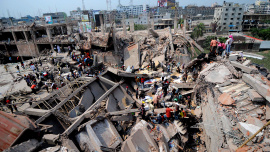
It is often said that Bengalis unite in times of disaster and celebration. The Rana Plaza collapse thirteen years ago in Savar offered a stark illustration of this truth. As news spread that an eight-storey factory building had collapsed with thousands of workers trapped beneath it, people seemed to reach the site faster than the news itself.
A vast coalition of volunteers, rescue workers, fire service personnel and day labourers abandoned their livelihoods to save the injured. The response was total. Van drivers ferried casualties to Enam Medical College Hospital, where intern doctors waited at the entrance to provide urgent care. Housewives brought home-cooked khichuri for survivors. Engineers worked alongside ordinary citizens, risking their lives in the debris. One poignant memory remains of a mosque muezzin from Manikganj who arrived at NITOR with funds collected from his village. Seeing the overwhelming support already present, he quietly approached a BILS volunteer, embarrassed by the modest size of his contribution but determined to help.
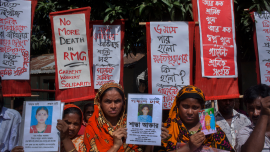
We carry countless such memories, yet they are slowly fading. The nation is now paying the price for that erosion. The collective awakening and compassion that emerged in the aftermath were not transformed into lasting change. Those entrusted with that responsibility—the state and policymakers—failed to make permanent the resolve that such a tragedy should never happen again, that no one should have to stand beside rubble crying, “Where is my child? Where is my mother? Where is my brother? Where is my sister?”
We also failed to extend the national and international cooperation that followed—through which significant improvements were made in structural and fire safety in one sector—into a broader national model. As a result, the lessons of such immense loss, collective empathy and global solidarity remained confined to a single industry and a single moment. We did not embed them in our national consciousness or build a lasting culture of workplace safety. Consequently, major industrial accidents have continued to occur, claiming lives year after year.
The pattern is tragically familiar. Thirteen firefighters died in the Chattogram container terminal explosion—an event rare in global history. Nearly eighty workers were killed in the Hashem Foods factory fire in Narayanganj, fifty-five of them children. Families could not identify their loved ones; DNA testing was needed to return remains to grieving relatives. Similar scenes unfolded in the gas lighter factory explosion in Keraniganj, where once again identification required DNA tests. In many of these disasters, one recurring factor significantly increased fatalities: locked factory gates. This was seen in Saraka Garments, Tazreen Fashions and again in Keraniganj.
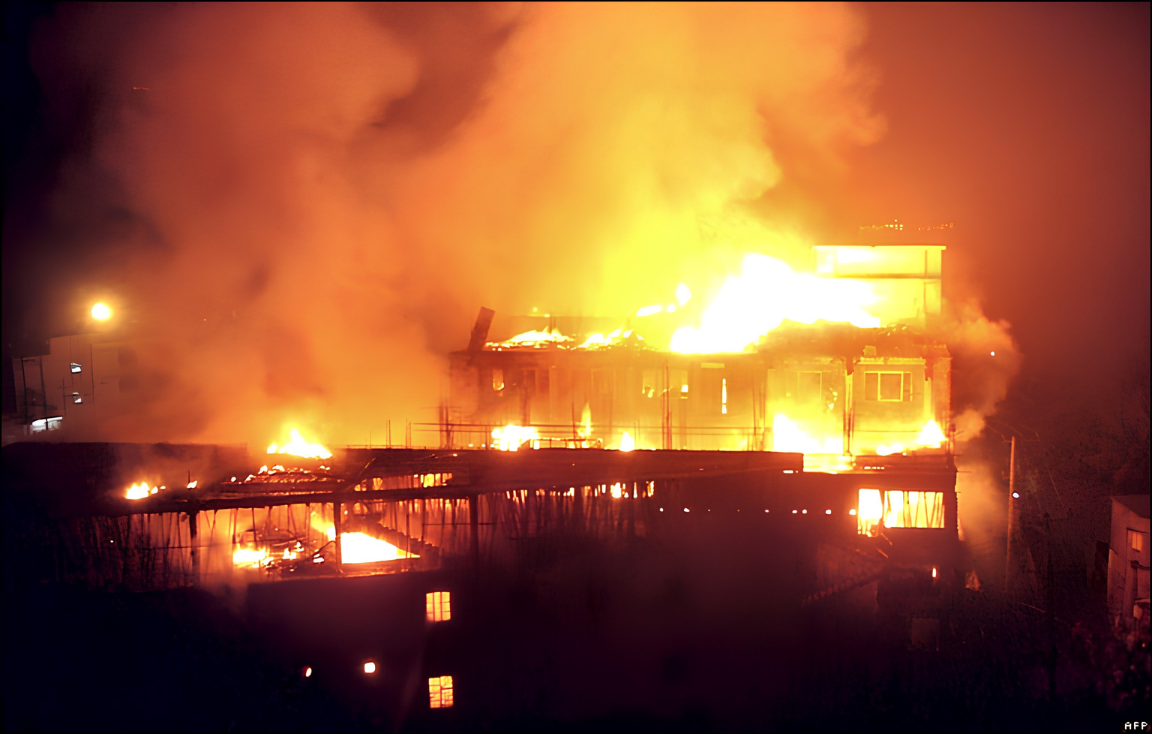
Elsewhere in the world, such catastrophes have often led to systemic change, with nations learning, rebuilding and setting new safety standards. After Rana Plaza, there was hope that Bangladesh would adopt a firm “never again” stance. The record since then tells a different story. From Rana Plaza to 2025, there have been 5,427 workplace accidents, resulting in 6,785 deaths. Industrial disasters—and workers’ coffins—have not stopped.
Why did this happen? From the outset, there was a deliberate effort to let the incident fade from public memory. Offers of international rescue assistance were declined, the scale of the tragedy was downplayed, and investigation reports—both before and after Rana Plaza—were never publicly disclosed. Had the findings from investigations into tragedies such as Spectrum been properly disclosed, greater caution could have been exercised in granting building approvals, regulating structural use, and ensuring compliance. The collapse of Rana Plaza might itself have been averted. Likewise, had the findings of the Tazreen investigation been widely disseminated, the Hashem Foods fire might well have been prevented.
When the causes of accidents and regulatory failures are transparent, people take precautions. Instead, information was suppressed, institutions moved on, and, in time, the public was made to forget.
Through the Accord on Fire and Building Safety and the Alliance for Bangladesh Worker Safety, a multinational initiative developed over several years, a model for structural, technological and fire safety was established in the ready-made garment sector, at least in larger factories. Other countries are now seeking to follow that model. Yet in Bangladesh, no meaningful effort was made to extend, formalise or legislate these standards across other industries. The issue was framed too narrowly. The collapse of Rana Plaza was often reduced to an unauthorised building with structural weaknesses. That was only part of the story. The deeper causes lay in weak enforcement of laws, ineffective regulatory systems, negligent approvals, disregard for worker safety, and the absence of workers’ rights to speak or organise. These conditions allowed workers to be forced back into a visibly cracked building, reassured by officials over loudspeakers that there was no danger.
This entrenched culture of negligence is reflected in the near absence of justice. From Tazreen Fashions to Keraniganj, the pattern remains unchanged. Only one individual—Rana—has been imprisoned. Others have faced no meaningful accountability, nor has responsibility been clearly established. This lack of consequence has fostered recklessness and indifference towards safety.
We also failed to extend the national and international cooperation that followed—through which significant improvements were made in structural and fire safety in one sector—into a broader national model. As a result, the lessons of such immense loss, collective empathy and global solidarity remained confined to a single industry and a single moment. We did not embed them in our national consciousness or build a lasting culture of workplace safety. Consequently, major industrial accidents have continued to occur, claiming lives year after year.
Justice is not only about punishment; it serves as a warning to society. That warning has not been delivered. Even where structural improvements have occurred in certain sectors, legal reform has lagged behind. In Bangladesh, the maximum penalty for death due to negligence remains four years’ imprisonment, while compensation typically ranges between BDT 200,000 and 250,000. Such minimal penalties do little to incentivise investment in safety. As one construction contractor remarked, safety equipment can cost more than the compensation paid after an accident. That stark calculation reflects a deeper systemic failure.
Without legal reform, strict enforcement and a commitment to learning from past failures, infrastructural improvements alone will not break this cycle. Escaping collective indifference is now an urgent task. Every workplace must be made safe, all workers brought under legal protection and a national database, and the right to refuse unsafe work without fear of losing employment must be guaranteed.
Participation is essential. Beyond infrastructure and technology, safety requires a framework that actively involves workers, employers and inspectors. While Rana Plaza led to the formation of safety committees, these remain largely confined to a single sector and are often ineffective. Efforts have not been scaled or sustained.
The risks are visible in places like Keraniganj, Mirpur and Bailey Road, where factories are densely embedded within residential areas. Community awareness, local government engagement and the role of elected representatives are critical. With around 85% of economic activity occurring informally, even bystanders are at risk, as seen in the Tampaco explosion.
We do not argue for closing factories; we argue for making them safe. Safety strengthens productivity, employment and local economies. The claim that safety threatens livelihoods is false. Nothing is more valuable than life, and a safe industrial zone creates more sustainable growth.
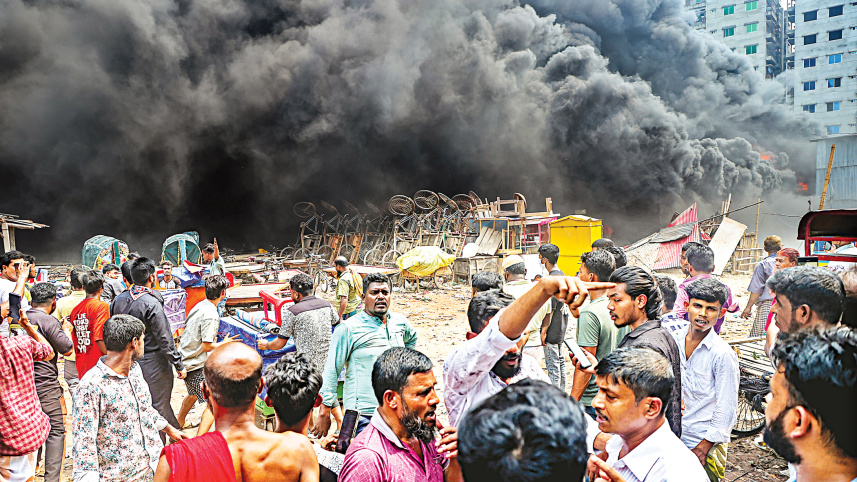
Equally important is infrastructure in industrial areas. Older zones like Tongi and Tejgaon once offered healthcare, education and dignified living. Today, in Ashulia, Narayanganj and Gazipur, millions of workers lack basic civic facilities. This worsens disasters, hinders rescue efforts, and harms physical, mental and social well-being.
Industrial production must be planned. Neglecting it is neglecting life itself. If we adopt “Safety first, safety for all” as a national principle and openly examine past accidents, we can build awareness while learning from successful reforms.
One positive outcome of Rana Plaza was compensation based on ILO Convention 121, replacing token charity. Yet it was never codified into law or expanded, and disability assessment remains weak. Many survivors continue to suffer without long-term care.
Forgetting does not heal. Our task is to turn sympathy into lasting commitment and make safe work a norm. Only then can we say we have learned—and ensure it never happens again.
Syed Sultan Uddin Ahmmed is the Executive Director of the Bangladesh Institute of Labour Studies (BILS).
Send your articles for Slow Reads to slowreads@thedailystar.net. Check out our submission guidelines for details.
Interactive / How many more lives before workplaces become safe?
Rana Plaza’s haunting echo: What has changed and what must change
Compensation falls short and fails workers, it must change
Rana Plaza, 13 years on: No justice, no memory