Compensation falls short and fails workers, it must change
In conversation with AKM Nasim, Country Programme Director at Solidarity Center Bangladesh and a former member of the Labour Reform Commission.
What provisions currently exist in Bangladesh’s labour laws and related policies regarding compensation for workers affected by industrial accidents?
The legal framework is primarily governed by the Bangladesh Labour Act, 2006, which establishes employer liability for workplace injuries and occupational diseases. On paper, workers are entitled to compensation depending on the nature of injury. In cases of death, compensation is Tk. 200,000, and for permanent total disablement Tk. 250,000. Partial disablement is calculated proportionately, while temporary disablement provides limited wage replacement for a short duration.
Supplementary mechanisms exist under the Bangladesh Labour Rules, 2015, particularly the Central Fund for export-oriented sectors. Under Rules 212–215, the fund is financed through a 0.03% levy on export orders and voluntary contributions. It provides additional benefits such as Tk. 300,000 for death or permanent disability, Tk. 200,000 in certain non-work-related cases, and up to Tk. 100,000 for loss of limb, along with support for treatment, education, and welfare initiatives.
Further support is provided under the Bangladesh Workers Welfare Foundation Rules, 2010. Rule 4 allows certain financial assistance for death or permanent disability, for medical treatment, and educational stipends for workers’ children.

In addition, the ongoing Employment Injury Scheme (EIS) Pilot introduces a more structured approach to compensation. Under this pilot, eligible workers or their dependents can apply for benefits through standardized application procedures, which include documentation of employment, injury, and medical assessment. The scheme provides monthly pension payments as income replacement, calculated based on the worker’s age and previous earnings, rather than relying solely on lump-sum compensation. It also includes provisions for disability assessment and, in some cases, rehabilitation-related support. While this represents a significant shift toward a more sustainable and rights-based model, the scheme is currently limited in scope, primarily covering the ready-made garment sector, and operates alongside existing mechanisms rather than fully replacing them.
Despite these provisions, entitlements remain limited. In most of the cases, compensation is largely one-time and capped, with no guaranteed system for long-term income replacement, structured rehabilitation, or reintegration. Medical and welfare benefits exist but are fragmented and often discretionary rather than rights-based.
In practice, how effectively are these legal provisions implemented following industrial accidents? Where do the biggest gaps lie between law and practice in delivering reparations?
In practice, implementation is weak and inconsistent. Although legal provisions establish employer liability and supplementary funds, workers face major barriers in accessing compensation.
A key gap is the inadequacy and stagnation of compensation amounts. Even when combined with Central Fund or Welfare Foundation support, payments remain insufficient to meet long-term needs. Moreover, these benefits are not always paid promptly, and delays are common.
Enforcement remains limited. Employers often underreport accidents or negotiate informal settlements below legal standards. Oversight institutions lack sufficient capacity to ensure compliance across sectors.
Procedural barriers further restrict access. Workers must navigate complex application processes for Central Fund or Welfare Foundation benefits, which require documentation, verification, and administrative approval. These processes are time-consuming and discourage claims, especially among vulnerable workers.
Additionally, most benefits under Rule 4 and Central Fund provisions are discretionary and application-based, not automatic entitlements. This creates uncertainty and unequal access.
There is also a major gap in rehabilitation. While some provisions allow treatment support or even the establishment of hospitals, there is no structured system ensuring long-term medical care, disability management, or reintegration into employment.
Overall, the system operates as a fragmented and limited safety net rather than an effective and accessible reparation mechanism.
Despite these provisions, entitlements remain limited. In most of the cases, compensation is largely one-time and capped, with no guaranteed system for long-term income replacement, structured rehabilitation, or reintegration. Medical and welfare benefits exist but are fragmented and often discretionary rather than rights-based.
How effective have past legal reforms been in addressing compensation and justice after incidents like Rana Plaza?
The Rana Plaza collapse led to significant attention and reforms, including improved safety measures, creation of the Rana Plaza Trust Fund, and establishment of the Central Fund for the garment sector.
However, these reforms have had limited structural impact. Statutory compensation under the Labour Act remains unchanged and inadequate. Much of the progress has relied on ad hoc arrangements driven by international pressure rather than systemic legal reform.
The introduction of the Employment Injury Scheme (EIS) through the 2026 amendment is a positive development. The current pilot in the garment sector covers millions of workers and provides monthly pensions as top-ups to lump-sum compensation, moving closer to international standards.
Despite this, the EIS remains limited in scope, sector-specific, and dependent on voluntary contributions. It is not yet a universal or fully institutionalized system.
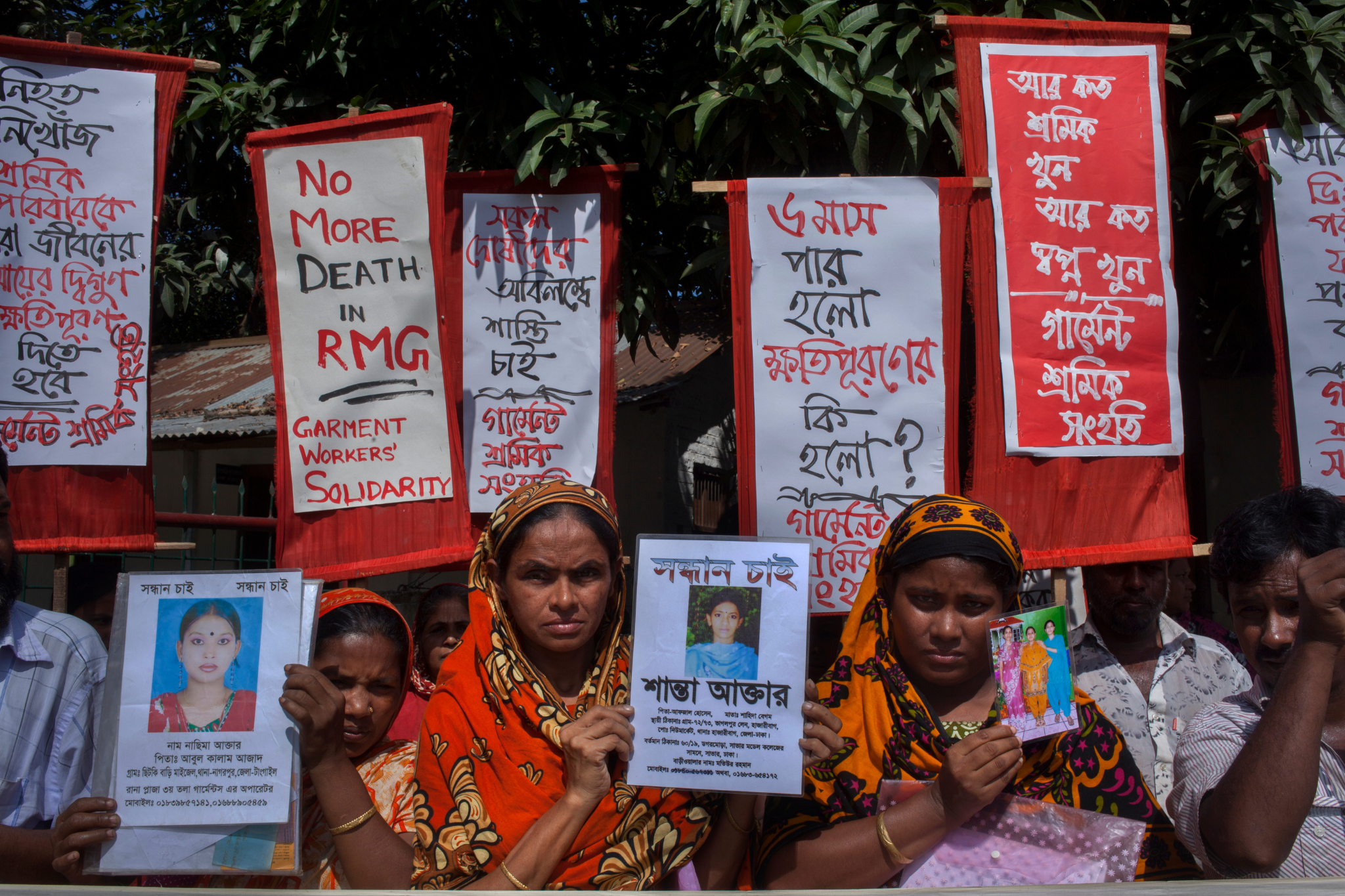
Justice outcomes also remain weak. Twelve years after Rana Plaza, multiple labour and criminal cases are still pending, with several accused absconding and trials ongoing. This reflects serious delays in accountability and highlights the limited effectiveness of legal reforms in delivering timely justice and compensation.
What role do courts and legal precedents play in shaping compensation outcomes for victims?
Courts in Bangladesh play a limited role in shaping compensation outcomes. There is a lack of strong judicial precedents that expand or clarify workers’ rights to compensation.
Most cases do not progress through formal litigation due to barriers such as cost, delay, and complexity. Workers often rely on administrative mechanisms or informal settlements instead of pursuing court remedies.
As a result, labour courts have not developed a consistent body of jurisprudence on key issues such as adequacy of compensation, employer negligence, or long-term rehabilitation. This weakens accountability and reduces the deterrent effect on employers.
The prolonged pendency of cases related to Rana Plaza further illustrates the limitations of the judicial system. Even where criminal and labour cases exist, delays undermine the effectiveness of legal remedies.
Overall, the absence of strong judicial intervention means that compensation remains largely governed by statutory minimums and administrative processes rather than evolving through rights-based legal interpretation.
What specific legal or policy reforms are needed to address these gaps and strengthen the compensation system?
A comprehensive reform approach is necessary to address existing loopholes.
First, compensation amounts under the Labour Act should be significantly increased and linked to wages, age, and loss of earning capacity, with automatic adjustment for inflation.
Second, the Employment Injury Scheme should be expanded into a universal and mandatory system covering all sectors, with sustainable financing and clear legal guarantees to ensure that benefits meet or exceed existing entitlements.
Third, enforcement mechanisms must be strengthened through improved labour inspection, strict penalties for non-compliance, and mandatory reporting of workplace accidents.
Fourth, the claims process should be simplified by creating a single, time-bound mechanism that reduces administrative burdens and removes dependence on employer certification.
Fifth, a comprehensive rehabilitation framework should be introduced, including medical care, long-term treatment, vocational training, and reintegration support.
Sixth, existing welfare mechanisms such as the Central Fund and Workers Welfare Foundation should be strengthened. Benefit limits under Rule 4 should be increased, and the discretionary nature of assistance should be replaced with clearer entitlement-based provisions.
Finally, strengthening labour courts and promoting strategic litigation can help build legal precedents, improve accountability, and reinforce a rights-based approach to compensation.
The interview was taken by Miftahul Jannat.
Send your articles for Slow Reads to slowreads@thedailystar.net. Check out our submission guidelines for details.

Interactive / How many more lives before workplaces become safe?
Rana Plaza’s haunting echo: What has changed and what must change
Not just garment factories, all workplaces must be safe
Rana Plaza, 13 years on: No justice, no memory