Who counts as a worker?
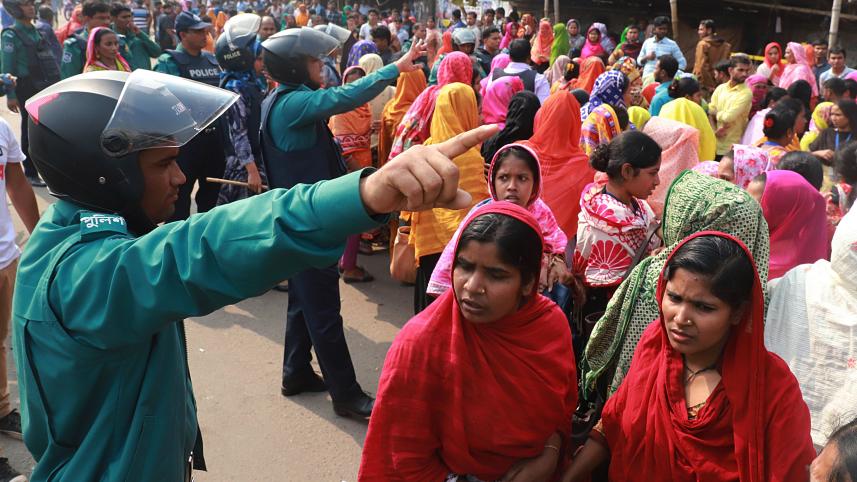
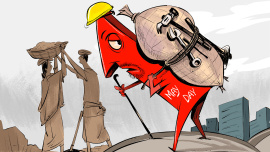
In late 2023, thousands of RMG workers mobilised into the streets of Ashulia, Gazipur, and the surrounding industrial belts. They blocked highways and confronted police with a demand for an increase in wages. During this unrest, around 300 factories were shut down. Before this protest, the monthly minimum wage was 8,300 BDT per month, announced in 2018. The workers demanded a minimum wage of Tk 23,000 per month, while the BGMEA or RMG owners proposed a minimum wage of Tk 10,400 per month. With the recommendation of the minimum wage board, the government finally raised the wage to Tk 12,500 per month. The workers’ organisations protested the amount and argued that such a meagre amount is not enough to meet the basic costs of housing, food, transport, and remittances to families in rural areas. For most workers, even after the increase, there is still a need for overtime, debt, or multiple earners in a household just to survive. This is what May Day looks like in Bangladesh. This is not a day for symbolic celebration but rather a site of ongoing struggle over the most necessary aspects of life and the terms of work.
The origin of this day traces to the Haymarket Affair of 1886 in the United States. The workers struck for an eight-hour workday and were faced with violent repression. On May 04, 1886, workers gathered in Chicago’s Haymarket area for a peaceful rally. A sudden bomb blast killed several police officers, and the officers started open firing at the protesters. Several workers were killed in the firing. Weeks later, labour leaders were arrested and executed, despite weak evidence. Three years later, in 1889, the Second International (an international federation of socialist and labour parties) declared May 1 as an International Day of Worker Solidarity. Thus, May Day was not only about reducing working hours; it was also about establishing workers as a subject, with rights, collective bargaining power, and an active role in shaping economic life. More than a century later, we explore a similar question in Bangladesh: who are the workers, and what is the framework to recognise their rights?
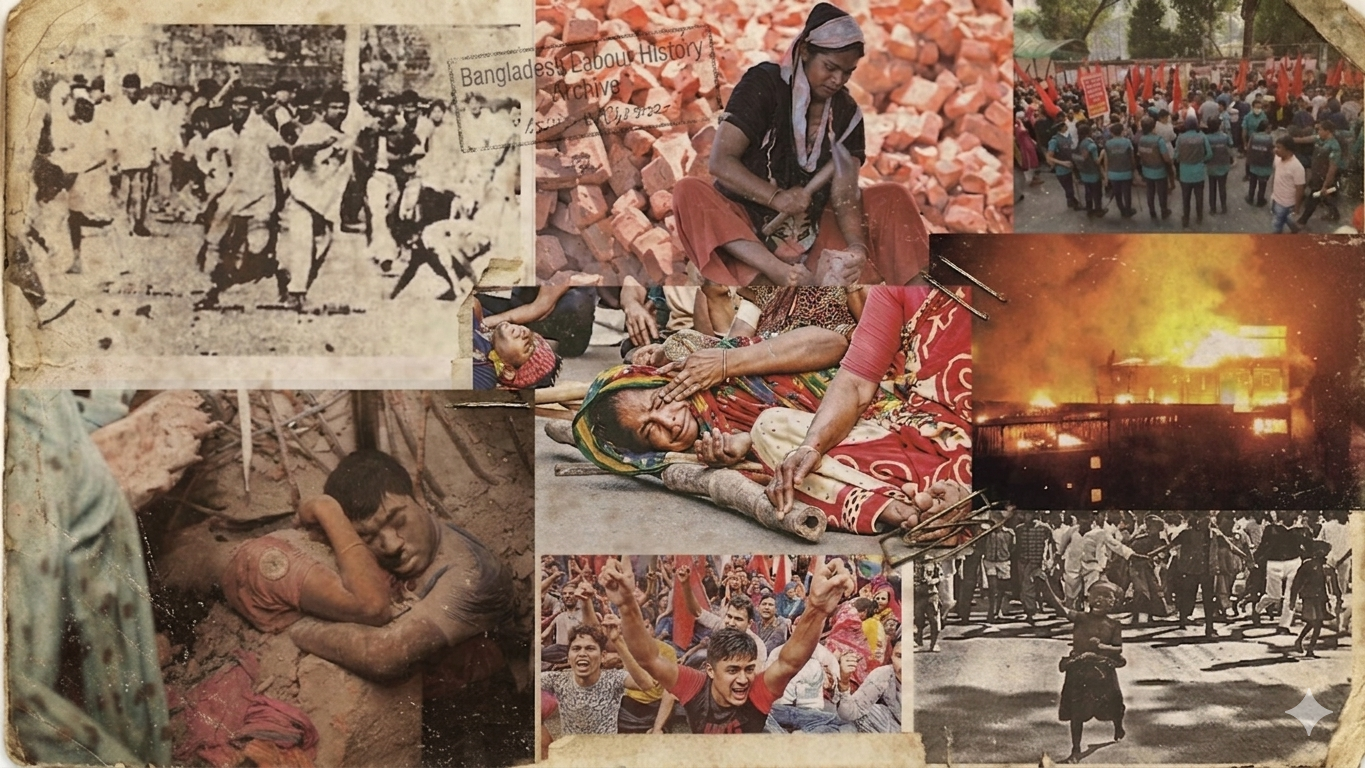
Over the past four decades, Bangladesh has built its economy based on industrialisation, which is labour-intensive. The RMG sector alone employs around four million workers, and contributes more than 80 percent of export earnings, amounting to roughly 10–12 percent of GDP. A large number of women have been brought into wage labour through the sector and play a significant role in poverty reduction. Yet, the success is met with persistent structural conflicts. Wages remain significantly low compared to living costs, safety measures in the workplace have been inadequate, and unionisation is highly constrained.
Though trade unions are legally permitted, their formation requires strict guidelines. This includes a minimum membership threshold and approval from the administration. This results in a low density of unions, and even where unions exist, their autonomy is highly compromised. Many of these unions are reported to be influenced by factory management or political actors. Rather than functioning as a bargaining actor between labour and capital, unions function as intermediaries: negotiating on behalf of powerful actors of the industry. This emerges as a diffused form of collective bargaining, one which is present theoretically, but limited in its capacity to redistribute power. While doing my M. Phil's fieldwork on collective bargaining, a worker was talking about how he was suspended from his factory without any prior notice. His fault was refusing to work on heavy machinery on a day when he was ill. The role of his existing union was to defend the management’s decision. The worker has repeatedly requested the union to talk to the management about his suspension, which has fallen on deaf ears. Thus, the union functioned not as a collective bargaining agent, but as an intermediary negotiating between two parties.
This constrained framework also applies to the large sector functioning under this formal economy, which is less discussed. According to the estimates of the Bangladesh Bureau of Statistics, almost 84–85 percent of the country’s workforce, more than 50 million people, are engaged in informal employment. In the agriculture sector, informality exceeds 90 percent. In other sectors such as construction, transport, and retail, this ranges from 70 to 90 percent. However, this 84–85 percent of the informal workforce accounts for 50 to 60 percent of GDP. Yet, this population remains largely outside taxation, labour regulations, and social protection schemes. This workforce is not a marginal or residual fraction; it is the dominant mode in the country through which labour and work are organised.
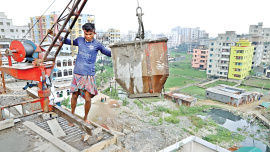
The technician may work by climbing onto narrow ledges without any safety harness and complete the work without any institutional or professional training or backup. If any accident occurs in this position, there is no insurance coverage, enforceable laws, or any other institutional way to seek redress. This pattern exists far beyond technical services. Workers in the construction sector also negotiate wages based on location, time, and availability of workers. In the domestic household work, the wages vary across regions, along with the rules. None of these has any guarantee of continuity or compensation for injury, at least not at the institutional level.
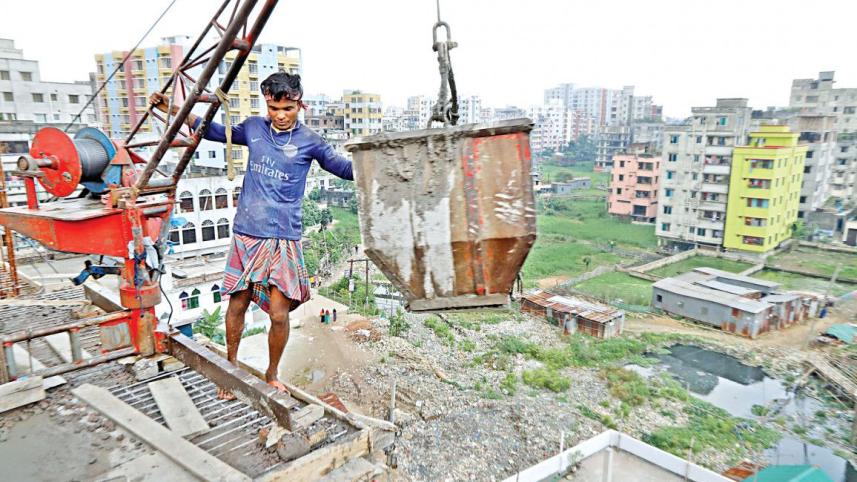
Let’s try to look into some examples to understand what this means in practice. Supposedly, a technician is called to install an air conditioner in an office or home. The technicians are normally called through informal networks, and the price is negotiated on the spot. It could be Tk 1,500 or Tk 3,500 depending on urgency, location, and perceived ability to pay. In this situation, there exists no standardised rate, no formal contract, no safeguards, and no regulatory oversight. The technician may work by climbing onto narrow ledges without any safety harness and complete the work without any institutional or professional training or backup. If any accident occurs in this position, there is no insurance coverage, enforceable laws, or any other institutional way to seek redress.
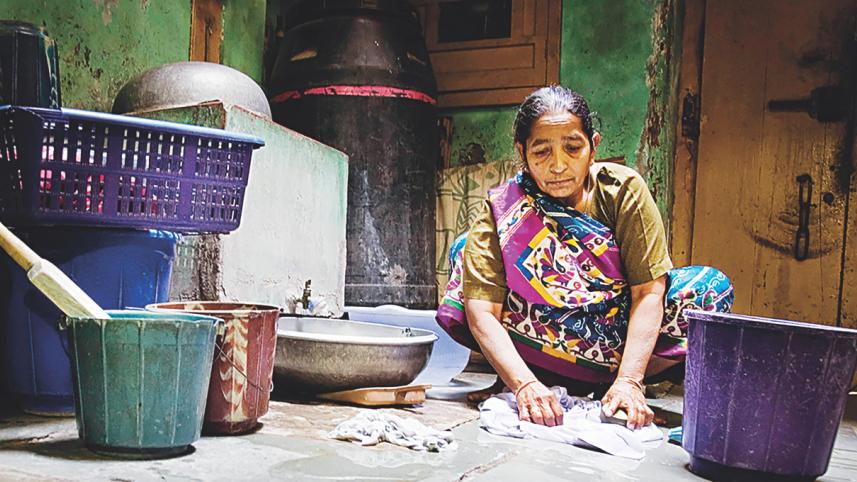
This pattern exists far beyond technical services. Workers in the construction sector also negotiate wages based on location, time, and availability of workers. In the domestic household work, the wages vary across regions, along with the rules. None of these has any guarantee of continuity or compensation for injury, at least not at the institutional level. In the rapidly increasing ridesharing industry, the working hours, leave policies, and wages are also determined mostly by the platform. This also varies in the case of maintenance expenses, job security, commissions, and other labour protections. These platform workers act under algorithmic pressure, with per-delivery payment, and have limited backup during accidents or disputes.
These are not isolated cases, and they follow a pattern. This is the dominant pattern of labour relations in Bangladesh. The work is organised through individualised, unregulated negotiations rather than collective, rule-based bargaining. This brings us to a theoretical debate. To understand the informal economy, dualist scholars speak about the residual conditions, i.e., the formal economy is inadequate to absorb workers in total, and thus, the informal economy emerges where these workers are incorporated. However, structuralist scholars like Alejandro Portes have argued that informality is not simply a leftover; capitalist organisations need this for firms and economies to reduce costs, bypass regulations, and maintain flexibility. In Bangladesh, from the RMG sector, the wide presence of subcontracting to all these informal sectors points towards the structural conditions. The insight of Karl Polanyi is vital in other senses. Polanyi argues that markets are always embedded in social and political institutions. Thus, they do not function naturally; rather they are constructed, regulated, and often selectively enforced.
Global case studies provide alternative trajectories to address informality. In Vietnam, labour-intensive industrialisation was complemented by stronger state control, better enforcement of labour regulations, and investments in skills. This has resulted in a gradual shift towards higher-value production. Brazil has addressed the issues by simplifying the tax and registration system, most importantly, Simples Nacional. This has enabled small enterprises to enter the formal economy without complex, prohibitive compliance costs.
This selective enforcement is critical in the context of Bangladesh. Labour laws exist and go through amendments. However, their application is uneven. There is greater regulatory oversight in the export-oriented sectors, often due to international pressure, while most of the domestic-centred economy remains unregulated. The consequences of these unregulated sectors extend beyond worker vulnerability. Informal enterprises are less productive in most cases and have less access to credit, technology, and formal institutions. This limits the ability to scale and innovate. At the state level, there is a significant loss of tax revenue and uneven competition between formal firms and unregulated actors. This brings in an equilibrium where short-term employment is sustained but long-term economic transformation is constrained.
Global case studies provide alternative trajectories to address informality. In Vietnam, labour-intensive industrialisation was complemented by stronger state control, better enforcement of labour regulations, and investments in skills. This has resulted in a gradual shift towards higher-value production. Brazil has addressed the issues by simplifying the tax and registration system, most importantly, Simples Nacional. This has enabled small enterprises to enter the formal economy without complex, prohibitive compliance costs.
In India, welfare boards are formed for specific sectors; for example, construction workers are provided with pensions, healthcare, and accident insurance. This fund is financed through industry levies and offers a model for extending social protection to informal workers. In advanced economies such as Spain and the United Kingdom, legal reforms and court rulings have started to bring labour protection to gig workers. The classifications of gig workers as independent contractors are challenged with this, and the platforms are brought under greater scrutiny and accountability. These examples do not attempt to eliminate or make invisible informality. Rather, they bring informality to a certain extent of institutionalisation within the frameworks of rights, standards, and accountability. For Bangladesh, there lies a dual and simultaneous challenge.
In the short term, there should be immediate protections and enforceable safety standards for different sectors (e.g., electrical, construction, installation services), a compulsory insurance mechanism for workers, and certain standardised service rate guidelines to reduce extreme wage fluctuations in common urban services. In the immediate future, there should be a system of recognition, such as a simplified registration process for informal workers, digitally assigned benefits to avoid patronage, and city-level associations or cooperatives to bring a collective voice outside traditional union structures. For the long term, there should be goals for a broader transformation of labour regimes through the expansion of universal social protection, the development of sectoral bargaining frameworks beyond factories, and the revision of labour laws at regular intervals.
May Day, thus, needs to move beyond symbolic celebration. Most workers are not permanent factory employees, nor will a major portion be part of these export-oriented factories. As a result, along with better enforcement and recognition of trade unions in the factories, the definition of labour needs to be revisited. Labour cannot be defined just as employment within industry, but should incorporate the full spectrum of work happening in economic life. May Day gives us a vital reminder in this regard. As capital moves beyond traditional factory settings, with newer meanings through apps, platforms, and technology, labour and workers need their definitions to be extended.
Ishtiaq Mohammod Fakhruddin is a Senior Lecturer at the Department of Sociology, East West University. He can be reached at ishtiaqjamikds@gmail.com
Send your articles for Slow Reads to slowreads@thedailystar.net. Check out our submission guidelines for details.
Interactive: Bangladesh Labour History · 1881 - 2026 / Fight for Justice
In conversation with Richard Wolff / Can workers seize the opportunity as Western capitalism declines?
The expansion of wage labour and the message of May Day
A closer look at Bangladesh’s new labour law: Gains and gaps
Fixing a labour justice system that fails workers

Servants of an algorithm: May Day and the fight for the South Asian digital working class
Beyond reform: Securing dignity for Bangladesh’s workers