


The wake of war: Costs for civilisation

As a fragile ceasefire unfolds, the costs of the catastrophic war in Iran cannot be ignored. It doesn’t end with a ceasefire against a turbulent backdrop; our collective understanding needs to expand to understanding the impact of war, in every sphere of life.
Destruction of memory
While wars generate profits for some sectors of the global economy, they impose costs that extend far beyond markets — including the erasure of history itself. Major damage to UNESCO heritage sites in Iran, such as the Golestan Palace in Tehran, speaks to a broader and often unseen cost of war that goes beyond oil markets, financial speculation, trade routes, power politics, and defense contractors. When cultural landmarks lie in ruins, something fundamental is lost. Wars destroy more than infrastructure and economies; they also erase memory. A world in which historic sites disappear is a world pushed to the brink of becoming ahistorical — losing its thread, its stories, and ultimately its sense of identity.
Environmental damage for generations to come
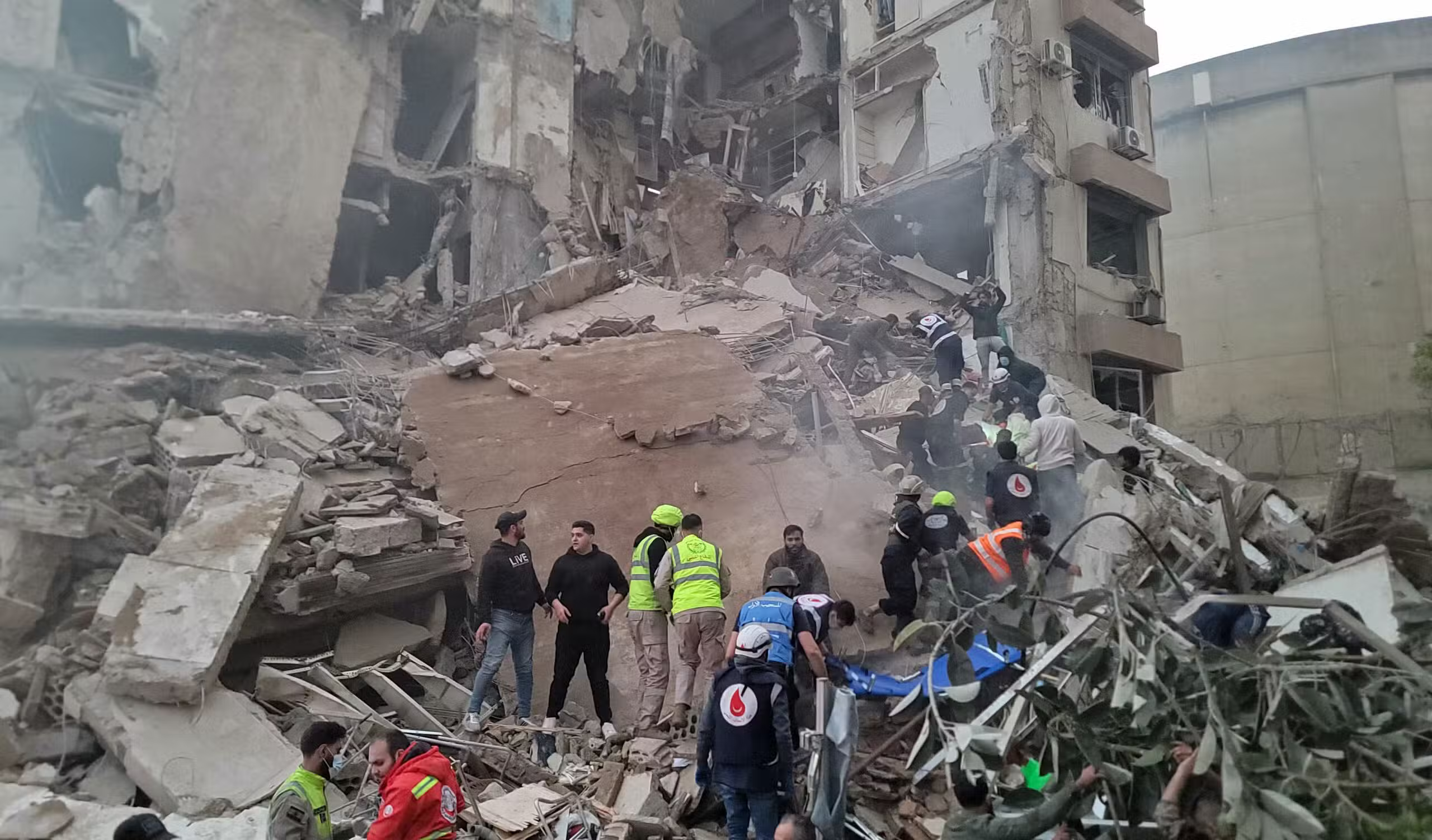
The real cost of war is ecological and generational. The wars of the twenty-first century do not merely redraw borders; they rewrite landscapes. While Lebanon has received far less attention in international media, the environmental damage in southern Lebanon is significant. Israel’s reported aerial spraying of glyphosate herbicide over farmland near the border has raised concerns about long-term consequences for soil health and food safety. Laboratory tests reportedly found concentrations 20–30 times higher than typical agricultural use, prompting fears of lasting soil degradation and crop contamination.
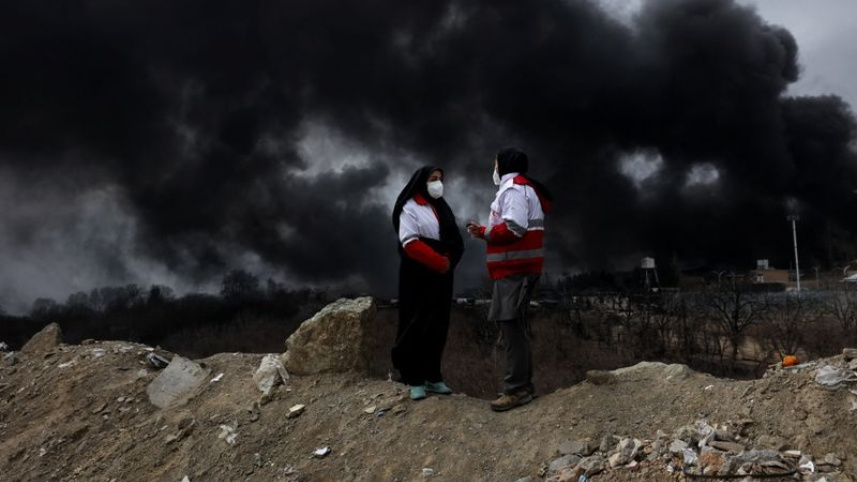
In Iran, after airstrikes hit oil depots and refineries around Tehran, massive fires released thick smoke and hydrocarbons into the atmosphere. When rain fell through this polluted air, it returned to the ground as what observers described as “black rain” — precipitation contaminated with soot, petroleum compounds, and other toxic chemicals. Such fallout occurs when burning oil infrastructure releases hydrocarbons, sulfur oxides, nitrogen compounds, and particulate soot that later settle back to earth through rainfall. Environmental researchers warn that pollutants from bombed oil facilities can linger in ecosystems for decades, contaminating soil and water supplies. The damage is historically comparable to the environmental aftermath of the 1991 Gulf War oil fires, which scarred the region’s environment for years. These costs rarely appear in the financial balance sheets of war, yet they shape the health of ecosystems and communities for generations.
Conflict also activates an economic ecosystem: defense contractors replenishing missile stockpiles, energy producers benefiting from price spikes, commodity traders exploiting market volatility, and insurers charging higher premiums for riskier shipping routes. War may be devastating for societies, but for certain sectors of the global economy it remains highly profitable.
Displacement and trauma for generations
One of the most enduring consequences of war is displacement. The conflict will likely trigger prolonged waves of precarious migration in a world that is already increasingly hostile to refugees. Across much of the West, immigration policies have tightened and political rhetoric around migration has hardened, leaving those fleeing conflict with fewer safe destinations. War therefore produces not only physical destruction but also long chains of uncertainty for those forced to leave their homes, and those who are still losing family members in Gaza and Lebanon, as we speak.
Early signs of outward movement are already visible. Around 1,300 people per day are reportedly crossing into Turkey seeking refuge, while Armenia and Azerbaijan together have received roughly 1,500 evacuees from Iran. These numbers remain small compared with major refugee crises, but they may signal the beginning of broader displacement. Turkey already hosts millions of refugees and has tightened its borders while preparing temporary shelters for possible Iranian arrivals. European policymakers are also discussing contingency plans, warning that a large refugee flow from Iran could be unprecedented given the country’s population of nearly 90 million. Even if only a fraction of that population were displaced, it could produce one of the largest refugee crises in modern history.
The ledger of war also includes psychological wounds that last long after the fighting ends. Studies suggest that nearly half of children living in conflict zones show signs of toxic stress. Among soldiers, the burden is similarly profound: data from the US Department of Veterans Affairs suggests that between 11 and 20 percent of veterans experience post-traumatic stress disorder, and suicide has become one of the most troubling long-term consequences of recent wars. The emotional aftermath does not stop with those who directly experience conflict. Studies show that children of trauma survivors often exhibit higher rates of anxiety and depression, carrying the psychological imprint of war into the next generation.
Bills for future generations
The United States is not only spending money on the war; it is also borrowing to finance it, creating long-term consequences that will extend far beyond the battlefield. Early estimates presented to Congress suggested that the first days of the conflict could cost more than $10 billion. Historically, the United States financed wars through higher taxes or the issuance of war bonds. In recent decades, however, military campaigns have increasingly been funded through borrowing. Economists studying the post-9/11 conflicts note that the wars in Iraq and Afghanistan were largely financed through government debt rather than taxation, shifting the burden onto future taxpayers. To fund military spending, the government issues Treasury securities to investors. This is a war on credit — with a bill that future generations will be forced to pay.
The credit that finances modern war does not come from a hidden source. It comes from investors across the world who purchase US Treasury bonds — from pension funds and banks to foreign governments and central banks. In effect, the war is financed through global capital markets, with the expectation that future taxpayers will repay the debt, along with decades of interest.
The Iraq War alone cost about $1.9 trillion in direct congressional spending, while the combined wars in Iraq, Afghanistan, and related conflicts have been estimated at roughly $8 trillion overall. Much of this financial burden will continue for decades through veterans’ care and interest payments on war debt. In this sense, the true cost of war is rarely paid during the war itself. Instead, it accumulates over time, expanding public debt and increasing interest obligations. The United States already spends around $1 trillion annually in interest on its national debt, and additional wartime borrowing will only add to those future payments.
Profits from war
So why does war persist despite the enormous costs it imposes? Because war also generates landslide profits for a handful of powerful actors.
Conflict also activates an economic ecosystem: defense contractors replenishing missile stockpiles, energy producers benefiting from price spikes, commodity traders exploiting market volatility, and insurers charging higher premiums for riskier shipping routes. War may be devastating for societies, but for certain sectors of the global economy it remains highly profitable.
While wars generate profits for some sectors of the global economy, they impose costs that extend far beyond markets — including the erasure of history itself. Major damage to UNESCO heritage sites in Iran, such as the Golestan Palace in Tehran, speaks to a broader and often unseen cost of war that goes beyond oil markets, financial speculation, trade routes, power politics, and defense contractors. When cultural landmarks lie in ruins, something fundamental is lost.
If war produces immense human and environmental costs, it also produces economic winners. In the days following the strikes on Iran, shares of several defense companies rose sharply. Stock in RTX Corporation climbed about four to five percent, reflecting expectations of increased demand for its Patriot air-defense systems, missiles, and radar technologies widely used in Middle Eastern conflicts. Shares of Northrop Grumman rose roughly five to six percent as investors anticipated greater demand for missile defense systems and stealth bombers. Meanwhile, Palantir Technologies saw its stock rise around 6 percent, driven by expectations that battlefield intelligence and data-analysis platforms will play a larger role in modern warfare.
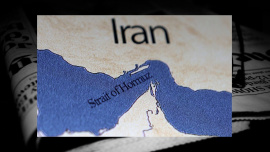
These movements reflect a broader pattern in the global war economy. The world’s top 100 defense companies generated roughly $679 billion in arms revenue in recent years, and rising military spending continues to push their valuations upward. Drone and counter-drone firms have also attracted investor attention as militaries increasingly rely on unmanned systems. Energy markets reacted strongly as well. The conflict threatens the Strait of Hormuz, through which roughly 20 percent of global oil trade passes, soaring crude prices and benefiting producers and commodity traders.
But as we are witnessing, it is only some powerful actors who profit. Airlines, tourism companies, and regional markets have already lost billions in market value as geopolitical risk rises. Countries dependent on oil and gas imports, particularly those with fragile economies — such as Bangladesh — are suffering short-term consequences, which will impact daily lives in the long-term. Wars do not merely redraw borders or shift geopolitical power; they reshape landscapes, burden economies, and fracture collective memory. In the calculus of war, the gains are concentrated, but the losses — financial, environmental, cultural, and human — are shared by the world.
Sarzah Yeasmin is a public policy analyst and a graduate of Harvard University.
Send your articles for Slow Reads to slowreads@thedailystar.net. Check out our submission guidelines for details.
The Indo-Pacific at a crossroads: What it means for Bangladesh
Could the Teesta redraw the map of India-Bangladesh diplomacy?
Iran’s China moment? From isolation to regional hegemony

Makkah Pact: The geopolitics beyond Islamic solidarity
Myanmar’s deteriorating crisis and the political future of the Rohingya
Bangladesh between India and China: The dilemma of defence diversification
What Bangladesh should ask before joining the Makkah Pact

Nepal’s difficult passage: Political change meets ecological crisis
BRICS at 20: Why the New Delhi Summit matters to the Global South
