


Myanmar’s recent election and what it means for Bangladesh
Between late December 2025 and late January 2026, Myanmar held its first general election since the military junta, officially the State Administration Council (SAC), seized power in its February 2021 coup. Conducted over three phases on December 28, January 11, and January 25, the election was immediately and widely condemned by international bodies, including the United Nations, Human Rights Watch, and the US State Department, as neither free nor fair. The result was as predictable as it was troubling: the military’s long-standing proxy, the Union Solidarity and Development Party (USDP), swept to a landslide victory, winning 89 of the first 102 declared seats in the initial phase alone.
For readers in Dhaka, this might seem like a distant internal affair, the latest chapter in Myanmar’s tragic post-coup story. It is not. The outcomes of Myanmar’s political theatre carry direct, concrete, and urgent implications for Bangladesh’s foreign policy, its security posture, and its ability to resolve the most pressing humanitarian burden it carries: the presence of over 1.18 million Rohingya refugees on its soil. Understanding Myanmar’s election, therefore, is not merely an exercise in regional studies. It is an exercise in strategic self-awareness.
A political landscape designed for one outcome
To understand why Myanmar’s election matters to Bangladesh, one must first understand what the election was and was not. It was not a democratic exercise in the conventional sense. The National League for Democracy (NLD), which won 88 percent of national parliamentary seats in the last free election in 2020, was dissolved by the junta in 2023 after refusing to re-register under new political party laws widely regarded as designed to exclude genuine opposition. Along with the NLD, 38 other parties were disbanded. Aung San Suu Kyi, the civilian leader who commanded that mandate in 2020, remains imprisoned.
A new legal architecture was erected to ensure that only compliant parties could compete. New legislation required parties to possess at least USD 35,000 in funds, maintain 100,000 members (up from 1,000 previously), and contest half of all constituencies — requirements tailor-made to favour the USDP. The junta also enacted a law imposing the death penalty for any act deemed to “disrupt” the electoral process, and rolled out a sweeping cyber security law criminalising VPN use and the sharing of information from banned social media platforms.
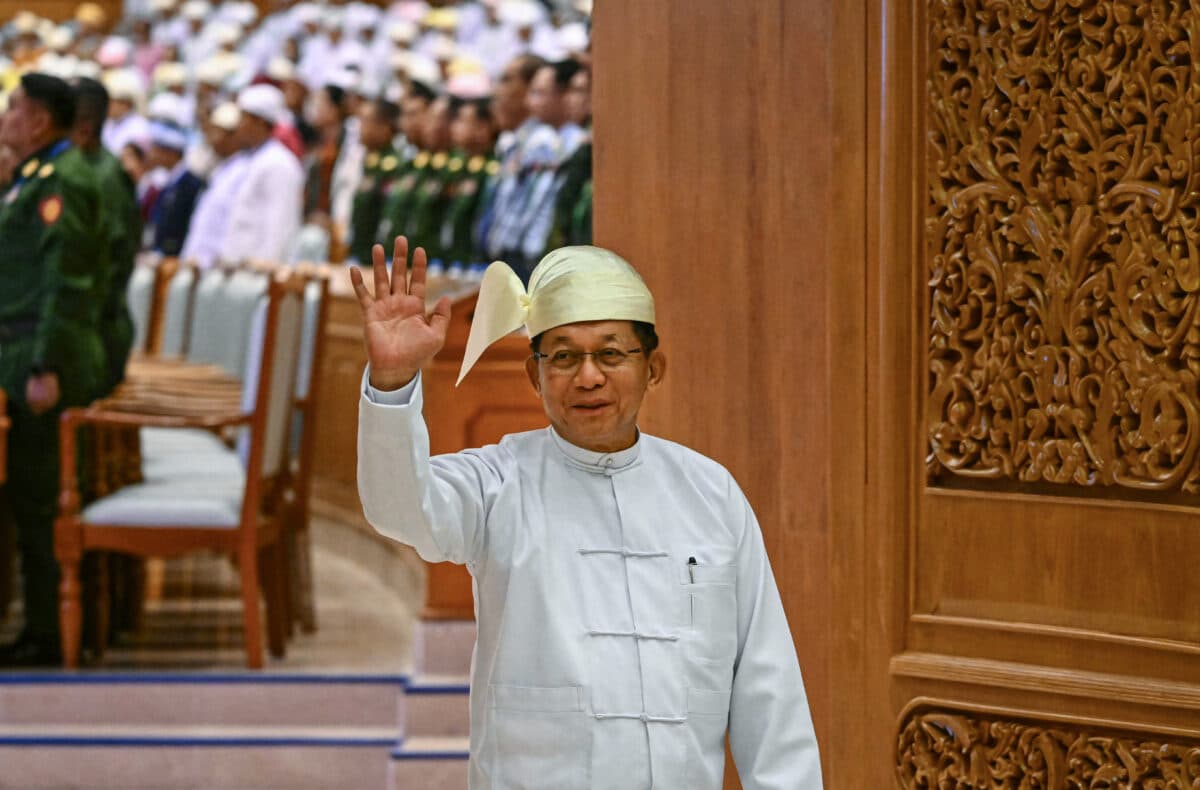
In this suffocating political environment, nearly 60 parties registered to compete, but only nine planned to contest nationwide, and most were either small or military-aligned. Independent analysts at the Asian Network for Free Elections and the Special Advisory Council for Myanmar concluded in their joint April 2026 report, pointedly titled Old Generals, New Clothes, that the elections “comprehensively failed to meet internationally recognised standards for genuine elections.” In March 2026, Senior General Min Aung Hlaing stepped down as commander-in-chief to position himself as president of a nominally civilian government—a repackaging of military rule, not a departure from it. The International Crisis Group has since described this transition as a shift to “pseudo-civilian rule” that will do nothing to change the fundamental dynamics of conflict inside Myanmar.
he government must simultaneously maintain a working relationship with the junta for any prospect of repatriation diplomacy, engage China to preserve economic ties, coordinate with Western partners and UN agencies to keep the Rohingya issue alive on the global agenda, and manage growing domestic anti-Rohingya sentiment in communities around Cox’s Bazar that have absorbed extraordinary strain. Dhaka’s Myanmar policy can be characterised as an “exhaustion trap”, where Bangladesh keeps managing crisis fatigue rather than changing strategy, which threatens to become a permanent condition if no structural breakthrough occurs.
Potential outcomes and their implications for Bangladesh
The consolidation of military rule in Myanmar under a thin civilian veneer—what analysts are now calling “authoritarian upgrading”—presents Bangladesh with a multi-dimensional strategic challenge. The most immediate implication is the near-permanent suspension of meaningful Rohingya repatriation. As the Crisis Group has noted, conditions in Rakhine State “offer no pathway to safe, voluntary, and dignified repatriation for Rohingya in the medium term.” Within Myanmar, the Arakan Army, an ethnic Rakhine insurgent group, has made substantial territorial gains in Rakhine State, creating a complex and contested environment in which neither the junta nor the Arakan Army has demonstrated political will to guarantee Rohingya rights, citizenship, or safety. No major political force in Myanmar, whether aligned with the junta or opposed to it, has articulated any serious vision for Rohingya reintegration.
For Bangladesh, which by January 2026 was hosting 1,182,755 registered Rohingya refugees, this is not an abstract concern. The 2025–26 Joint Response Plan sought $934.5 million in its first year to assist 1.48 million people. Global donor fatigue is already undermining this effort, with international attention and funding shifting towards other crises in Ukraine, Gaza, and the Gulf. The International Criminal Court issued an arrest warrant against Min Aung Hlaing in November 2024 for crimes against the Rohingya; yet his political ascent since then signals the international community’s limited capacity to translate legal accountability into practical pressure.
Another implication flows from the strategic footprint of China. Beijing has deepened its engagement with the Myanmar junta, and by late 2025 had effectively concluded that the military was the only force capable of maintaining even minimal stability. China’s primary interest in Rakhine State centres on its infrastructure and energy corridor investments that form a critical part of the Belt and Road Initiative. This reality constrains Bangladesh’s diplomatic room for manoeuvre. Dhaka cannot afford to alienate Beijing, its largest trading partner and a key development financier.
Historical ties: A relationship defined by asymmetry and crisis
Bangladesh and Myanmar share a 271-kilometre border and a relationship shaped as much by geography as by tragedy. The modern history of this bilateral relationship is, to a significant degree, the history of the Rohingya crisis. The first major wave of Rohingya refugees entered Bangladesh in 1978, followed by another in 1991–92. Notably, Ziaur Rahman and Khaleda Zia oversaw the repatriation of a significant number of Rohingya during their respective tenures. The current Bangladesh Nationalist Party government, led by their son, Tarique Rahman, has cited this experience as evidence that sustained diplomatic engagement with Myanmar can produce results.
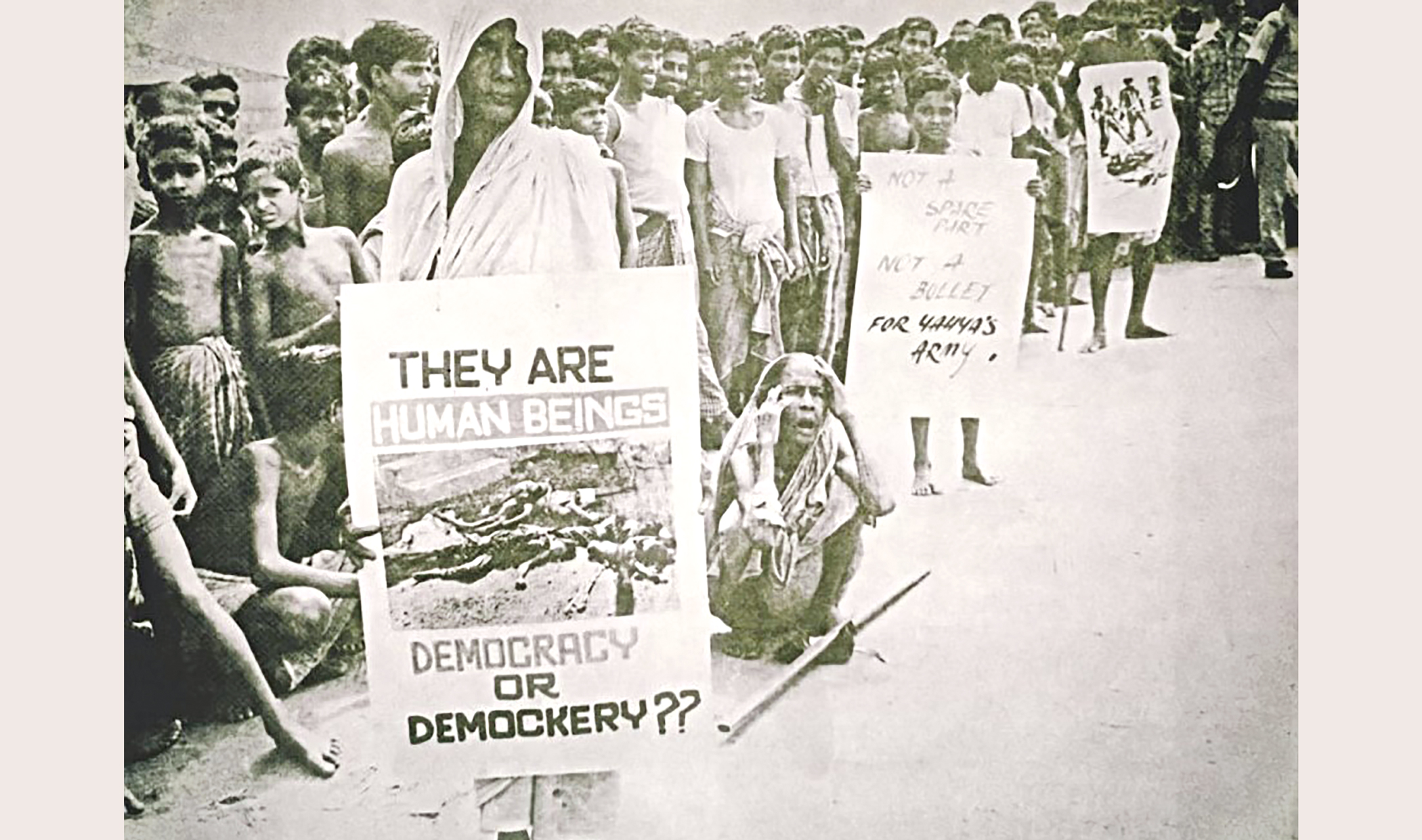
However, the scale and severity of the 2017 crisis, when a brutal military crackdown drove nearly a million Rohingya into Bangladesh in a matter of weeks, was unprecedented. Bangladesh has since attempted multiple rounds of repatriation negotiations, including agreements in 2018 and 2019 that collapsed entirely because Rohingya refugees refused to return without guarantees of safety, citizenship, and dignity that Myanmar was unwilling to provide. This history reveals a structural asymmetry: Bangladesh has far greater urgency to resolve the crisis than Myanmar has incentive to cooperate.
For Bangladesh, which by January 2026 was hosting 1,182,755 registered Rohingya refugees, this is not an abstract concern. The 2025–26 Joint Response Plan sought $934.5 million in its first year to assist 1.48 million people. Global donor fatigue is already undermining this effort, with international attention and funding shifting towards other crises in Ukraine, Gaza, and the Gulf. The International Criminal Court issued an arrest warrant against Min Aung Hlaing in November 2024 for crimes against the Rohingya; yet his political ascent since then signals the international community’s limited capacity to translate legal accountability into practical pressure.
Beyond the refugee issue, Bangladesh and Myanmar have shared economic interests, including trade linkages through Cox’s Bazar and the Teknaf–Maungdaw corridor, as well as the broader potential for connectivity within the Bay of Bengal region. But the ongoing conflict in Myanmar has effectively frozen these opportunities. Bangladesh’s ambitions to position itself within larger Bay of Bengal and Indo-Pacific frameworks depend, at least partly, on a stable eastern neighbourhood—a stability that Myanmar’s political dysfunction comprehensively denies.
Challenges and opportunities for Bangladesh’s foreign policy
Bangladesh’s new BNP-led government, which came to power following the country’s own February 2026 election, has inherited a complex foreign policy landscape shaped in part by Myanmar’s disorder. The challenges are formidable. The government must simultaneously maintain a working relationship with the junta for any prospect of repatriation diplomacy, engage China to preserve economic ties, coordinate with Western partners and UN agencies to keep the Rohingya issue alive on the global agenda, and manage growing domestic anti-Rohingya sentiment in communities around Cox’s Bazar that have absorbed extraordinary strain.
Dhaka’s Myanmar policy can be characterised as an “exhaustion trap”, where Bangladesh keeps managing crisis fatigue rather than changing strategy, which threatens to become a permanent condition if no structural breakthrough occurs.
Yet there are also carefully calibrated opportunities. The BNP’s historical record of successful repatriations provides political legitimacy for renewed engagement. Bangladesh’s legal advocacy at the International Court of Justice, alongside The Gambia’s genocide case against Myanmar, offers a track of principled diplomacy that strengthens Dhaka’s moral standing internationally.
The Arakan Army’s growing control over parts of Rakhine State creates a new and unconventional interlocutor that Bangladesh could engage, cautiously and without formal recognition, to discuss humanitarian access and eventually repatriation conditions. The United States remains the single largest provider of humanitarian assistance for the Rohingya, having contributed nearly $2.4 billion since 2017, and Washington’s strategic competition with Beijing means it has incentives to keep Bangladesh diplomatically engaged and well resourced.
A new legal architecture was erected to ensure that only compliant parties could compete. New legislation required parties to possess at least USD 35,000 in funds, maintain 100,000 members (up from 1,000 previously), and contest half of all constituencies — requirements tailor-made to favour the USDP. The junta also enacted a law imposing the death penalty for any act deemed to “disrupt” the electoral process, and rolled out a sweeping cyber security law criminalising VPN use and the sharing of information from banned social media platforms.
The risk, however, is that without a coherent long-term strategy, Bangladesh may find itself cycling through the same diplomatic gestures—bilateral talks, multilateral conferences, and repatriation announcements—that go nowhere, while the structural conditions in Myanmar remain unchanged.
Navigating a neighbourhood in crisis
Myanmar’s 2025–26 election was, at its core, not a democratic transition but a political manoeuvre—an attempt by a military establishment to clothe authoritarian continuity in the legitimacy of electoral procedure. The “Old Generals, New Clothes” framing offered by election observers captures this dynamic with uncomfortable precision. Min Aung Hlaing’s likely ascent to the presidency changes the façade of power in Naypyidaw without altering its substance.
For Bangladesh, the sobering takeaway is this: the consolidation of junta control under a civilian veneer removes even the theoretical possibility of a genuine democratic transition in Myanmar that might create conditions for Rohingya return. This is not merely a humanitarian issue; it is a strategic one. As foreign policy analysts have observed, Bangladesh’s aspirations for regional integration, economic connectivity, and middle-power diplomacy are all complicated by a fractured state on its south-eastern border.
The new government faces a test of strategic imagination. Managing the Rohingya crisis with dignity and sustainability will require moving beyond repatriation as the only diplomatic instrument, investing in Rohingya human development within Bangladesh, pursuing multilateral legal accountability, and finding pragmatic but principled channels to engage the emerging power dynamics inside Rakhine State. Most crucially, it will require recognising that Myanmar’s hollow election has not resolved the country’s crisis; it has merely institutionalised it. And in a region where instability travels, Bangladesh cannot afford to treat that institutionalisation as somebody else’s problem.
Md Nahiyan Shajid Khan is a Research Officer at the Bangladesh Institute of International and Strategic Studies (BIISS).
Send your articles for Slow Reads to slowreads@thedailystar.net. Check out our submission guidelines for details.

The Indo-Pacific at a crossroads: What it means for Bangladesh
Could the Teesta redraw the map of India-Bangladesh diplomacy?

Iran’s China moment? From isolation to regional hegemony

Makkah Pact: The geopolitics beyond Islamic solidarity
Myanmar’s deteriorating crisis and the political future of the Rohingya
Bangladesh between India and China: The dilemma of defence diversification
What Bangladesh should ask before joining the Makkah Pact

Nepal’s difficult passage: Political change meets ecological crisis

BRICS at 20: Why the New Delhi Summit matters to the Global South
