Diplomacy as deception: How war on Iran was made inevitable

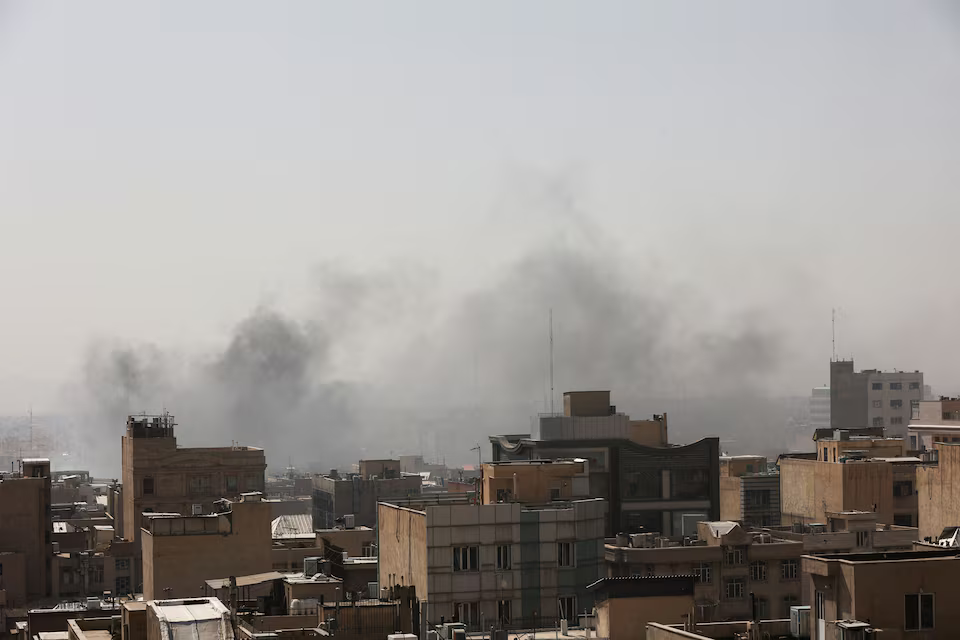
The explosions that shook Tehran, Isfahan, Qom, Karaj, Tabriz, and Kermanshah in the early hours of Saturday morning arrived with an abundance of warning. The US-Israeli strikes on Iran, confirmed by President Trump as "major combat operations" under what is codenamed by the US as "Operation Epic Fury,” do not represent a failure of diplomacy. They represent its calculated weaponisation.
That distinction matters. Understanding it is the first task of anyone who wishes to make sense of the most consequential military escalation in the Middle East in recent history.
The architecture of manufactured consent
As recently as February 26, US and Iranian negotiators were engaged in ongoing nuclear-related talks in Geneva. Oman's Foreign Minister had signalled that Tehran had agreed, in principle, to stop holding enriched nuclear material. Under any good faith reading of nonproliferation diplomacy, the concession should have sustained talks. Iran had indicated willingness to compromise on its nuclear programme while holding firm that its ballistic missile program was not on the table.
Washington's response was to strike. From a security studies perspective, this sequence fits almost perfectly the template of preventive war's "window of opportunity" logic. A stronger power strikes not because war is inevitable, but because the moment is strategically favourable. Trump claimed Iran had "refused" to make a deal and was "rebuilding" its nuclear programme. Yet the Arms Control Association, drawing on inspections data and enrichment timelines, has stated recently, that there exists no indication that Iran is close to weaponising its nuclear material in a manner that justifies unilateral military strikes.
The negotiation was not diplomacy. It was surveillance, a mechanism to gather targeting intelligence, stall Iranian defensive preparations, and manufacture the appearance of a peaceful last resort. The Omani channel was, as analysts inside Tehran are already saying, camouflage.
Iran's strategic horizon: trapped between the bomb and the bullet
The Islamic Republic has for over four decades navigated an environment of extraordinary hostility, including sanctions, covert sabotage, and proxy warfare, without acquiring the one instrument that might have deterred all of it. That instrument is a nuclear weapon.
This paradox deepened in June 2025, when the first round of US-Israeli strikes hit Fordow and other enrichment sites. Iran responded with a retaliatory attack on an American air base in Qatar, reportedly causing minor damage and no casualties. This was a deliberately calibrated response designed to signal resolve without triggering full-scale war. Washington interpreted that restraint not as an opening for diplomacy, but as a demonstration of weakness to be exploited.
Iranian leaders have now concluded that the only way to stop further bombing cycles requires drawing American blood. This is not irrationalism. It is a rational actor updating its deterrence calculus in response to evidence that restraint fails. The Islamic Republic finds itself in the worst possible position in deterrence theory. It has neither the nuclear capability to deter attack, nor the conventional asymmetric capacity to make aggression prohibitively costly. What it retains is a vast arsenal of short and medium range missiles, anti-ship missiles that could threaten US assets and maritime shipping through the Strait of Hormuz, and a network of regional proxies from Yemen to Lebanon to Iraq.
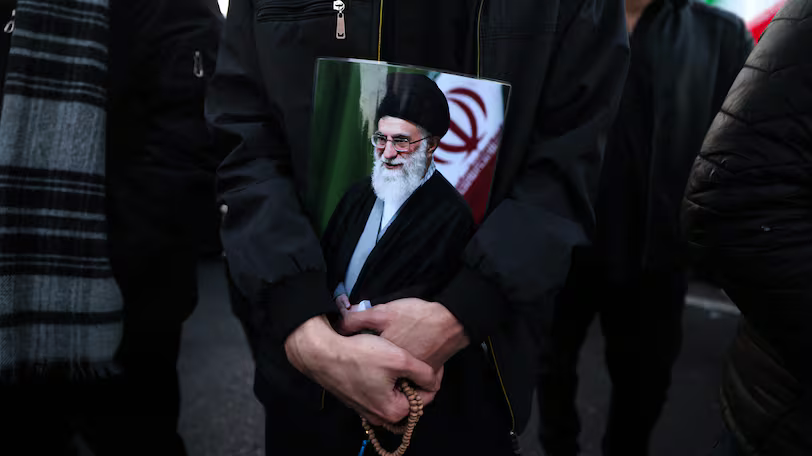
The US-Israeli strikes targeted six cities simultaneously. Tehran, Isfahan, Qom, Karaj, Tabriz, and Kermanshah were hit in a campaign designed not merely to degrade military capability but to paralyse the command-and-control infrastructure of the Iranian state. Cyber-attacks on IRNA News Agency and other media outlets, conducted in parallel, confirm that this is an operation aimed at information dominance as much as kinetic destruction. Supreme Leader Khamenei has been killed. President Pezeshkian is confirmed safe. The message from the US-Israel attacks is existential in its ambition.
The international law vacuum and the question of legitimacy
There was no Security Council resolution. There was no imminent armed attack on the United States that would satisfy even the most permissive reading of Article 51 of the UN Charter. A US attack would be inconsistent with US and international law, the Arms Control Association noted days before it happened. Congress was not consulted. The War Powers Resolution has been treated as a dead letter.
What we are witnessing is the normalisation of preventive war as US strategic doctrine. This is a doctrine that, when applied against Iraq in 2003, required a fabricated dossier. Today, it requires only a Truth Social post and an Israeli partner.
Netanyahu predictably framed the assault as removing an "existential threat." The framing is dangerously expansive. If any state may strike another preemptively on the grounds that its weapons programmes constitute a future existential threat, the nonproliferation regime does not merely weaken. It inverts. Other nations in the Middle East and beyond will likely conclude that only possession of nuclear weapons can protect a regime from US attack. Iran's nuclear knowledge, as the Arms Control Association observed, cannot be bombed away.
What comes next: escalation dynamics
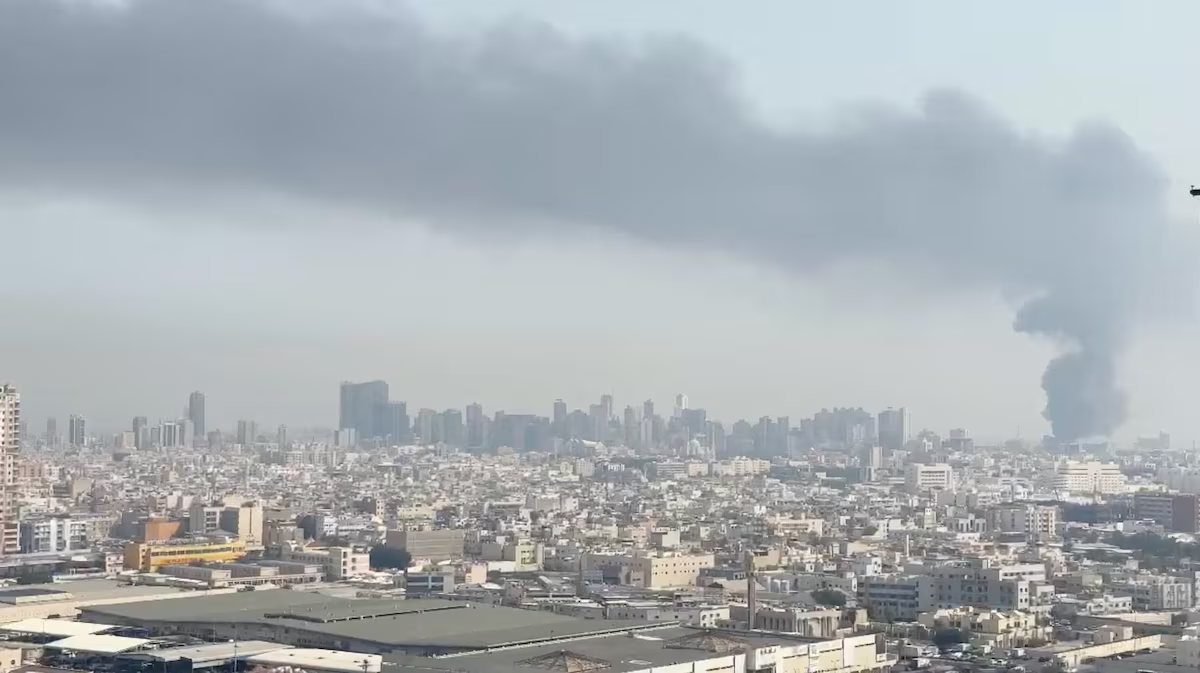
The immediate security calculation is grim. The Israeli military has confirmed missiles launched from Iran toward Israeli territory, with air defence systems activated across the country. The US Embassy in Qatar has sheltered its personnel. Oil prices have climbed to six-month high, with 20 percent of the world's oil supply passing through the Strait of Hormuz. This is a choke point Iran can and likely will threaten.
A person briefed on the operation told NPR it was expected to last a few days, with Israel's military focusing on Iran's missile programme. But wars of choice rarely conform to their architects' timelines. The second and third order effects, including Hezbollah's posture in Lebanon, the Houthis in Yemen, and Iran aligned militias in Iraq, represent vectors of escalation no war game has convincingly resolved.
History offers a sobering lesson. The assumption that a state can be bombed into submission without triggering wider conflagration has been falsified with brutal consistency from Vietnam to Iraq to Libya. Iran is not a depleted state. It is a country of 93 million people, a sophisticated military industrial base, and a political culture that, even among those who despise the Islamic Republic, does not easily absorb foreign bombs without a nationalist response.
Trump's extraordinary declaration, "to the Iranian people, your hour of freedom is at hand," mirrors almost verbatim the language used before the invasion of Iraq. It is the language of regime change dressed in the rhetoric of liberation. It should be read as such.
A final word
As smoke rises over Tehran and air raid sirens sound in Tel Aviv, the world confronts a moment of structural rupture. The post-Cold War architecture of arms control, nonproliferation, and diplomatic resolution has not merely frayed. It has been deliberately dismantled by the power that constructed it.
The most dangerous element is not the bombs themselves. It is the precedent they establish. That precedent holds that diplomacy is available as a tool of deception, that international law is optional for the powerful, and that nuclear restraint is rewarded with destruction. If that is the lesson the next fifty years draw from today, we will not have to wait long for the consequences.
Aishwarya Sanjukta Roy Proma is a lecturer at the Department of International Relations, University of Rajshahi.
Send your articles for Slow Reads to slowreads@thedailystar.net. Check out our submission guidelines for details.
Bihar wants Delhi to not renew Ganges treaty. What does it mean for Dhaka?
Bangladesh and the United States: Beyond the tariff bargain

From the Carter Doctrine to the Mecca Pact: A changing Gulf security order
More capability, less autonomy? Bangladesh’s emerging security dilemma
An anti-West network is emerging: How should Bangladesh respond?
The Mecca Pact: Deterrence, Israel, and the new Gulf security equation
What Nepal’s flood devastation means for Bangladesh, India and China
Five reasons why Bangladesh shouldn’t join the Mecca Pact
Why Gaza peace deals keep falling apart