Garment workers' productivity: Truth and myth

A Bangladeshi worker takes 1.5 hours to complete a task that a Chinese worker finishes in 20 minutes and a European or Vietnamese worker in 30 minutes. A representative made the statement of garment owners at a discussion organised by The Business Standard.
Her remark would prompt the audience to juxtapose, in their imagination, a sleepy workforce in a black-and-white factory setting in Bangladesh with counterparts elsewhere hurrying through tasks like machines. How else is one to make sense of it?
Now, let's break down the myth of productivity that garment owners in Bangladesh have promulgated over time. No one—not even labour rights activists—challenged that misperception.
The productivity of Chinese people is much higher than that of Bangladeshis. This is evident from the GDP (gross domestic product) data itself. GDP is the total value of final goods and services produced in a country within a year. So, a nation's GDP divided by its population shows how much economic value, on average, an individual in that country creates in a given year. According to World Bank data, Bangladesh's nominal GDP per capita is $2,593.4, while China's average economic output per person is $13,303.
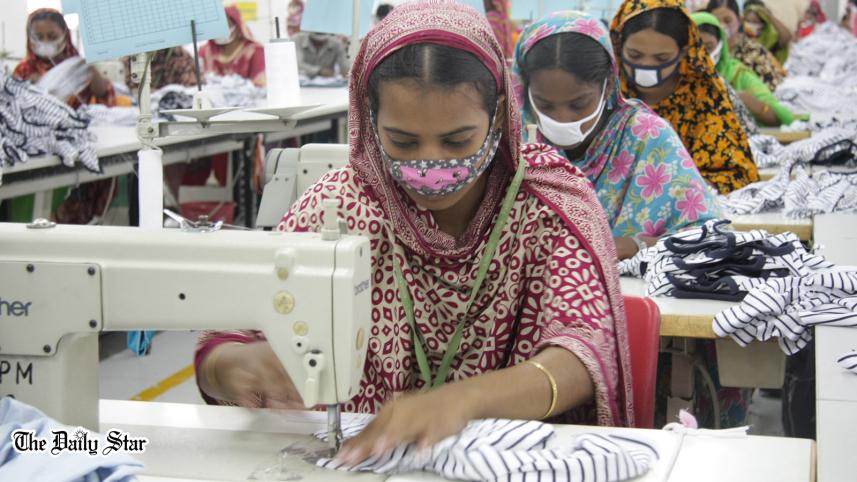
Do the figures mean Chinese workers are quicker than Bangladeshi workers, or that they work harder? No. Productivity is not measured by how quickly a job is done. It is the economic value or output per worker, or the economic value or output created per hour worked.
Historically, it has been proven that human productivity increased when machines replaced manual labour. Over time, better technologies have replaced earlier ones. So, workers using advanced technologies or machines can create higher economic value than those using outdated versions.
For example, if a Bangladeshi worker makes 100 T-shirts in an hour, a Chinese worker may make 150 T-shirts of the same type in an hour with better machines, advanced logistics, or perhaps robotics in factories. In this case, Chinese garment owners invested more capital to secure higher productivity.
Garment workers' productivity in Bangladesh will not improve much, even with greater skills, if they continue making basic everyday apparel.
The argument, however, must not be limited to T-shirts because Chinese, Vietnamese, or European manufacturers are not producing identical products; what they sell varies in terms of value, market, and consumers. A hundred T-shirts would be of lower economic value than, say, 10 highly sophisticated sportswear items manufactured within the same time.
Garment workers' productivity in Bangladesh will not improve much, even with greater skills, if they continue making basic everyday apparel.
High-value products can translate into higher productivity, leading to higher wages, higher national income, and higher GDP per capita. China is richer now than in the 1980s, not by increasing output per unit, but by moving away from producing low-value items like T-shirts toward high-value products such as electronic goods, cars, and semiconductors. After all, manufacturing a smartphone creates more economic value than stitching a T-shirt.
China has boosted workers' productivity by investing in education, technology, research and development (R&D), and infrastructure. An efficient transportation system, which may not seem directly related to productivity, also plays a role. The transportation of goods, when interrupted by bad roads, bureaucratic tangles, and lengthy paperwork, slows workers' productivity, irrespective of how skilled they are.
While entrepreneurs in Bangladesh need to invest in technology and training to shift to high-value items to boost productivity, the government must act as an enabler by helping create an educated workforce ready to adapt to a sophisticated work environment and by developing communication networks.
There are other aspects related to productivity as well.
What garment factory owners and advocacy groups in Bangladesh refer to when speaking of productivity is actually workers' production of economic value at the factory level. Businesspeople here have little control over design, marketing, branding, and distribution.
After products are shipped from Bangladesh, the rest of the supply chain is managed by companies operating in the US, the UK, or other European nations. At the retail level, the economic value of a made-in-Bangladesh product can multiply through marketing and branding.
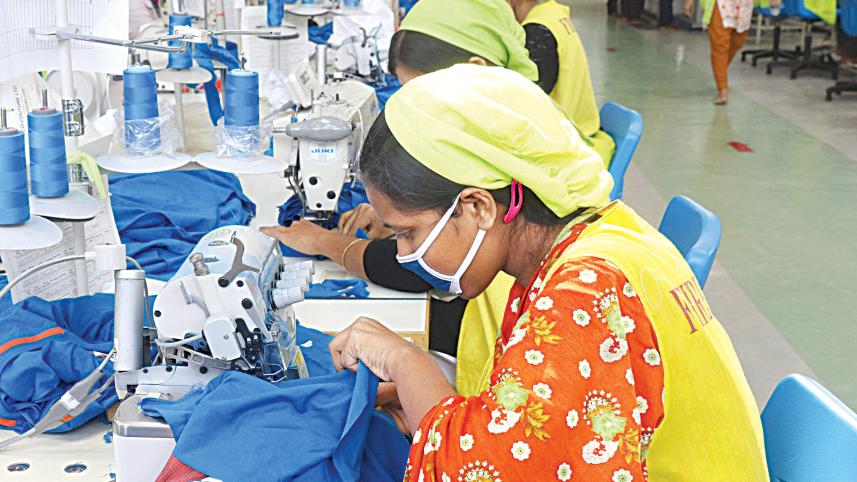
For instance, a clothing item from a popular brand may cost $50 to produce but can be sold at retail for $500 because customers are willing to pay a high premium for the brand. Low factory-level productivity may yield higher productivity at the end of the value chain.
Bangladesh operates at the factory level, but advanced economies dictate the value chain. We have to move up the value chain to create higher economic value for what we manufacture and export. That is achievable by entrepreneurs. Shifting blame to workers for low productivity will not yield any result.
Productivity has nothing to do with workers' human abilities. Period.
Bishakha Devnath is the business editor of The Financial Express.
Send your articles for Slow Reads to slowreads@thedailystar.net. Check out our submission guidelines for details.

Can Bangladesh afford not to invest in Bhola’s gas?

Bangladesh’s renewable policy: Still too little but not too late
Prabhat Patnaik speaks / Why the Global South must rethink export-led growth

Bhotekoshi flood: Another warning from the Himalayas. Are we listening?

Renewing the Ganges Water Sharing Treaty: What should Bangladesh do?

What it really costs to live in Dhaka

Why Nepal’s devastating floods should no longer surprise us

What kind of doctors does Bangladesh need?
Why aren’t we talking about the health risks of battery rickshaws?