


Breathing the history between the Nile and the Mediterranean Sea
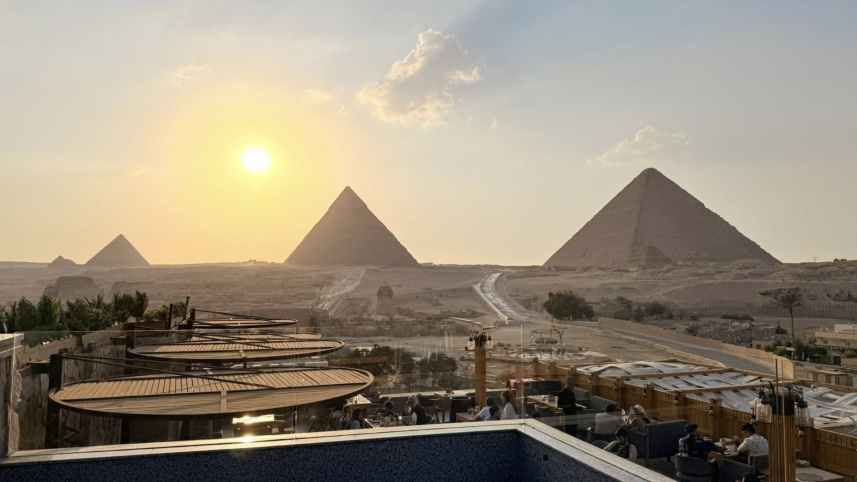
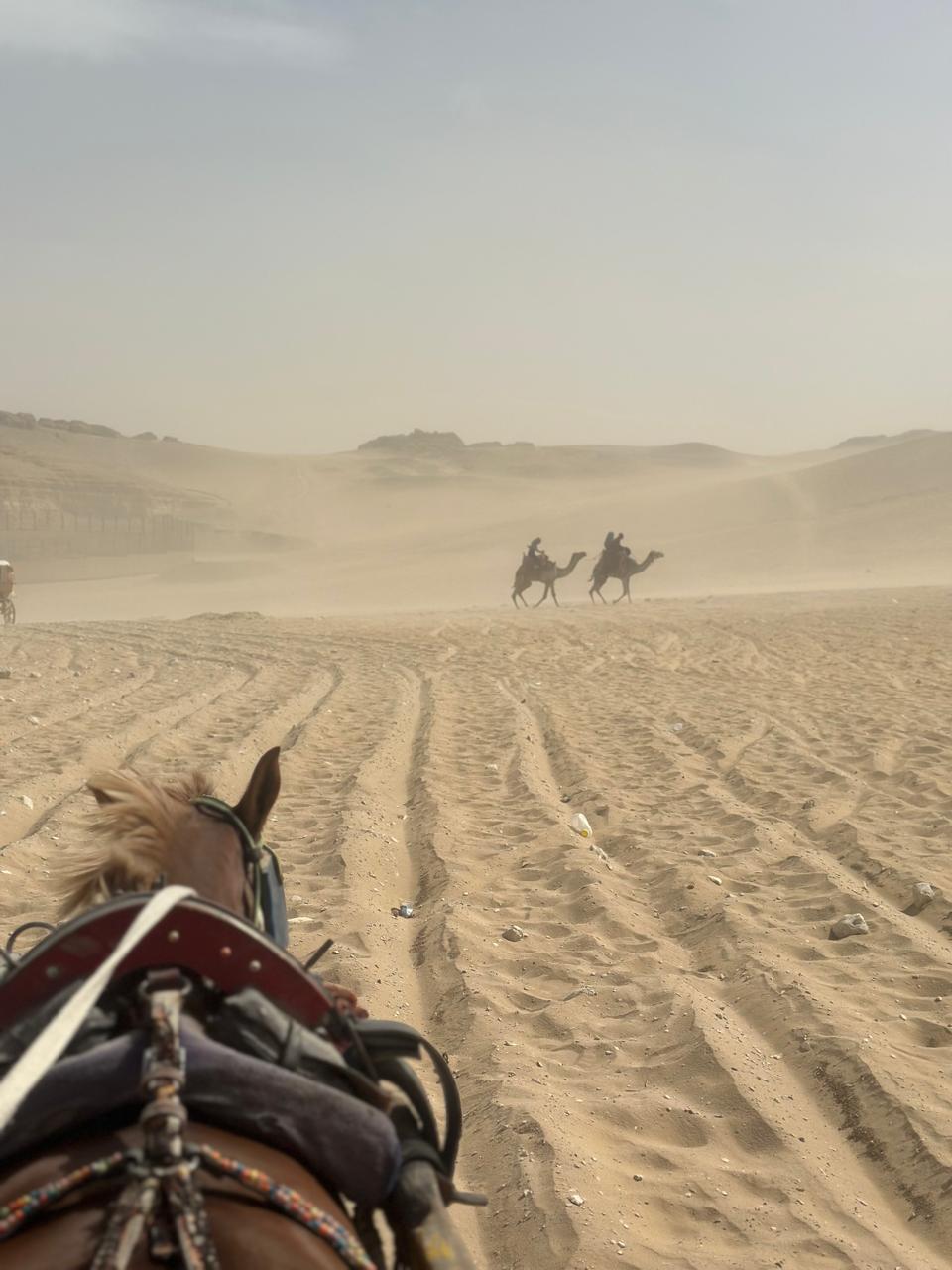
As a class ten student who had just passed her Bangladesh and Global Studies (BGS) exam, I had spent countless hours reading not only textbooks but also devouring books from the school library. Yet, nothing in those books could make me more awestruck than witnessing a real-life sandstorm and the massive, kingly pyramids peeking through it.
Cairo

Modernisation has not always treated Cairo – Egypt’s present-day capital – kindly. You will find the latest models of vehicles, yet the repeated dents on their bodies prove poor driving etiquette. Nevertheless, towering flyovers stretch across the skyline, and the homely buildings represent their earlier architectural style – simple boxes of brick and concrete. They have ‘toktoks’, which look like our CNG-driven autorickshaws. Their idea of public transportation includes overcrowded minivans with broken ACs. But amidst all the hustle and bustle, unlike Dhaka, Cairo’s roads are relatively traffic-free.
We stayed at the Hilton Cairo Grand Nile, which offered us a clear view of the Nile River. Every morning at breakfast, we enjoyed the magnificent sight of the river flowing calmly past the busy city.
Beneath my feet, I walked on glistening sand, my eyes absorbing the vastness of the Giza Plateau. A timeless wonder, with perfectly calculated and immaculate stones placed one on top of another in a prism-like shape, stood like the eye of the sandstorm. Photos cannot truly capture the weathered limestone walls that have outlived empires.
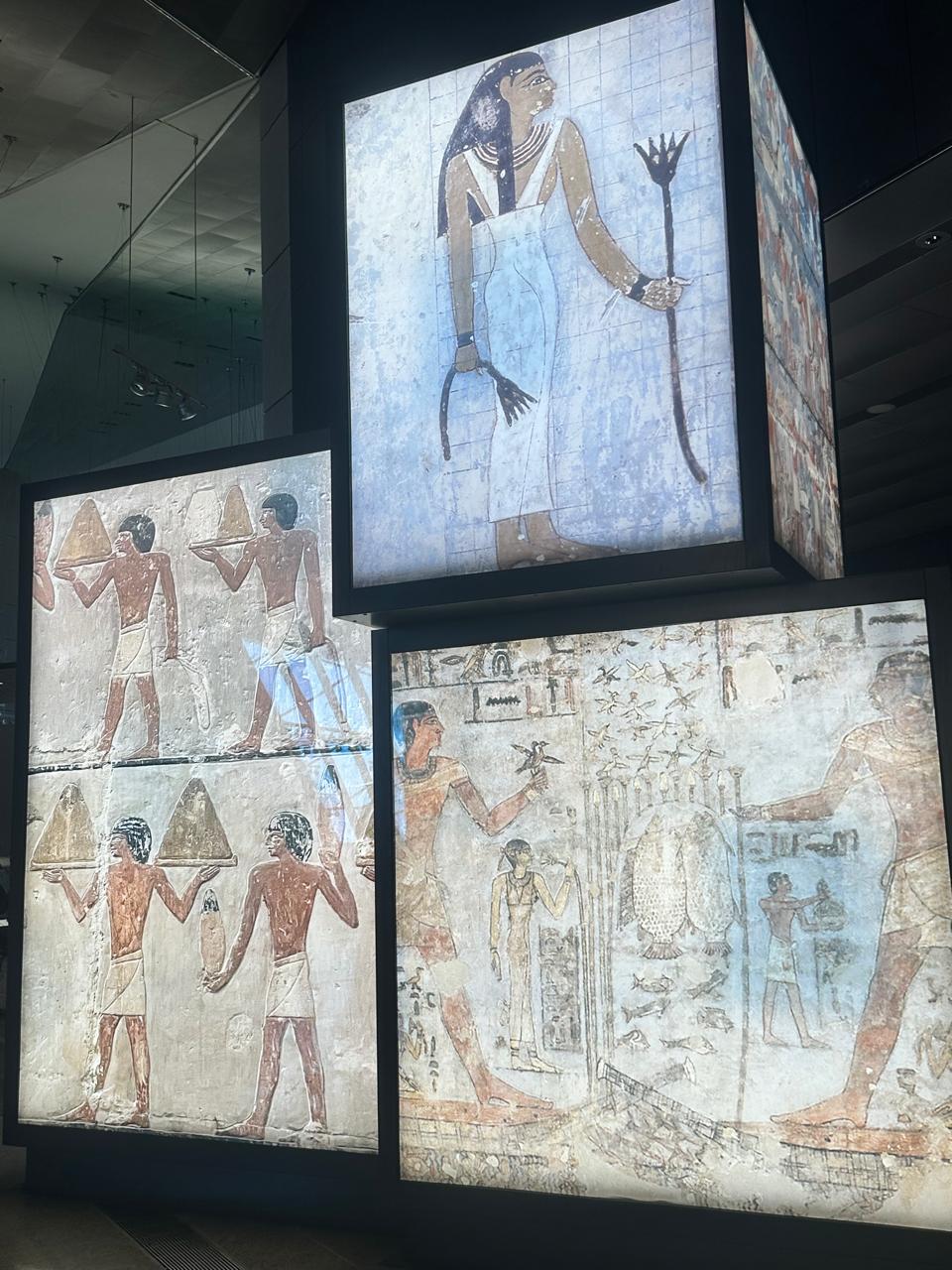
The Great Sphinx of Giza sat calmly upright, its head straight, its eyes bearing witness to every civilisation that has risen and fallen. Inside the museums, the ancient civilisation comes to life. The funerary gold masks, burial rituals, and offerings all told stories. Everything wove together into a rich historical timeline. The mummies under the museum lights and their preserved grandeur spoke of the recorded knowledge of the ancient Egyptians. Women’s jewellery and culinary items blended into the spiritual and domestic life they once lived.
The Grand Egyptian Museum is one of the largest archaeological museums in the world dedicated to a single civilisation—ancient Egypt. It houses well over 100,000 artefacts, with about 50,000 exhibited to visitors. It is the most popular and well-known museum in Egypt.
We also visited the National Museum of Egyptian Civilisation. While the Grand Egyptian Museum focuses only on ancient Egypt, the National Museum of Egyptian Civilisation is a modern history and culture museum that tells the story of Egyptian civilisation from prehistoric times to the present day.
But in Egypt, history does not confine itself to museums or pyramids; it breathes from every corner. The labyrinthine alleys of Khan el-Khalili smell of burning incense and tea. The market is full of life, vibrant hues, and store lights shining softly on the souvenirs. If a shopkeeper asks for USD 80 for a souvenir, say USD 20. Old Cairo felt like a different Old Dhaka. The familiarity surprised me. Despite the geographical distance, there was something recognisably South Asian in the rhythm of negotiation, communal laughter, and unfiltered humanity.
In Cairo, you can buy tickets for dinner cruises, which include authentic belly dancing and traditional food. A night spent on the waters of the Nile offers the chance to meet new people and enjoy the vibrant atmosphere.
Alexandria
Compared to Cairo, Alexandria has a completely different atmosphere. While the former is lively, the latter is calm and peaceful. This time, we stayed at the Hilton Alexandria Corniche Hotel. Alexandria is all about the tranquil Mediterranean breeze. The Corniche of Alexandria stretches for approximately 16 to 20 kilometres (10–12 miles) along the Mediterranean coast. It offers one of the best panoramic views of the Mediterranean Sea.
Alexandria is mostly famous for its Greco-Roman history. It was once founded by Alexander the Great, which gave the city its timeless Greco-Roman heritage.
The difference between Cairo and Alexandria is clearly visible in their architectural styles. Cairo leans toward Islamic architecture, while Alexandria resembles its former pre-Islamic Roman period.
Alexandria provides a hop-on, hop-off bus service that runs 24 hours. On one occasion, we hopped on the bus at 10 AM sharp, and the ride went back and forth along the coastline, allowing us to explore the sea from different angles.
The Lighthouse of Alexandria, or Pharos, felt like the world’s greatest beacon. Built around 280 BCE under the auspices of Ptolemy II Philadelphus and designed by the Greek architect Sostratus, it helped guide countless sailors safely into Alexandria’s bustling harbour. It’s flame radiating over the waves, perhaps reflected in bronze mirrors, a beacon of both hope and power. Towering at over 100 meters, it was one of the tallest man-made structures of its time, earning its place among the “Seven Wonders of the Ancient World”. Though centuries of earthquakes reduced it to rubble, its stones went on to become part of the Citadel of Qaitbay, and the name “pharos” became the word for lighthouses everywhere. Walking along Alexandria’s coast today, you can’t help but imagine the awe of those first sailors spotting its light, feeling the city’s heartbeat across the waves.
No visit to Alexandria is complete without reflecting on the great legacy of the ancient Library of Alexandria. Unfortunately, the original library was destroyed long ago. It is believed to have contained approximately 400,000–700,000 scrolls. To pay homage to that legacy and preserve knowledge, the Bibliotheca Alexandrina was inaugurated in 2002. It is designed like a sundial, symbolising that, just like sunlight, knowledge is timeless.
 For all latest news, follow The Daily Star's Google News channel.
 A reverie unfolding
I have been travelling since the age of two, and by 15, I had visited 22 countries. Yet Egypt was humbling. It was a reminder that as humans, we leave traces that may outlive us. They become memory, proof that once, we existed, quietly saying, “We were here.”
The author is a student of class ten at Military Collegiate School Khulna (MCSK).
Comments