


What an empty Dhaka teaches us about how we live
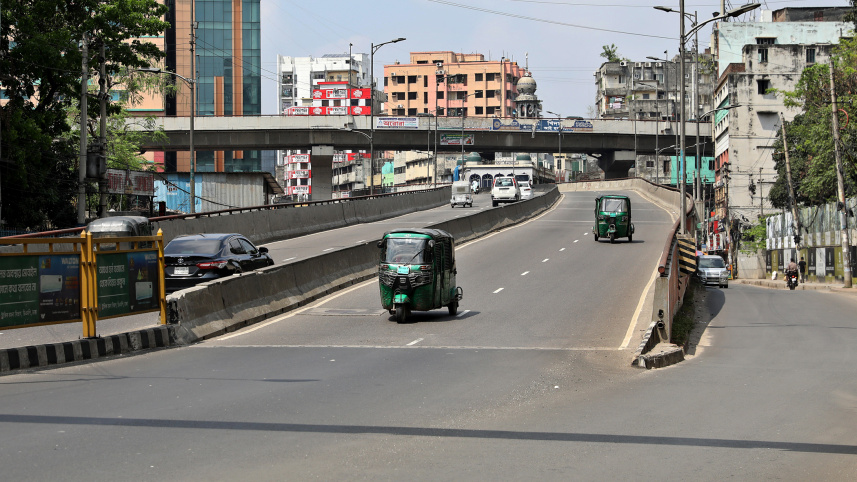
On a regular weekday afternoon, Dhaka’s roads are overwhelming. Horns blare, the air smells of diesel, people hurry by, and it feels like several million people are all trying to find space at once. But during the short duration of Eid holidays, the city changes completely. The usual crowds disappear, the streets clear up, the dust settles, and for once, you can stand on the overpasses in Banani or Mohakhali and actually hear the wind.
Every year, at least one crore people—sometimes even more—leave the capital to visit family. For those who stay behind, the city feels almost perfect. Suddenly, you can drive from Uttara to Dhanmondi in less than half an hour. The air gets noticeably cleaner as the city takes a break from pollution. However, behind the relief of empty roads, there is a deeper truth: for many, Dhaka is more of a workplace than a true home. The rest of the country relies on this one city for work, education, and a better life. Everyone, from a rickshaw-puller to an executive, endures the chaos because most opportunities in Bangladesh are concentrated in this overburdened metropolis. But when they leave, the city becomes a shadow of its regular self. Local tea stalls close, the vibrant neighbourhood activity fades, and the city’s underlying infrastructure is exposed.

While Dhaka’s Eid migration is dramatic, big cities like Mumbai, Lagos and Jakarta see similar patterns during major holidays. Some of these big cities have addressed this challenge in different ways. For example, in Mumbai, the development of satellite towns like Navi Mumbai has helped ease pressure on the city centre by spreading out population and job opportunities into neighbouring areas. Similarly, Lagos has supported the growth of nearby towns such as Ikeja and Lekki through infrastructure investment and by encouraging businesses to set up outside the main city. These cases show that thoughtful decentralisation and better regional planning can help large cities manage the stress caused by massive populations.
The “Eid version” of Dhaka offers a tantalising glimpse of the city’s potential. The cleaner air and quiet streets show that better urban living conditions are physically possible. However, as recent urban studies highlight, these improvements are fleeting due to long-standing institutional weaknesses and centralised planning that benefit only a few. This reliance on centralisation leaves the city’s infrastructure fundamentally strained, making genuine decentralisation difficult and leaving both the city centre and its outskirts facing perpetual challenges.
To achieve lasting improvements, the government should decentralise key services and opportunities by actively supporting hospitals, universities, and industries in regional centres. This could be done through targeted public investment in building and upgrading facilities outside Dhaka and offering incentives for businesses to relocate or expand beyond the capital. Improving public transport modes, such as developing reliable, frequent commuter rail links between regional towns and Dhaka, would also make it practical for people to live and work outside the city. Urban planners can update zoning regulations to require mixed-use developments, ensuring that housing, business, and public facilities grow together in new satellite towns. Clear policy guidelines, with measurable targets, enforceable timelines, and dedicated budgets, would ensure accountability in implementing these initiatives.
Of course, there will be some challenges. Moving institutions, services, and industries away from the capital city that has run as the central hub for economic activities, education, and administrative work for so long will require significant collaboration between different levels of government, private investors, and local communities. There could be resistance from stakeholders who benefit from the current set-up. In addition, building strong regional economies will take time and may face obstacles, such as a lack of local expertise or slow infrastructure development. Addressing these challenges will require consistent leadership, transparent monitoring, and flexibility to adapt policies as needed. Implementing evidence-based approaches would bring sustained improvements to urban life across Bangladesh, turning the Eid experience from an exception to the norm.
In a couple of days, those who left Dhaka for the holidays will all return. Trains will be packed at Kamalapur, traffic jams will return to the city roads, and the noise will be back. We will revert to our routines, dealing with traffic and crowds again.
For now, as we walk through these empty streets, we have a chance to turn this relief into real change. Dhaka’s transformation during Eid is a clear call to action. Only with real decentralisation and investment in other regions, led by government, business and community efforts, can peace and liveability become part of daily life, not just a brief holiday moment.
As concrete next steps, every group has a role to play. Policymakers can begin public consultations to identify promising regional centres and commit to pilot projects outside Dhaka. Businesses might consider shifting part of their operations or opening new branches in the growing towns across the country. University students and young professionals can get involved in local civic initiatives or volunteer projects to improve their home districts. Citizens can contact their elected officials to advocate for better transport and healthcare facilities in their own communities and stay engaged with the planning processes. The choice is ours; let’s make it.
Monjurul Hoque Bhuiyan is executive in the Department of Corporate Regulatory Affairs at US-Bangla Assets Ltd. He can be reached at monjurul.bhuiyan01@northsouth.edu.
Views expressed in this article are the author's own.
Follow The Daily Star Opinion on Facebook for the latest opinions, commentaries, and analyses by experts and professionals. To contribute your article or letter to The Daily Star Opinion, see our guidelines for submission.
 For all latest news, follow The Daily Star's Google News channel.
Comments