


Can we use private healthcare to improve health literacy?

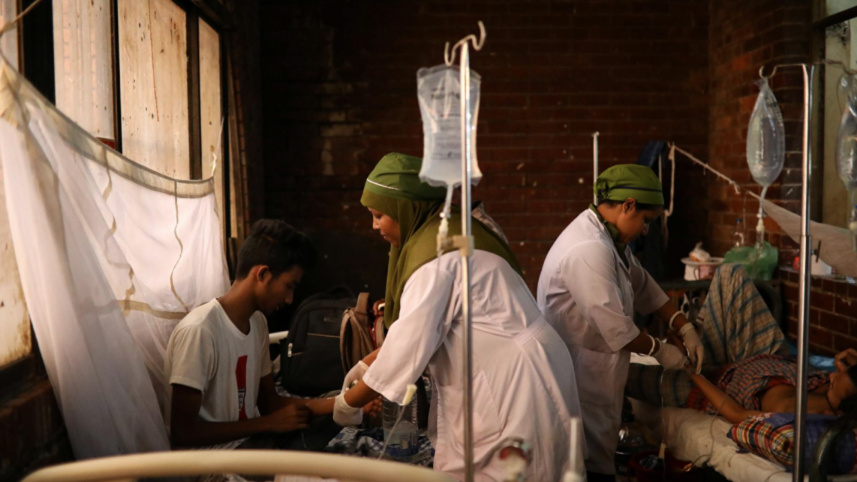
When a diabetic patient walks out of a hospital without understanding how to manage their condition between visits, the cost of that failure is economic as much as it is medical. The patient may return sicker, require more expensive intervention, and quite possibly push their family deeper into debt. Multiply that by millions of patient interactions every year in a country where nearly 69 percent of health expenditure is paid directly out of pocket, and the picture becomes systemic.
Noncommunicable diseases (NCDs), also known as chronic diseases, are conditions that demand sustained management, early intervention, and informed patient behaviour. In Bangladesh, due to the absence of structured health literacy, NCDs account for around 67 percent of all deaths, with nearly one in five people between 30 and 70 years of age at the risk of dying, according to the World Health Organization (WHO).

Currently, public health communication in Bangladesh remains largely campaign-driven: seasonal dengue awareness, immunisation pushes, and periodic chronic disease messaging. These efforts reach millions but are episodic, centrally designed, and constrained by a system where public health spending stays below one percent of GDP. So, families often find themselves in a position where they have to decide on what symptoms to act upon, when to seek specialist consultation, how to manage hypertension between visits, whether to trust health advice circulating on social media, with almost no consistent, credible source of guidance. This is a gap that can be bridged through a collaboration between public and private healthcare.
The private healthcare sector, now responsible for over half of total healthcare demand, operates thousands of digital platforms, call centres, outreach programmes, and dedicated marketing teams that collectively reach millions daily. The communication infrastructure produces an array of promotional content on a regular basis: physician profiles, equipment announcements, service advertisements, and patient testimonials. However, it fails to ensure a proper health education for the general people.
This is not because hospitals are indifferent. It is because no policy connects private healthcare communication to public health objectives. There are no national standards defining what evidence-based health education from a private provider should look like. There is no incentive—through accreditation weighting, licensing consideration, or targeted tax benefits—that signals health literacy output carries institutional value. Without that signal, investing in health education remains commercially irrational. The gap is not one of intent but of policy.
Health education does not have to mean national campaigns or expensive programmes. Much of it can be embedded in what hospitals already do. For example, a cardiologist’s profile can include guidance on symptoms that warrant urgent evaluation. An endocrinology announcement can outline warning signs of uncontrolled diabetes. Discharge instructions can include standard follow-up messaging.
Similarly, a doctor who takes two minutes to explain why completing an antibiotic course matters is delivering health education, as is the nurse who teaches a new mother to recognise danger signs in her newborn. These might not be grand interventions and may cost almost nothing individually, but across millions of patient interactions every year, they reshape how a population relates to its own health. For that to happen, a systematic change must be brought forth.
Making it systematic means repositioning hospital communication teams to work alongside trained public health education and promotion specialists who can embed evidence-based guidance into routine outreach. This is not an additional burden on private providers. Hospitals that integrate health education into their communication build deeper community trust, attract patients earlier in their care journey, and differentiate themselves in an increasingly competitive market. The framework succeeds precisely because it aligns public health objectives with institutional self-interest and participation becomes commercially rational, not charitable.
But this shift requires a professional workforce that barely exists in Bangladesh’s private healthcare sector: public health education and promotion specialists trained in behavioural science, health communication, and programme evaluation. Currently, these professionals work mostly in government agencies, NGOs, and international organisations, not because they are irrelevant to private healthcare, but because there is currently no framework that generates demand for them there. Once the policy framework is created, the demand follows. And when the demand creates positions, it opens the door to measurable impact.
The government does not need new bureaucracies for this. The Bureau of Health Education under the Directorate General of Health Services already holds a nationwide mandate for health education, with resource centres across all 64 districts. Its scope, however, has never extended to the private sector. Expanding the bureau’s authority to set standards for private-sector health communication, staffed by public health education professionals—not administrative generalists—would give this framework an institutional home. Three mechanisms would make it operational: national content standards for private providers, incentive structures tied to health literacy output, and a public-private health communication compact enabling government messaging to flow through private networks during outbreaks and health emergencies.
If even a quarter of private healthcare communication incorporated structured health education, the effect on population health literacy would exceed what public spending increases alone could achieve. So, the question is not whether this would work. The question is what happens if the government does not act. The private sector will continue reaching millions daily, with content that does nothing to improve general health outcomes. Preventable complications will keep generating avoidable debt. And the country’s largest health communication infrastructure will remain commercially active but strategically wasted. The new government has pledged a stronger, more competitive Bangladesh. This would be a good place to start.
Md Shafaat Ali Choyon is public health professional with a background in business strategy and digital innovation.
Views expressed in this article are the author's own.
Follow The Daily Star Opinion on Facebook for the latest opinions, commentaries, and analyses by experts and professionals. To contribute your article or letter to The Daily Star Opinion, see our guidelines for submission.
 For all latest news, follow The Daily Star's Google News channel.
Comments