


We must restore parliament’s oversight role

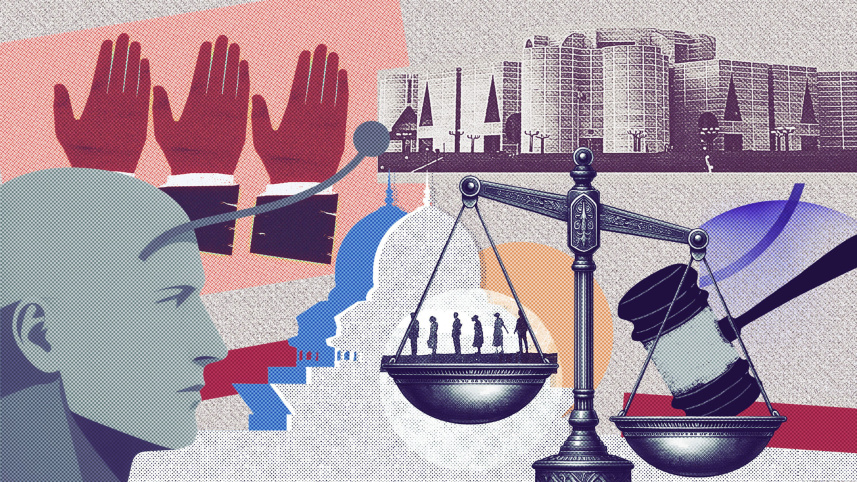
The question of accountability and transparency in state institutions often arise when Bangladesh faces a major public controversy. But this question almost always remains without a meaningful answer. The lack of accountability is often caused by the weakness in the institutions that are supposed to ensure it. And some of the most consistently overlooked institutions for this task are the parliamentary standing committees.
The need for parliamentary standing committees is recognised in the Constitution of Bangladesh. Article 76 provides for the establishment of such committees, including those for individual ministries. It also empowers parliament to determine the composition and functions of these committees through the Rules of Procedure. The vision for this is straightforward: the parliamentary standing committees will continuously oversee how the executive branch of the government—the ministries and other officials—perform and implement policies.

Parliamentary oversight is considered a bedrock of democracy, and we often see it in practice. In the US, for instance, the Congressional committee hearings have compelled many influential figures to answer for their actions. We have seen Meta CEO Mark Zuckerberg testify before the Senate on issues ranging from data privacy to misinformation spread. FBI directors often appear before the committees to answer questions on surveillance, investigations, and national security. In the UK, it is routine for Parliamentary Select Committees to question ministers about their handling of government policies and affairs. These hearings demonstrate a simple democratic principle: in a functional democracy, no public institution, official or corporation is beyond scrutiny.
The parliamentary standing committees in Bangladesh are designed for this function. Their tasks include reviewing proposed legislation before it reaches the floor of the House, examining the performance of ministries, scrutinising public expenses, and inviting officials and ministers to justify their actions. The hearings can take place behind closed doors if it’s related to national security, or in a public setting, if appropriate. Furthermore, the standing committees have investigative authority to look into irregularities across sectors.
However, the reality is different. Parliamentary committees rarely exercise their independence and authority to ensure accountability in the public sector. The executive branch’s influence over the legislature is a key reason that limits the committees’ willingness to scrutinise ministries. In most cases, the committees are dominated by ruling party lawmakers, and those members often prioritise party loyalty over accountability, as a 2015 TIB report found. Also, the committees don’t meet regularly, and there is poor coordination, limited technical support, and low public awareness.
A strong oversight mechanism is vital when governments exercise significant executive power. Decisions on issues such as public procurement, surveillance, digital governance, and the delivery of public services that affect the citizens should be questioned by effective parliamentary committees, which can review administrative actions and provide recommendations, and further improve accountability, transparency, and public trust in governance.
To this end, the country doesn’t need any constitutional reform; Article 76 already outlines the framework of these committees. What is needed is to allow them to function independently and equip them with adequate resources so they can perform their oversight role effectively.
Muhtasim M. Musanna is a student in the Department of Public Administration at Dhaka University.
Views expressed in this article are the author's own.
Follow The Daily Star Opinion on Facebook for the latest opinions, commentaries, and analyses by experts and professionals. To contribute your article or letter to The Daily Star Opinion, see our guidelines for submission.
 For all latest news, follow The Daily Star's Google News channel.
Comments