


Global crises demand feminist lens on global governance
Over the past three years, a series of devastating conflicts—the Russian invasion of Ukraine, and by Isreal in Gaza, the ongoing Sudan civil war and the conflict in Iran—have exposed the fragility of the global rules meant to prevent violence and protect civilians. Regional crises now spill rapidly across borders, destabilising economies, fueling displacement, and deepening humanitarian emergencies. At the same time, new forms of conflict are emerging through cyber warfare, digital surveillance, and information manipulation, challenging the capacity of many countries, especially developing nations to respond effectively.
The result is a growing sense that the international rules-based order that has guided cooperation for decades is losing both legitimacy and efficacy. Multilateral bodies such as the United Nations (UN) increasingly struggle to enforce norms or mediate conflicts among powerful states. Meanwhile, geopolitical competition often sidelines human rights, humanitarian principles, and the voices of women and marginalised communities.
 For all latest news, follow The Daily Star's Google News channel.
 A feminist perspective reveals something deeper about this crisis. The current system of global governance has long been built on militarised, state-centric notions of power that marginalise the experiences of those most affected by conflict and inequality. Women and girls bear disproportionate burdens during crises: displacement, gender-based violence, economic insecurity, and political exclusion. Yet they remain dramatically underrepresented in peace negotiations, diplomatic initiatives, and security institutions. This gap between rhetorical commitments to gender equality and the reality of exclusion reflects structural imbalances embedded within global governance.
Civil society organisations and international NGOs have historically helped to bridge this gap. They advocate human rights, monitor abuses, and hold governments accountable. Many of the world’s most important advances in women’s rights from humanitarian norms to international agreements such as the Convention on the Elimination of All Forms of Discrimination Against Women were achieved through sustained activism rather than state action alone.
Today, however, civil society operates in an increasingly constrained environment. Shrinking civic space, rising nationalism, and restrictions on foreign funding make cross-border collaboration difficult. Governments sometimes portray NGOs as external actors undermining sovereignty, while fragmented international cooperation weakens advocacy networks. In this context, protecting and empowering women-led organisations is critical for both domestic and global resilience.
For Bangladesh, these global shifts carry direct implications. The country faces climate vulnerability, migration pressures, supply chain disruptions, and the ongoing Rohingya refugee crisis. Any breakdown in international cooperation quickly translates into real pressures on governance, resources, and social stability. At the same time, Bangladesh has an opportunity to shape emerging debates about global governance. With a long history of engagement in development cooperation, peacekeeping, and South-South collaboration, the country has credibility in the Global South. Yet domestic gender gaps limit its potential.
Political representation remains a key barrier. In the most recent national elections, less than four percent of candidates were women, and only seven were elected to general seats. The upcoming opportunities for women through the 50 reserved parliamentary seats provide a crucial avenue for meaningful participation. These seats should not be treated as symbolic; they must serve as platforms for women to influence lawmaking, oversee policy, and shape decisions affecting families, communities, and national development. Maximising this provision, alongside engagement with women-led civil society organisations, could transform Bangladesh’s political culture and reinforce its international credibility as a regional leader in gender equality.
There are several areas where policymakers could act decisively. First, Bangladesh should strengthen the integration of gender perspectives within foreign policy and diplomacy. Expanding women’s participation in negotiation, peacebuilding, and international decision-making improves outcomes and aligns domestic practice with global commitments. Second, civil society must be recognised as a strategic partner. Women’s organisations often possess the most nuanced understanding of social dynamics and emerging risks and including them in policy discussions enhances both legitimacy and effectiveness.
Third, Bangladesh should champion reforms in global governance that reflect the growing influence of the Global South. International institutions must adapt to a world where power is distributed more widely and legitimacy depends on fair representation. Advocating for inclusive decision-making including gender-balanced leadership strengthens both credibility and outcomes. Fourth, the government should invest in protecting digital spaces. Disinformation and online harassment disproportionately target women activists and journalists. Policies that safeguard freedom of expression, promote digital literacy, and prevent online abuse are essential to ensure meaningful democratic participation.
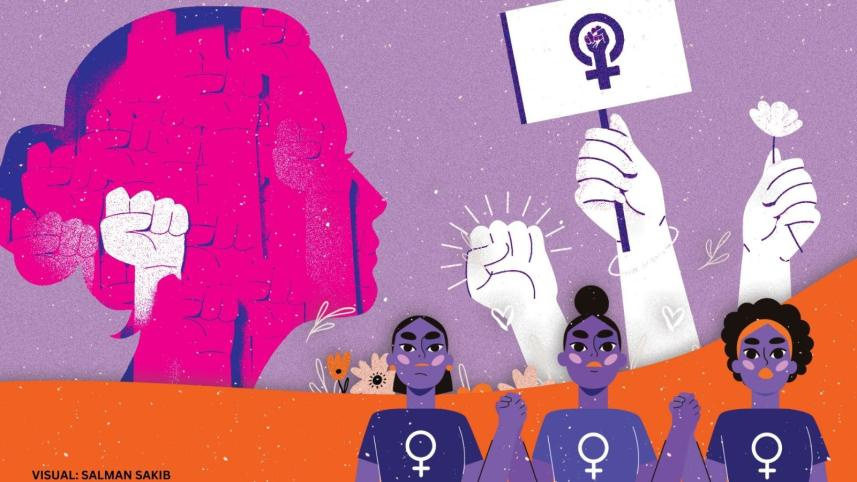
International Women’s Day is often marked by symbolic celebrations. In 2026, it should serve as a reminder that the struggle for gender equality is inseparable from the fight for a just, resilient, and inclusive governance. Women’s participation is not a side issue but instead, central to how societies respond to crisis, build peace, and sustain democracy.
The international order is clearly entering a period of transition. Whether that transition produces greater instability or a more just system of cooperation will depend in part on whose voices are heard. By leveraging reserved parliamentary seats, protecting civic space, and advancing women’s leadership at home and abroad, Bangladesh can demonstrate that feminist, rights-based governance is not only a moral imperative but a practical strategy for national resilience and global credibility.
Farah Kabir is country director of ActionAid Bangladesh.
Views expressed in this article are the author's own.
Follow The Daily Star Opinion on Facebook for the latest opinions, commentaries, and analyses by experts and professionals. To contribute your article or letter to The Daily Star Opinion, see our guidelines for submission.
Comments