


US global dominance and the Donroe Doctrine in the making

US global dominance has never been accidental. It comes from decades of strategy, adaptation, and the careful linking of finance, energy, military power, technology, maritime control and control over global resource flows. At the centre is the US dollar, not just a currency, but the operating system of global order. Since 1973, the “petrodollar” system has transformed the US dollar into the backbone of international power, allowing Washington to anchor finance, and act decisively whenever that order is challenged.
The story begins after World War II. The United States emerged strong, while Europe and Japan lay devastated. In 1944, the Bretton Woods system fixed the dollar to gold at $35 an ounce, making the US, the anchor of global finance. For nearly twenty-five years, this structure provided stability. But by the late 1960s, heavy spending on the Vietnam War and persistent trade deficits exposed its limits.
In 1971, US President Nixon ended the gold link. US dominance could have collapsed. Instead, it was reengineered. Henry Kissinger grasped what was necessary: if gold could no longer anchor the dollar, something else unavoidable had to replace it. Oil was the answer. Between 1971 and 1973, Washington reached a strategic arrangement with Saudi Arabia. Saudi oil would be priced in US dollars, and other OPEC members would follow. In return, the US would guarantee the Saudi regime's security. In 1974, US-Saudi deals sealed the maintenance of petroleum pricing in US dollars as essential to US financial dominance, where any challenge would be met with the full range of American power. That principle continues to shape US foreign policy today, from the Persian Gulf to Latin America.
Oil only matters if it moves. Tankers must traverse the Persian Gulf, Red Sea, Indian Ocean, and Atlantic, navigating chokepoints the Strait of Hormuz, Bab el-Mandeb, the Malacca Strait, the Suez Canal, Panama. Dollars alone cannot enforce access to these routes. Aircraft carriers, warships, port access, insurance markets, and political agreements do. The oceans themselves became instruments of financial power. The petrodollar is not just a pricing mechanism; it’s a system that fuses finance, energy, and maritime control — a system that works only when three elements function in perfect coordination.
The US maintains strategic influence not by owning every coastline, but by building relationships with the governments that sit beside key sea routes. This is a form of networked control, blending soft and hard power. For soft power, Washington uses military assistance, development financing, and security partnerships. Egypt is a clear example: consistent US military aid helps ensure reliable access through the Suez Canal, one of the world’s most vital maritime arteries.
The US projects hard power through military interventions and support for regime changes, as seen in the 1953 action in Iran, the 2003 invasion of Iraq, the 2011 operation in Libya, and the 2026 operation in Venezuela, all motivated in part by protecting strategic access and preventing governments from controlling vital sea routes or energy supplies.
By building alliances, securing port access, operating overseas bases, and conducting joint naval exercises, the US keeps a strong presence across the Indian Ocean and South Pacific, projecting power from the Persian Gulf to Southeast Asia. It’s a quieter form of influence than running a traditional empire, but often more effective: the navy can protect dollar-based trade, keep an eye on key chokepoints, and limit rivals’ movements without ever directly invading foreign territory.
Strategic military bases in Japan, Guam, Diego Garcia, Singapore, and Djibouti serve purposes that extend far beyond logistical support. These installations enable the US to project power across vast distances, maintain constant surveillance over critical waterways, and enforce the international rules-based order that governs global commerce.
US maritime supremacy now faces growing challenges as China, Russia, and India expand their overseas presence. China develops ports and logistics hubs through its Belt and Road Initiative, gaining military access in the Indian Ocean and South China Sea, including Djibouti. Russia has established outposts in the Arctic, Mediterranean, and Black Sea, leveraging strategic partnerships with allied states. India strengthens naval ties with Indian Ocean island nations such as Mauritius, the Maldives, and Seychelles. Each effort highlights how control of the seas has become central to great power competition in today’s multipolar world.
The US responds by maintaining a forward-deployed footprint designed to prevent rivals from dominating key chokepoints or threatening the dollar-based global trading system. Yet this rivalry underscores a fundamental geographic reality: controlling sea routes requires more than military power and depends on cultivating strong relationships with the governments that control adjacent coastlines. Even the most advanced fleet cannot operate without access to ports for refueling, resupply, and maintenance.
Three critical maritime chokepoints illustrate why coastal influence is as important as naval strength. The Strait of Hormuz, between Iran and Oman, regulates passage through the Persian Gulf. The Malacca Strait, between Malaysia and Indonesia, is the main maritime route connecting the Middle East and East Asia. The Suez Canal, across Egyptian territory, links Europe and Asia. These geographic realities explain why great powers compete not only for control of the oceans but also for influence over the governments that border these vital waterways.
Any attempt to bypass dollar‑based energy trade triggers consequences. Iraq announced in 2000 it would sell oil in Euros; within three years, US intervention altered its trajectory. Libya’s 2011 proposal for a gold backed pan‑African currency coincided with NATO intervention. Venezuela attempted oil sales in Euros and Yuan; sanctions and maritime restrictions limited these efforts. These episodes show a simple truth: preserving the dollar is inseparable from preserving US economic power. Venezuela’s strategic importance underscores this, along with the fact that it holds the world’s largest proven oil reserves, about 303 billion barrels, and is home to key minerals such as lithium and rare earths. By 2025, much of its oil trade was linked to China and BRICS financial networks; had it succeeded in bypassing the dollar, it could have encouraged others to follow.
Even small experiments at bypassing the dollar reveal the limits of autonomy. Saudi Arabia’s partial use of the Yuan, Russia’s Ruble‑denominated oil sales, and China’s Belt and Road currency swaps all encounter structural constraints. Rival powers are simultaneously building alternatives to the US-controlled financial system. Russia operates the SPFS, a SWIFT-like network; China runs the Cross-Border Interbank Payment System (CIPS), which clears “renminbi” payments with participation from major global banks such as HSBC; and BRICS nations are developing BRICS Pay to link national payment platforms and facilitate trade in local currency. India, as a BRICS member, is actively integrating its Rupee into bilateral trade agreements with partners like Russia, Iran, UAE, and several countries, in order to expand non-dollar trade networks. These systems are designed to reduce dependence on SWIFT and the dollar, but they still face challenges of scale, trust, and interoperability. Meanwhile, the US can maintain control without direct conflict: blocking key shipping routes, restricting access to strategic straits.
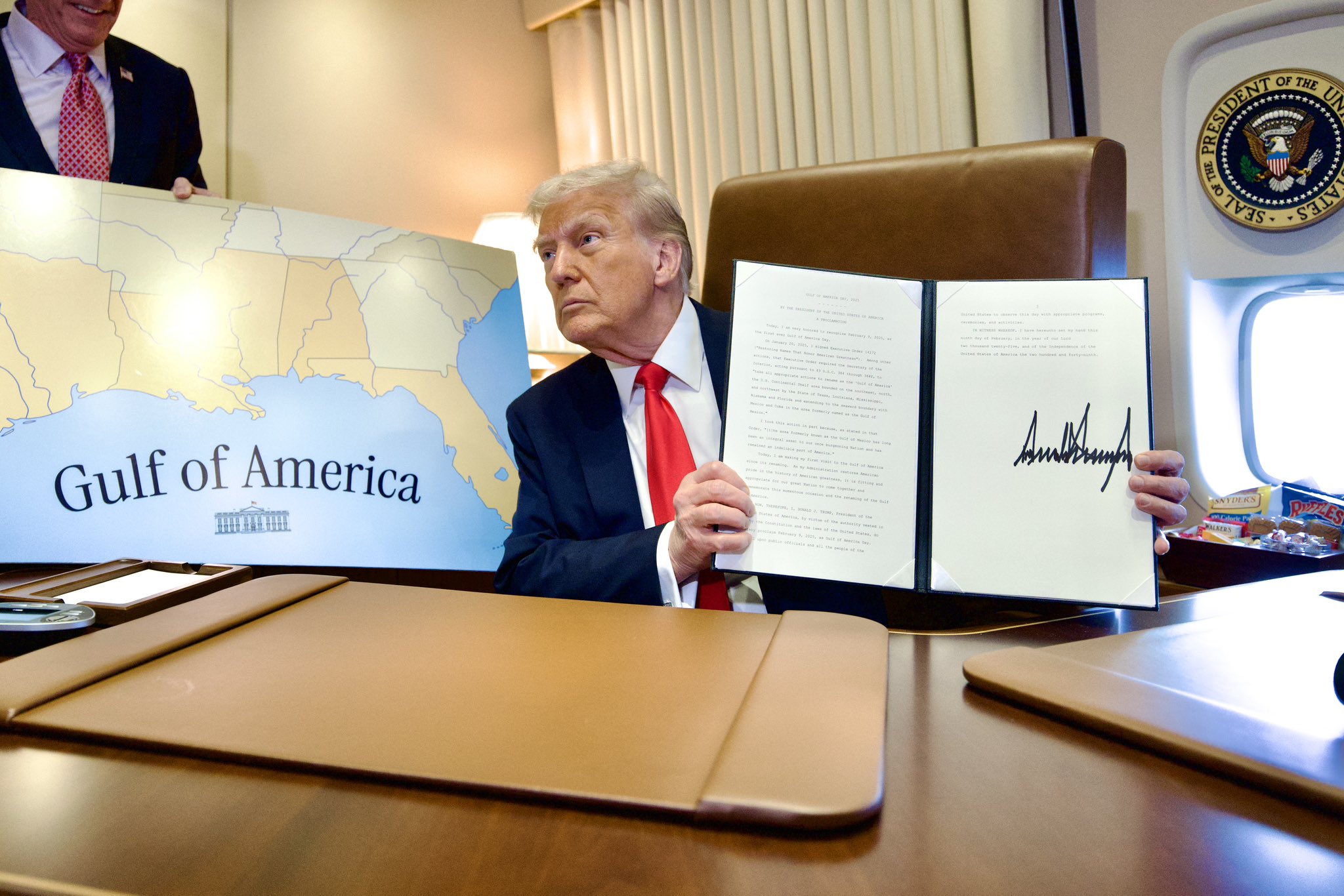
Under Trump’s 2025 National Security Strategy, economic power was equated with national security. This approach revived the Monroe Doctrine in a modern, transactional form: alliances were judged not only by shared values but by the strategic and economic benefits each partner delivered. Europe was urged to increase defense spending. Japan and South Korea were encouraged to strengthen their militaries, and key Asian ports were reminded that US presence depended on reciprocal advantages. Now referred to as the “Donroe Doctrine,” it advances US interests through influence rather than formal empire—by shaping governments, securing ports, controlling critical resources, and projecting military power. At its core, it emphasises control of the seas. Venezuela illustrates this strategy in action, where US leverage over oil revenues maintained strategic influence. Greenland is similarly important: its Arctic position across the Greenland–Iceland–UK (GIUK) gap, a key North Atlantic chokepoint, combined with rich mineral reserves, makes it vital for countering China and Russia while safeguarding essential trade routes.
Africa shows just how far-reaching this system of control runs. The continent is rich in oil, gas, and critical minerals, and much of its trade moves through sea lanes dominated by dollar-denominated systems. Exports are often priced in US dollars, insured by Western firms, and cleared through financial networks heavily influenced by the US. This arrangement gives Washington indirect leverage over the flow of African resources, even without formal control of the territories themselves. While some countries experiment with alternative currencies or financial channels, the bulk of Africa’s strategic commodities still operate within the dollar-based global framework, reinforcing US influence across continents.
The paradox is clear: nations may challenge the dollar rhetorically, but building a global system requires scale, trust, enforcement, legal stability, technological integration, and maritime control. China has economic and military scale but lacks uncontested control of the seas and full global trust. Europe has credibility and technological strength but no unified naval power. Within BRICS, ambition is high, but cohesion is limited. While BRICS members are asserting influence, they cannot yet match the US in integrated maritime dominance.
The dollar endures not because it is fair or neutral, but because it is embedded in oil priced in dollars, backed by global energy resources, and carried across oceans under US control. Petrodollars fuse finance, military power, and energy into a single resilient system: energy moves because ships move, and money moves because energy moves. The world is arguably shifting toward multipolar global order where multiple powers, rather than a single hegemon, hold influence. China, Russia, India, and other emerging powers are testing the dollar’s limits and building partial alternatives. But for now, the architecture of US global dominance holds. Dollars flow, oil flows, commodities flow, and oceans carry both under American defense. Control over finance, energy, and movement forms a resilient triangle underpinning US influence. The dollar still moves with the tides because American power still guards the oceans that carry it. Whoever controls the flow of money, energy, and movement shapes the global order. As such, de-dollarization still remains aspiration, not reality.
Kollol Kibria is an advocate, human rights activist, and political analyst. He can be reached at kollolkibriaa@gmail.com
Send your articles for Slow Reads to slowreads@thedailystar.net. Check out our submission guidelines for details.