


Who will defend our forests?

We talked about this for years. We saw how, before the 2024 political transition, influential groups and even government officials encroached upon the Chunati Wildlife Sanctuary in Chattogram. But it’s saddening that this trend continues even today, according to a recent report by this daily. The original Chunati forest area covered 37,182 acres, and in 1986, the then government declared around 19,200 acres between Chattogram and Cox’s Bazar as the Chunati Wildlife Sanctuary. But due to unabated encroachment and extraction over the decades, at least 1,870 acres have been converted into settlements and agricultural land. According to the Forest Department, 6,991 houses have been built within the boundaries of the forest so far; there are also 18,899 betel leaf gardens, 23 fish farms, and 1,550 acres for paddy cultivation.

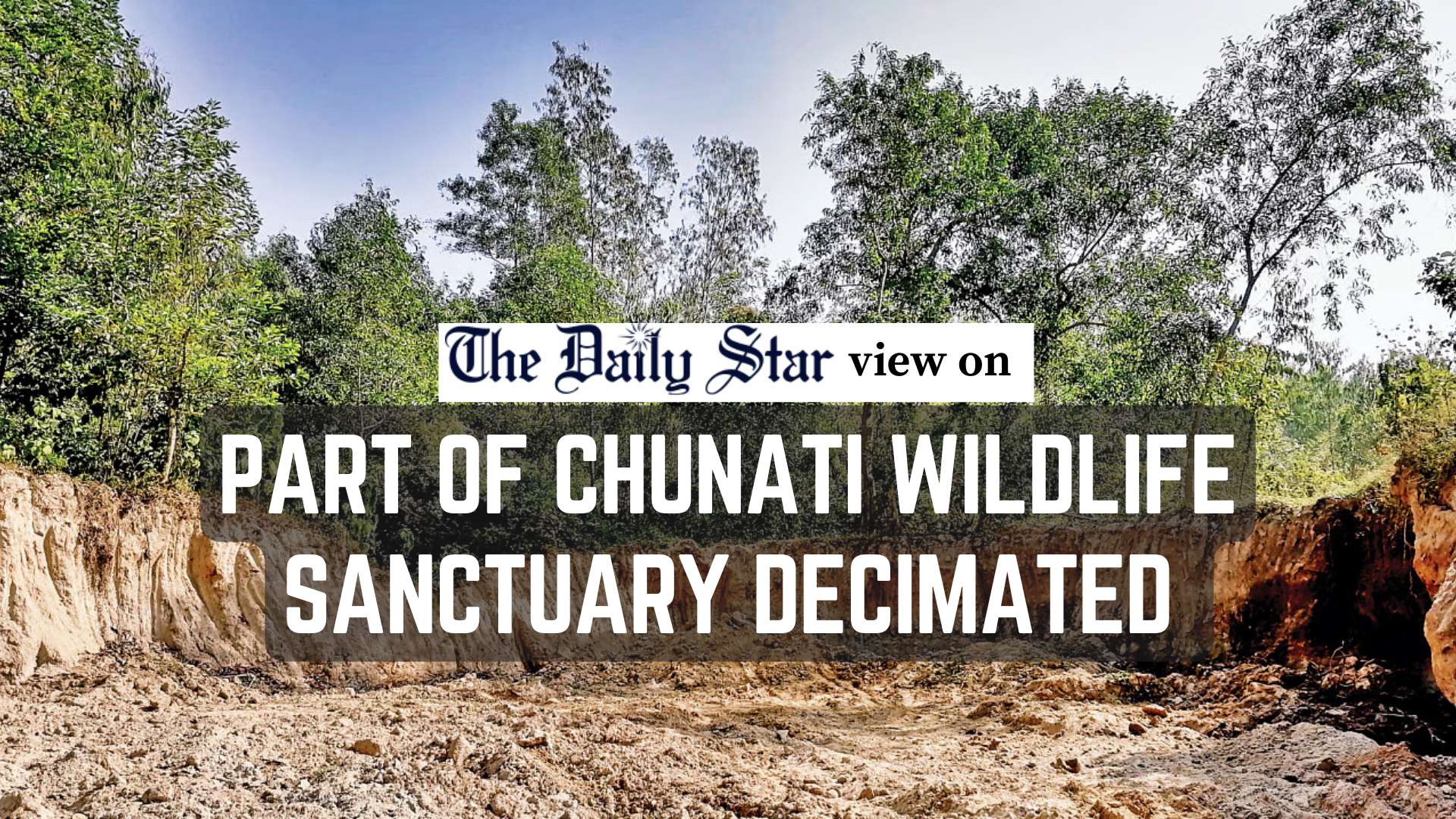
Against this despicable reality, one thing that gives us pause is that most of those who have built structures illegally within the forest are climate refugees. While the role played by influential locals in facilitating such encroachment and settlement is undeniable, and punishable, the plight of many residents, having been displaced by coastal erosion, also deserves consideration. Inevitably, however, this growing human presence has severely affected the wildlife that once thrived here—for whose benefit, let us not forget, the sanctuary was originally established. Once a lush haven for Asian elephants, the safety and welfare of these animals have been compromised over time due to declining forest density and frequent human-elephant conflict.
Government-led development projects have also added to the erosion of the forest’s biodiversity. According to data from the Wildlife Division, 207 acres of forest land were de-reserved in 2018, while around 240,000 trees were felled and several hills levelled to accommodate the Chattogram-Cox’s Bazar railway line. Since its operations began in late 2023, not only has the railway disrupted wildlife behaviour in the area, but an elephant was also killed by a train in October 2024. Additionally, the proposed expansion of the Chattogram-Cox’s Bazar highway threatens elephant crossing points in and around the sanctuary.

We urge the BNP government to prioritise the preservation of the biodiversity and wildlife of the Chunati Wildlife Sanctuary, along with finding humane alternatives for those displaced by climate crises. The authorities must identify major encroachers and bring them to justice so that they cannot evade accountability. Chunati is nationally and internationally significant, given its status as the only Monitoring the Illegal Killing of Elephants (MIKE) site in Bangladesh. Fragmented efforts to prevent further deforestation or recover lost land are no longer enough; we need a coordinated approach.
 For all latest news, follow The Daily Star's Google News channel.
Comments