


Unnecessary C-sections must be stopped
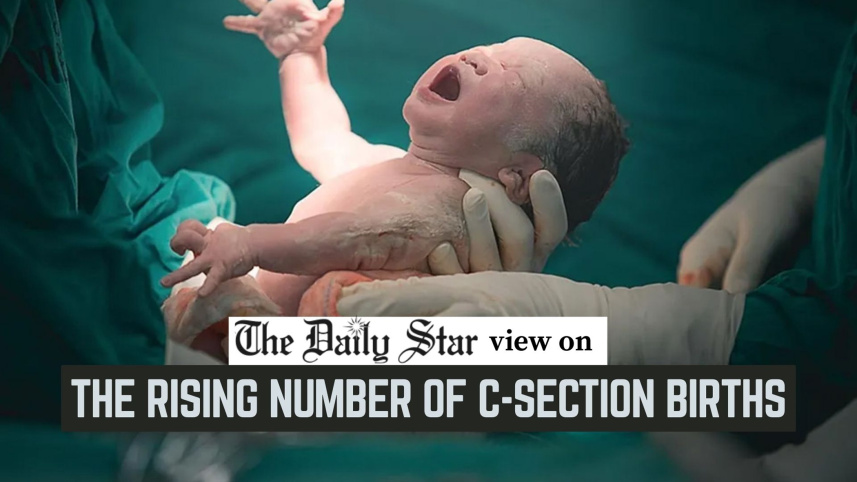
We are deeply concerned by the reckless rise in births by Caesarean section in the country, even when there is no medical need for the surgeries to be performed. Last year alone, around 17 lakh children were born through unnecessary C-section surgeries, according to a recent seminar. Research further found that almost one in two children is born via C-section, as opposed to the global average of one in five children being delivered through surgery. A 2018 estimate by Save the Children suggests that over Tk 5,000 crore is lost every year to these unnecessary procedures.
The number of C-section births has been allowed to rise exponentially over a number of years, mainly due to the absence of any meaningful government action to check it. In the meantime, private healthcare facilities have been able to count crores of taka in profits each year by performing unnecessary C-sections. At present, more than half of all births in Bangladesh happen surgically. While many institutions lack sufficient capable staff, emergency medical support and standard labour rooms, surgical delivery is also opted for (even by patients themselves in many cases) due to being less time-consuming than normal delivery. Additionally, patients’ and families’ lack of awareness regarding the best option for them is another barrier to preventing a C-section where a normal delivery would be sufficient. According to research, eight or nine out of every 10 deliveries in Bangladesh’s private hospitals are done via C-sections.

According to experts, unnecessary C-section birth could negatively impact a child’s immunity and long-term health. Natural birth allows beneficial microbes or the mother’s microbiome to be transferred to the newborn, and also allows for immediate skin-to-skin contact between mother and baby, which is recognised by the World Health Organization as a fundamental aspect of neonatal care.
It is up to the healthcare authorities to put a monitoring system in place to oversee the activities of private hospitals, as that is where the ratio of normal to C-section deliveries is the most dismal. Community-based campaigns must also be initiated to raise awareness against unnecessary C-sections. Most importantly, healthcare facilities across public and private sectors must be bolstered to ensure that patients receive the best possible prenatal and postnatal care, while not being charged dubious amounts in hospital bills.
 For all latest news, follow The Daily Star's Google News channel.
Comments