


Fatal landslides in Chattogram are man-made
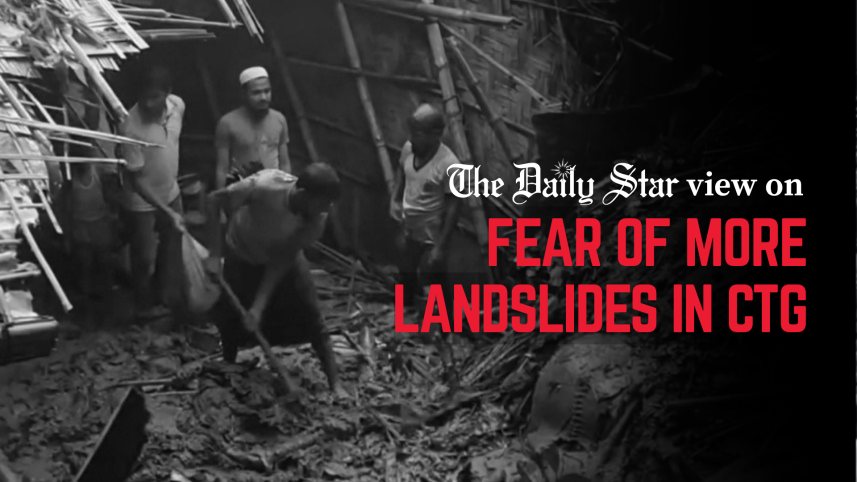
At least 11 people have died in separate landslides in Cox’s Bazar. As tragic as they are, these deaths are as predictable as rain in monsoon. Illegal hill-cutting, deforestation, poor drainage, and unplanned settlements have made Chattogram’s hills precarious and unstable. Thousands of families live under the threat of landslides as the rainy season rages on. Those who live in these hills know the risks; every heavy rainfall keeps them awake at night in sheer terror. But safe housing is unaffordable. Residents include garment workers, day labourers, and other low-income people. As for the Rohingya who live in refugee camps built after clearing hills, relocation to a safer area is not even an option.
Every monsoon, authorities deploy volunteers, announce warnings through loudspeakers, and arrange shelters for evacuation. But these are emergency measures to save lives in the event of a landslide; they don't solve the underlying problem. The same families return to their houses and live under the same risky conditions. In 2007, as many as 128 people died in a landslide in Chattogram. Between 2000 and 2018, the total death toll was 279.

Ukhiya and Teknaf house 12 lakh Rohingya in 33 camps which were built after clearing forests on the hills, with no thought of the devastating future consequences to the environment and to human lives. Relocation is a complicated affair given that they are displaced people from another country. But to save lives, safer housing has to be part of the plan. For the short term, more shelters, improving the drainage system, and continuing with reforestation efforts will provide some soil stability. The regular deaths due to landslides should prompt the government, with the help of the international community, to find a sustainable solution to the Rohingya crisis.
The government must also strategise on how to incorporate affordable housing into its climate adaptation and disaster management plans. At the same time, it must crack down on illegal hill-cutting. For over a decade, we have witnessed indiscriminate hill-cutting by land-grabbers and developers enjoying political patronage. The present government must put a complete stop to this practice and ensure that no new settlements are permitted in identified high-risk zones. Long-term plans must include afforestation, better drainage, and slope stabilisation.
For emergency situations, authorities can introduce early warning systems such as SMS alerts, mobile app notifications, and evacuation protocols. Community volunteers also have to be mobilised and trained as first responders. Moreover, a unified landslide risk management strategy is needed under which the disaster management, city corporation, local government and housing authorities will work together. When the rain stops, people will return to the same vulnerable hills and face the same risks when the next heavy rain comes. This cycle has to be stopped. Until the government addresses the housing problem and permanent rehabilitation in its environmental protection plan, landslides will continue to end precious lives.
 For all latest news, follow The Daily Star's Google News channel.
Comments