


Ducsu’s politics of revisionism
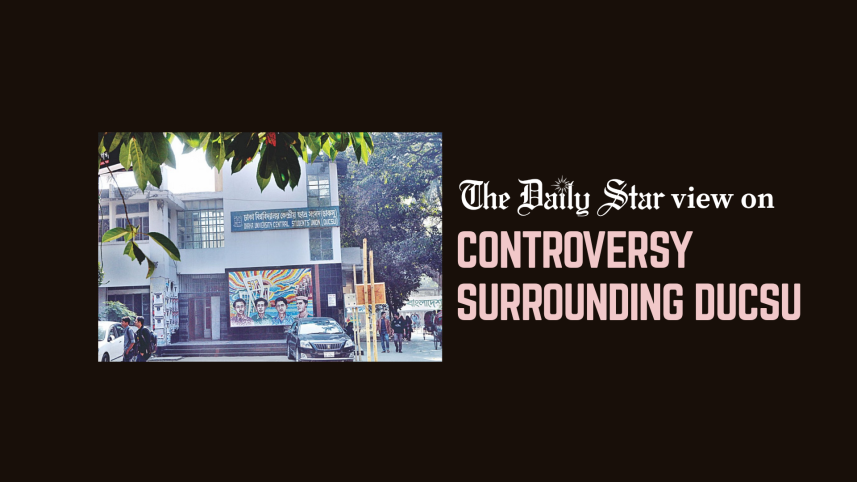
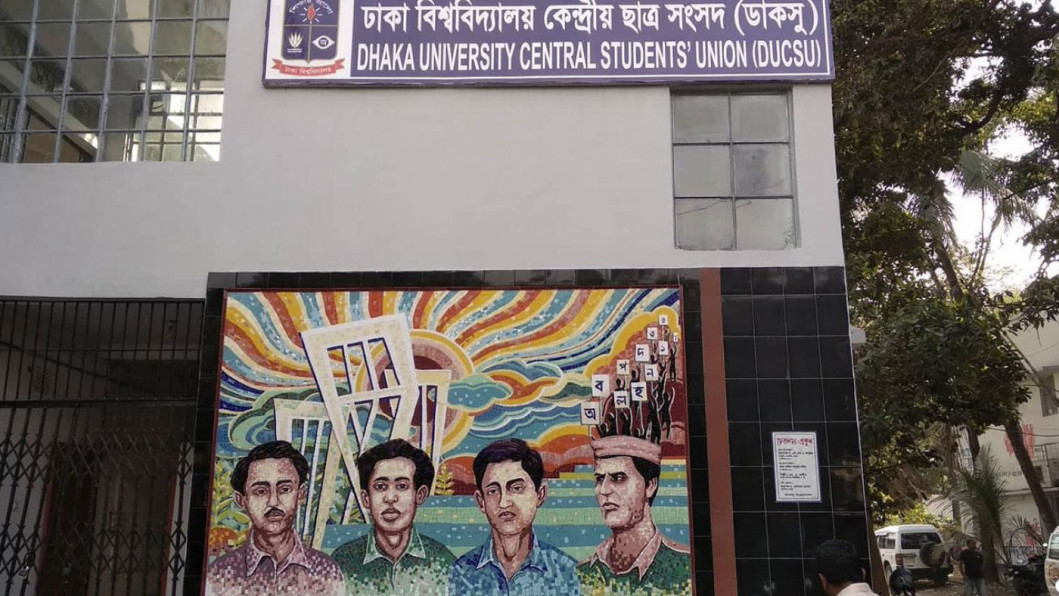
The surprise attempt by the outgoing leaders of the Dhaka University Central Students’ Union (Ducsu) to rewrite the history of our nation by altering its archive is deplorable. In reorganising Ducsu’s archive, its top executives—who ran for office as non-partisan but are now identified as leaders of Islami Chhatrashibir, the student wing affiliated with Jamaat-e-Islami, a party historically opposed to the creation of Bangladesh—have clearly overstepped their remit by making such changes without authorisation from the university administration. Their arbitrary inclusion of an infamous photograph of Pakistan’s founder, Muhammad Ali Jinnah, delivering his speech declaring Urdu as the state language is a blatant affront to the spirit of our Language Movement and independence struggle.

There can be little justification for dismissing this as mere ignorance. Jinnah’s speech, delivered at the University of Dhaka 78 years ago, was immediately met with strong protests from the students. His attempt to impose Urdu on a population in which Bangla was spoken by the overwhelming majority helped fuel the Language Movement and, more broadly, the struggle for self-rule that ultimately contributed to the break-up of Pakistan and the birth of independent Bangladesh.
The outgoing Ducsu leadership’s audacious decision to prominently feature Jinnah, therefore, raises questions about its intentions. Those questions become even more pertinent given the removal of the photograph of Bangabandhu Sheikh Mujibur Rahman’s historic March 7, 1971 speech, one of the defining moments of Bangladesh’s struggle for independence. Jinnah’s role in establishing Pakistan as a separate homeland for Muslims in the subcontinent following the end of British colonial rule is undisputed. Equally undisputed is Bangabandhu’s historic role in leading the struggle that culminated in the creation of Bangladesh through its separation from Pakistan. Any attempt to diminish Bangabandhu while simultaneously glorifying Jinnah—particularly by individuals associated with a political organisation that opposed Bangladesh’s Liberation War—amounts to an effort to construct a narrative that runs counter to the established history of the nation.
This is not, however, the only instance in which the current Ducsu leadership appears to have exceeded its mandate. It has become embroiled in a number of controversies, raising questions about the scope of its activities and the authority under which they were undertaken. We also question why the Dhaka University administration remained seemingly passive in the face of several unauthorised activities by Ducsu, which increasingly appeared to operate as a parallel authority within the institution. These activities reportedly included assessing teachers’ academic performance and undertaking construction and engineering works on campus—functions that clearly fall outside the normal remit of a students’ union.
We welcome the administration’s assertion that the latest display was incompatible with the history of the Language Movement and the Liberation War. The university authority should complete its investigation without delay, and take appropriate action against those responsible for violating the university’s existing laws, regulations, policies and administrative structures. Any attempt to establish a parallel administration by bypassing or defying the rules and regulations of the institution must be dealt with firmly.
 For all latest news, follow The Daily Star's Google News channel.
Comments