


Dhaka must reclaim its lost water bodies
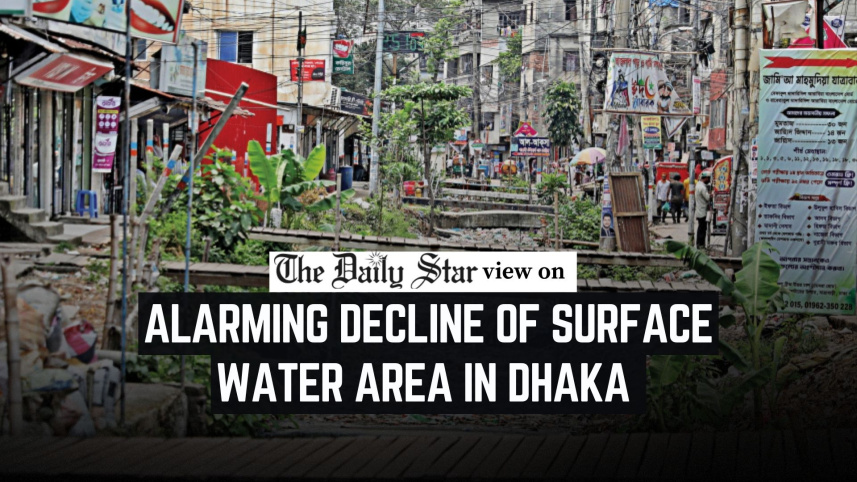
We are deeply concerned by the preliminary findings of a government study on Dhaka’s disappearing water bodies. The study, conducted by the Urban Development Directorate (UDD) covering 3,126.64 sq km across Dhaka and seven peripheral districts, provides a clear picture of how the region’s rivers, canals, ponds and wetlands have been systematically lost. It reveals that over the past 250 years, the surface water area of the capital and its surrounding regions has declined by a staggering 83.40 percent—from around 383 sq km in 1776 to just 64 sq km in 2025. This has made Dhaka more vulnerable to flooding and waterlogging, while putting its environment at immense risk.


Researchers estimate that nearly 319 sq km of surface water and water retention areas have disappeared primarily due to rapid urban expansion, unregulated landfilling, riverbank encroachment, and the filling or enclosure of open canals. The disappearance of historic waterways such as the Konai, Painar, Pandu, Narai and Ati rivers, as well as the reduction of Dholai Khal to fragmented remnants, show how unplanned development has severely damaged Dhaka’s natural drainage system. The city once had around 344 km of canals, but approximately 124 km have now been lost. Over the last 44 years alone, around 60 percent of its water bodies have disappeared.
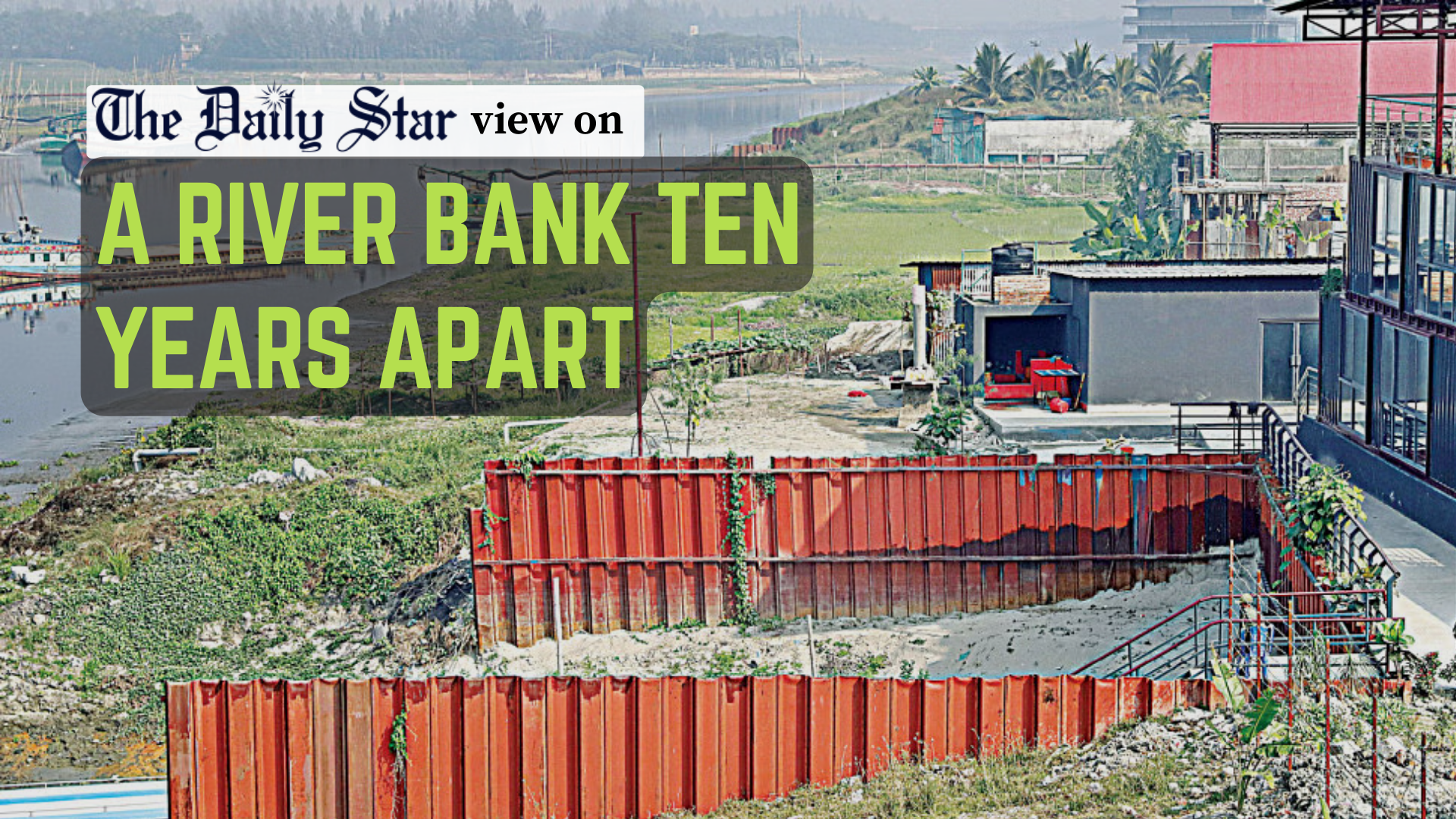
We have witnessed the consequences of this destruction repeatedly. Dhaka's worsening waterlogging during heavy rainfall is directly linked to the loss of natural water retention areas and the disruption of drainage networks. Sadly, despite decades of warnings and laws to protect water bodies, encroachment and pollution continue unabated. Those that remain are also being polluted by household and industrial waste. At the same time, the connectivity between canals and rivers has been severely disrupted. As experts have pointed out, flood protection infrastructure built after the 1988 flood cut off many canal mouths from rivers. Reopening these links wherever possible must be a priority.

The government must formulate a clear action plan to restore Dhaka's water bodies. It should prepare an updated map of all existing and historically lost water bodies and identify the most important sites for immediate protection and restoration. It should strictly enforce the laws against encroachment and illegal filling. The authorities must also stop the discharge of untreated household and industrial waste into water bodies, regularly monitor water quality, and take action against polluters. Canal mouths that can be reopened should be restored, while priority canals and water retention areas should be re-excavated. Meanwhile, all development projects should be assessed to ensure that they don't further obstruct natural drainage or sever connections between canals and rivers. Furthermore, the agencies responsible for protecting these resources must be held accountable for failing to prevent their destruction. Saving Dhaka's remaining water bodies is essential for the city's survival.
 For all latest news, follow The Daily Star's Google News channel.
Comments