


Clumsy execution of fuel rationing is causing crises
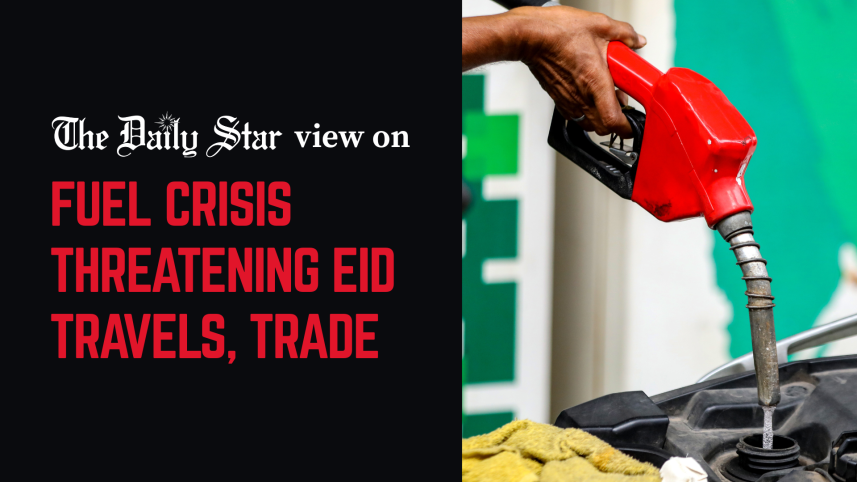
Every year, as Eid-ul-Fitr approaches, millions of people leave the congested capital of Dhaka for their ancestral homes. Even in normal times, the annual exodus is a logistical nightmare. This year, however, the journey faces an additional obstacle: a severe fuel shortage that has left buses hesitant to leave the terminals.
The origins of the squeeze lie far beyond Bangladesh’s borders, of course. The US-Israeli attacks on Iran and Tehran’s subsequent retaliation have sent tremors through global energy markets, delaying the arrival of crucial fuel shipments at the port of Chattogram. Faced with a genuine supply shortfall, the new government responded with rigid fuel rationing: motorcycles are now limited to two litres a day, private cars to ten. More importantly, long-haul buses have seen their allocations drastically reduced, according to a report in Samakal.
 For all latest news, follow The Daily Star's Google News channel.
 Even the announcement of strict quotas set off a rush at filling stations. The government initially cut octane and petrol supplies to filling stations by 25 percent before easing the restriction to 15 percent in an attempt to stabilise the market. The adjustment eased the immediate crisis slightly. The constraint is not only the volume of fuel available but also the time required to obtain it. Drivers who once spent ten minutes filling their tanks now wait in queues for up to three hours. Fuel rationing has begun to weigh on the country’s supply chains. In the northern agricultural hub of Bogura, the cost of transporting 10 to 12 tonnes of vegetables to Chattogram has jumped from Tk 25,000 to Tk 35,000 in a matter of weeks, according to Prothom Alo. Fares for shipments to Dhaka’s Karwan Bazar have risen by Tk 9,000 per trip.
The economic ripple effects have spread quickly. In construction, the price of steel rods has already begun to climb. The garment sector—the lifeblood of Bangladesh’s foreign exchange earnings—depends on a constant flow of covered vans transporting goods to Chattogram port. Exporters say pre-Eid freight costs have risen by as much as Tk 6,000 per van.
The official response, we must say, has been heavy on reassurance and light on economic realism. Ministers have offered comforting promises that fuel will soon flow more freely and prices will remain unchanged. Rationing may indeed be unavoidable during a severe supply shock, but applying it bluntly across every sector is an unforced error. If the government hopes to prevent a surge in inflation, it must gradually introduce monitored exemptions for daily essentials and export shipments.
To be fair to the government, this crisis was largely inherited. No administration would welcome geopolitical turmoil and delayed fuel shipments just as it assumes office. The fragile energy supply chain and procurement vulnerabilities predate the current leadership. Still, the responsibility now lies with the government to prevent economic paralysis and an inflationary spiral. Extending depot operating hours and prioritising freight transport over private vehicles would be sensible first steps. Attempting to suspend the laws of supply and demand by decree rarely ends well. Panic, after all, is a very poor substitute for fuel.
Comments