


Why Bangladesh’s vegetable exports fail long before take-off
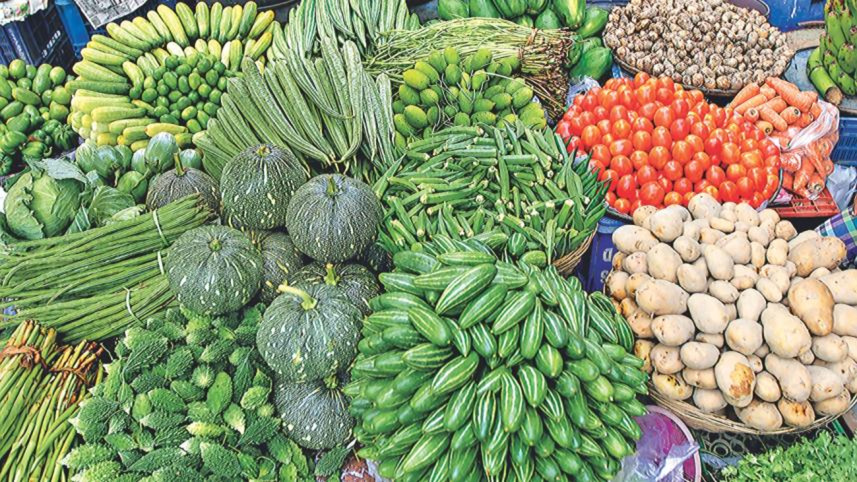
Bangladesh produces more than 1.7 crore tonnes of vegetables annually, yet exports account for less than 0.3 percent of total output. This is mainly due to a combination of poor practices and decisions leading up to boarding the air freight.
When we talk about the challenges surrounding our vegetable exports, we often frame the issue as a simple question of export promotion, certification, or country branding. But the real issue is whether our vegetable production and supply chain can consistently deliver safe, traceable, and market-ready output. A major misunderstanding in our policy formulation is the assumption that awareness automatically leads to compliance. Many farmers have heard of Sanitary and Phytosanitary (SPS) requirements but do not follow it. SPS measures are food safety and plant health rules meant to ensure exported products are safe and free from harmful pests, diseases, and chemical residues.

This gap between awareness and compliance is one of the most serious weaknesses in Bangladesh’s vegetable export chain. Farmers may know about safe pesticide use in principle, yet very few keep records of pesticide or fertiliser application. Without records, there is no reliable traceability and without that, exporters cannot confidently verify compliance.
The biggest challenge, however, is likely overuse and misuse of pesticide. This is where Bangladesh’s export ambition runs directly into farm level realities. Excessive spraying, frequent chemical application, and mixing multiple pesticides in one spray cycle raise the risk of residue exceedance. These practices are often shaped by immediate pressure from pests, fear of crop loss, and advice from agro-input shopkeepers, instead of formal guidance from government agriculture officers. So, when exporters later face residue related problems, the issue is often portrayed as an export side problem, even though it is actually a governance problem on the production side.
The same applies to pre-harvest intervals (PHI) which is the minimum waiting time between the last pesticide application and harvest. This is one of the most basic principles of safe production for export. Yet in practice, farmers often harvest too quickly after spraying. Market demand is immediate, so is pest pressure and the need for cash. On the other hand, the benefits of compliance are distant, uncertain, and often captured by someone else in the chain. Until this incentive mismatch is addressed, PHI noncompliance will continue to undermine export competitiveness.
Another uncomfortable truth is that Bangladesh’s vegetable export system still depends heavily on fragmented sourcing. Most farmers do not sell directly to exporters. They sell to local markets and middlemen. This weakens traceability and encourages mixing of produce from different sources, including farmers who may not have followed safe production practices. When exporters need to fill shipment volumes, the system becomes even more vulnerable to compliance uncertainty. In effect, we expect strict quality control at the end of the chain after allowing disorder in the middle.
Post harvest handling is another neglected issue. Public discussions on export rejection often focus on pesticide residues, which is important, but hygiene and packaging matter too. If produce is not washed properly, if packaging materials are unsafe, or if pesticide and fertiliser sacks are reused for vegetables, contamination risks rise sharply. This has a direct effect on export credibility. We cannot build a reputation for safe vegetable exports if basic post-harvest hygiene remains weak at the farm and local aggregation level.
Similarly, when it comes to testing infrastructure, exporters need rapid and reliable residue testing, especially for perishable vegetables. But when testing facilities are limited, centralised, expensive, or slow, the compliance system becomes impractical. In Bangladesh, there are very few private and public testing labs that can conduct the tests required for vegetable exports. Even then, the tests take a few weeks to produce results. A few weeks can be a significant amount of time in vegetable value chains. Which is why farmers and exporters often neglect proper testing prior to exports.
Then comes the obstacle everyone acknowledges but few address effectively: logistics, especially the absence of a functional cold chain. Bangladesh cannot scale fresh vegetable exports if cold chain management is treated as optional. The problem is made worse by the centralised handling system, where vegetables must first be sent to the packing house in Shyampur for sorting, grading, inspection, and issuance of the Phytosanitary Certificate (PC), which confirms export eligibility. As a result, even vegetables arriving from northern districts often have to pass the airport area, travel onward to Shyampur for certification, and then return to the airport for shipment. This back-and-forth movement increases transit time, handling, and exposure to non-cold storage conditions, all of which can significantly reduce product quality and export viability.
So, what does any of this mean for policy? It means Bangladesh should stop treating SPS compliance as a final checkpoint before export. Compliance has to be built into the full value chain. That requires coordinated action across farmer training, pesticide usage, PHI enforcement, traceability systems, safe packaging, residue testing, and cold chain logistics. It also requires something we often avoid discussing: incentives. Farmers and traders will not sustain better practices unless the market rewards compliance and the system makes compliance feasible.
Bangladesh has the production potential. The question is whether it is willing to make the institutional and logistical investments needed to export safely and consistently. The bottlenecks in our value chain are not isolated and they are not accidental. They are systemic. And unless they are addressed as a system, Bangladesh’s vegetable export ambitions will continue to fall short on their promise.
Tahmeed Rifa works at Innovision Consulting Private Limited.
Views expressed in this article are the author's own.
Follow The Daily Star Opinion on Facebook for the latest opinions, commentaries, and analyses by experts and professionals. To contribute your article or letter to The Daily Star Opinion, see our guidelines for submission.
 For all latest news, follow The Daily Star's Google News channel.
Comments