


Boeing deal reflects geopolitics more than aviation strategy
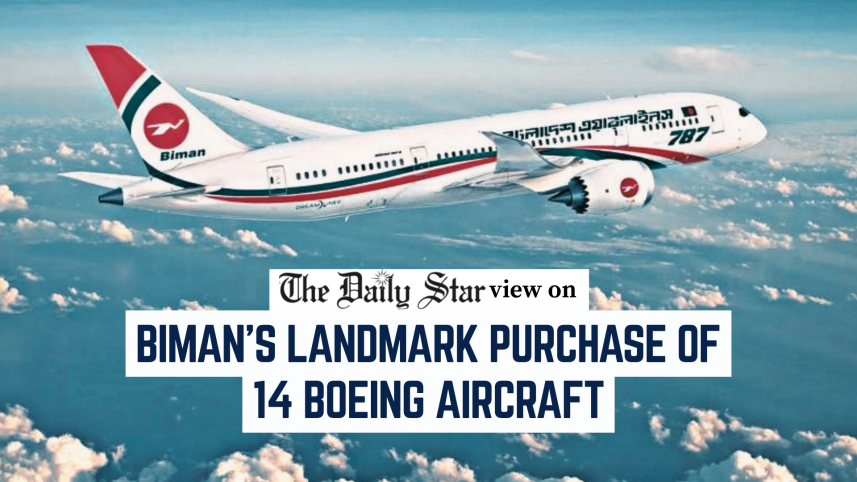
The decision to spend $3.7 billion on American jetliners is partly a calculation of geopolitical intent. Under a deal with Boeing, Biman Bangladesh Airlines will buy 14 new aircraft—eight 787-10 Dreamliners, two 787-9s and four 737 MAX jets. It fulfils a commitment made by the interim government in February, when Dhaka and Washington signed a reciprocal trade agreement to address Bangladesh’s $7 billion surplus with the United States.
The politics behind all this is not difficult to read. The Trump administration, now in its second term, has been clear about its preference for reciprocal arrangements. As Washington began signalling tariff threats, Dhaka moved quickly to commit to buying American goods—and to make those commitments visible. Purchasing Boeing aircraft fit neatly into that logic and appeared to have resonated in Washington. Navigating a fragile transition, the interim government ultimately yielded to American pressure, leaving a large financial obligation for the next administration to inherit, just days before Bangladesh’s national election.

The choice of Boeing over Airbus carries its own subtext. The Awami League government had announced plans to purchase ten Airbus jets, a move that would have deepened Biman’s ties with European manufacturers and signalled strategic diversification. After the mass uprising of 2024, the interim government reversed course. Airbus argued, reasonably, that its aircraft would diversify Biman’s all-Boeing fleet. Boeing, however, made the stronger case that it had influence in Washington. What stands out is not Boeing’s victory over Airbus, but the circumstances in which the decision was made. The original trade agreement was presented as a diplomatic success, yet it was concluded without any scrutiny, at a time when no parliament was in place.
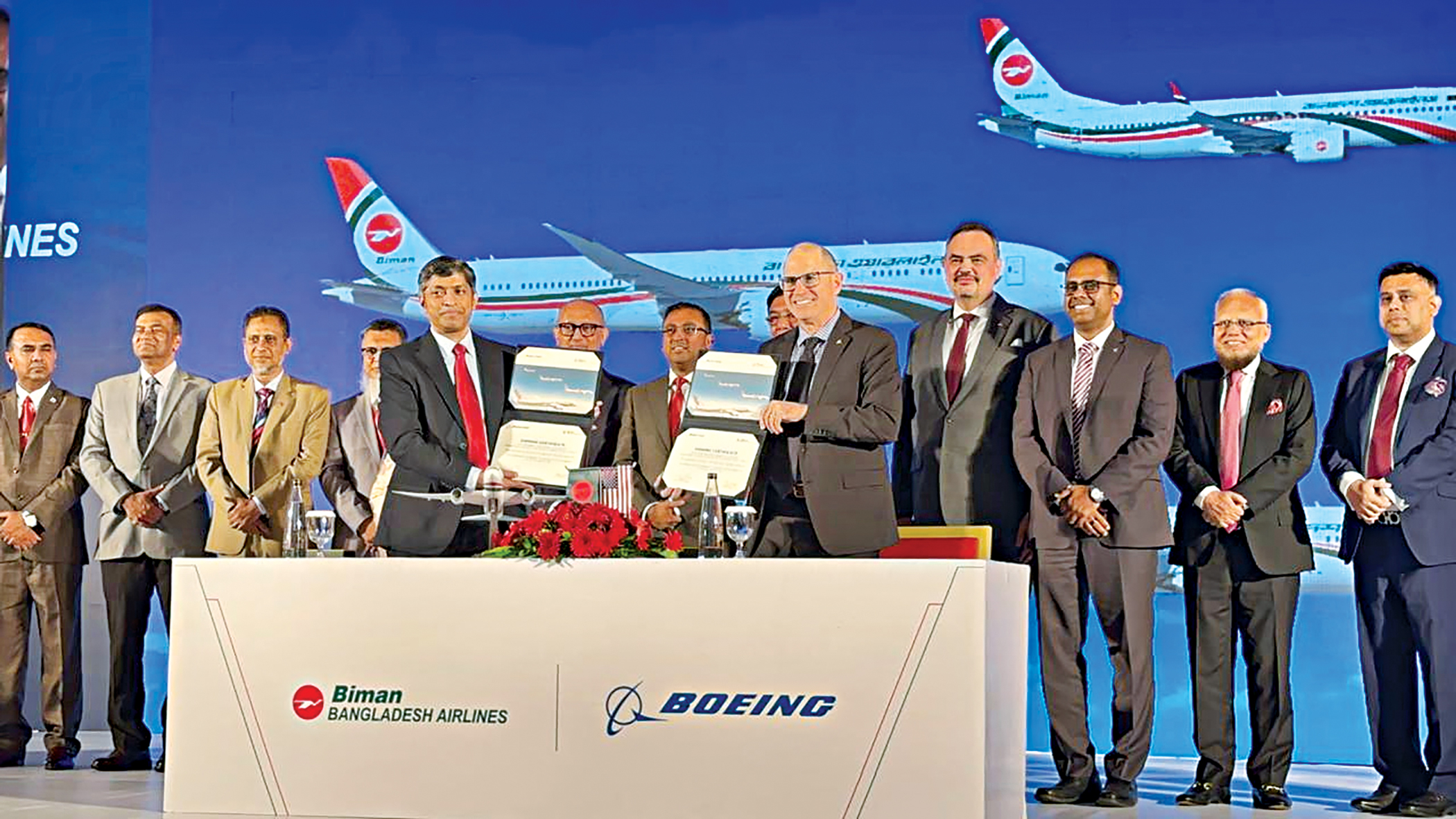
Geopolitical logic and commercial logic do not always align. Biman currently operates around 19 aircraft on international routes, well below the 30-35 it is believed to require. The government will provide a sovereign guarantee to underwrite the purchase, meaning that if Biman cannot service the debt, the state will. Payments are expected to extend over 20 years, costing between Tk 1,500 crore and Tk 2,000 crore annually.
To be fair, the timing is not entirely misplaced. The near completion of Dhaka airport’s third terminal offers Biman an opportunity to expand capacity and position Dhaka as a regional hub. The wide-body Dreamliners, designed for long-haul efficiency, could strengthen services to Europe and the Gulf. Passenger demand is rising. A flag carrier that consistently under-invests in its fleet risks losing routes to competitors. The harder question is governance. Biman has not historically operated as an airline where aircraft are ordered solely based on network strategy, yield management or fuel economics. Political considerations have shaped its routes, staffing and procurement decisions. Unless there is a break from that pattern, Bangladesh will be left with an expensive fleet and a generation of debt.
Appeasing the US with a massive Boeing order, some believe, is a shrewd way to mitigate tariff risks. But the deal’s real value will depend on the less visible work of running a better-managed airline. That is the more difficult commitment—and the one that ultimately matters most.
 For all latest news, follow The Daily Star's Google News channel.
Comments