


War grinds on amid global push for talks
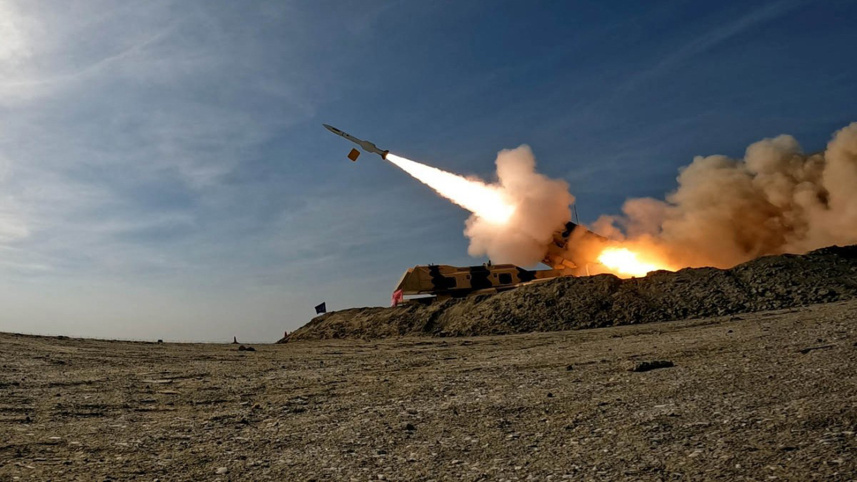
Iran and Israel traded fresh strikes yesterday as the Middle East war raged on, though a diplomatic push to bring Iran and the United States to the negotiating table appeared to be gathering pace.
Tehran has denied that talks with the US are taking place, and analysts say that even if they do go ahead, reaching a deal will be difficult given the deep distrust between the parties and Iran’s hardening stance on conditions.

The war, sparked by US-Israel attacks on Iran that killed its supreme leader, has upended global energy markets, roiled the world economy, and spiralled throughout the region.
Israel’s army said it had conducted a “large wave” of airstrikes across several areas of Iran, which had earlier launched a “direct hit” on a building in an upscale area of Tel Aviv.
Earlier, Iranian media reported US-Israeli warplanes had struck two gas facilities and a pipeline.
Gulf nations Bahrain, Kuwait, the United Arab Emirates and Saudi Arabia said they intercepted renewed drone and missile attacks yesterday. The UAE defence ministry said that a Moroccan contractor with the Emirati military was killed in Bahrain in an Iranian attack.
On Monday, Trump said that his administration was speaking with an unidentified “top person,” and paused his threat to attack Iranian energy sites for five days.
But Tehran’s parliamentary speaker, Mohammad Bagher Ghalibaf rebuffed it as “fake news” and said no negotiations were underway. He said lies are being “used to manipulate financial and oil markets”.
Despite the denial, Iran’s foreign ministry acknowledged that messages had been relayed by “some friendly countries” indicating a “US request for negotiations aimed at ending the war”.
Yesterday, Pakistan’s Prime Minister Shehbaz Sharif said Islamabad was prepared to host negotiations to stop the war, a day after he spoke with Iran’s President Masoud Pezeshkian.
US media outlet Axios reported US negotiators Witkoff and Jared Kushner may meet an Iranian delegation for talks in Pakistan as soon as this week, with Vice President JD Vance possibly joining.
Traditional mediator Qatar yesterday said it “supports all diplomatic efforts” to end the war.
Amid the confusion over talks, China’s top diplomat Wang Yi yesterday urged his Iranian counterpart Abbas Araghchi in a phone call that “talking is always better” than fighting.
Araghchi told Wang that “the Iranian side is committed to achieving a comprehensive end to the conflict, not just a temporary ceasefire”, and thanked China for its humanitarian assistance.
The US State Department announced that Secretary of State Marco Rubio would meet G7 counterparts in France on Friday to discuss Iran, his first foreign trip since the war began.
In unusually strong comments, German President Frank-Walter Steinmeier yesterday said the US-Israeli war on Iran was “a politically disastrous mistake”.
Israel meanwhile stepped up its campaign against the Iran-backed Hezbollah militant group in Lebanon, saying its military would take control of south Lebanon up to the Litani river, around 30 kilometres from the border.
Israeli pounded Beirut’s southern suburbs throughout the night while a strike on Bshamoun, south of the capital, killed two people yesterday, according to Lebanon’s health ministry.
Meanwhile, Israeli emergency services said a woman was killed in the north of the country yesterday following rocket fire from Lebanon.
Israel’s attacks in Lebanon have killed more than 1,000 people, according to Lebanon’s health ministry, and displaced more than a million people.
 For all latest news, follow The Daily Star's Google News channel.
 The war has killed at least 3,230 Iranians, including 1,406 civilians, according to the US-based Human Rights Activists News Agency. AFP cannot access strike sites nor independently verify tolls in Iran.
Meanwhile, The New York Times, citing US officials, reported that Saudi Arabia’s de facto leader, Prince Mohammed bin Salman, has been pushing Trump to continue the war against Iran, arguing that the US-Israeli military campaign presents a “historic opportunity” to remake the Middle East.
According to the report, in a series of conversations over the last week, Prince Mohammed has conveyed to Trump that he must press toward the destruction of Iran’s hard-line government.
Analysts familiar with Saudi government thinking say that while the prince probably preferred to avoid a war, he is concerned that if Trump pulls back now, Saudi Arabia and the rest of the Middle East will be left to confront an emboldened and furious Iran on their own.
In this view, they say, a half-finished offensive would expose Saudi Arabia to frequent Iranian attacks. Such a scenario could also leave Iran with the power to periodically close the Strait of Hormuz.
Tehran had vowed to deploy naval mines and strike power and water infrastructure across the region if its power sites are targeted, threatening to escalate an energy crisis of already historic proportions.
Analysts also doubt a positive outcome from the talks, even if they take place, given the conditions likely to be set by Iran and the US.
Sources in Tehran say Iran’s negotiating posture has hardened sharply since the war began, with the Revolutionary Guards exerting growing influence over decision-making.
In any talks with the US, Iran would not only demand an end to the war but concessions that are likely red lines for Trump -- guarantees against future military action, compensation for wartime losses and formal control of the Strait of Hormuz, the sources said.
Iran would also refuse to negotiate any limitations to its ballistic missile programme, they said.
The three senior sources said Iran had only had preliminary discussions with Pakistan, Turkey and Egypt over whether the groundwork existed for talks with the US over ending the war.
Three senior Israeli officials also yesterday said that, although Trump seemed determined to reach a deal, they viewed it as unlikely that Tehran would agree to US demands, which they believed would include an end to Iran’s ballistic missile and nuclear programmes.
Comments