


38 Bangladeshis rescued from cyber scam compounds in Cambodia return home
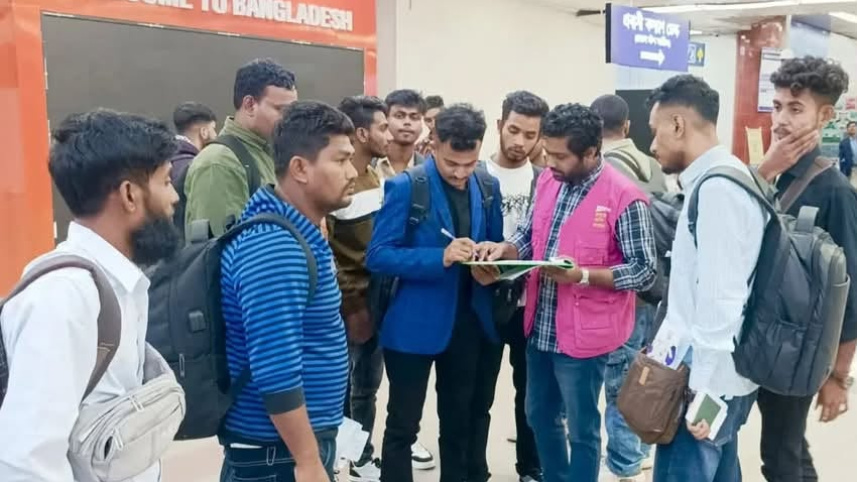
Thirty-eight Bangladeshis rescued from cyber scam compounds in Cambodia returned home today, with many alleging that they were trafficked there and forced to engage in cyber scams.
The returnees arrived at Hazrat Shahjalal International Airport in Dhaka on a Thai Airways flight at 12:10pm today.

With assistance from Civil Aviation Security and the expatriates’ welfare desk at the airport, BRAC’s Migration Programme provided them with emergency support, counselling and financial assistance to reach their homes.
Around 1,800 more Bangladeshis are waiting to return from Cambodia after the country allowed overstaying foreigners to leave voluntarily without paying fines from September 1, according to a press release by BRAC.
The returnees demanded that the authorities ensure their safety, provide necessary legal support, investigate their allegations and take action against those involved.
BRAC Migration Programme Associate Director Shariful Hasan said many of the returnees were kept inside scam compounds in Cambodia and forced to engage in cyber scam activities.
“Those who returned said some Bangladeshis involved in human trafficking in Cambodia tried to intimidate and pressure them and attempted in different ways to prevent their return,” he said.
Shariful said cyber scams had become one of the most dangerous forms of human trafficking, where people are taken abroad with promises of high-paying jobs and later forced to work in online fraud.
“Those who failed to meet assigned targets faced physical and mental torture. It is necessary to identify the brokers, recruiting agencies and international trafficking networks involved and bring them under the law through proper investigation,” he said.
According to data from the Bureau of Manpower, Employment and Training (BMET), 15,921 Bangladeshis travelled to Cambodia for employment purposes in the last one and a half years.
Earlier in June, 583 Bangladeshis returned home from Cambodia. Many of them had BMET clearance, according to the BRAC release.
BRAC said fraudsters use advertisements for jobs such as computer operators, call centre executives and customer service representatives through fake websites, emails, Facebook, WhatsApp and Telegram to lure jobseekers.
Later, victims are taken to scam compounds, held hostage and forced to conduct online fraud, the organisation said.
 For all latest news, follow The Daily Star's Google News channel.
Comments