


Apple's 50 years of highs, lows, and reinvention
Fifty years ago today, a young engineer named Steve Wozniak had just finished designing a computer circuit board. He showed it to his employer, Hewlett-Packard, not once but multiple times. Each time, they said no. So he and his friend Steve Jobs decided to go into business for themselves.
On April 1, 1976, the pair signed a partnership agreement with a third man, Ronald Wayne, in the Jobs family garage in Los Altos, California. Wayne sold his 10% stake for $800 just two weeks later, worried about the financial risk. It was a decision that would haunt him for decades. But for Jobs and Wozniak, it was the beginning of something that would reshape modern life.

From garage to global giant
Apple Inc. went public in 1980, but its rise was far from steady. In 1985, Jobs left after clashing with the board and then-chief executive John Sculley, the man Jobs had famously lured from Pepsi with the question: “Do you want to sell sugar water for the rest of your life, or do you want to come with me and change the world?”
Without Jobs, Apple struggled. By the mid-1990s, the company was in severe financial difficulty. It had laid off a large portion of its workforce, and rival executives openly mocked its prospects. The rescue came in 1997: Apple bought NeXT for $429 million, bringing Jobs back, and received a $150 million investment from Microsoft, which promised to keep Office on the Mac.
What followed was one of the most remarkable turnarounds in business history. Jobs streamlined Apple’s product line, discontinued underperforming products like the Newton, and introduced the iMac G3, a colourful, translucent machine that embraced USB while still including a floppy drive in early models. It was a clear sign that Apple was thinking differently.
Products that changed the world
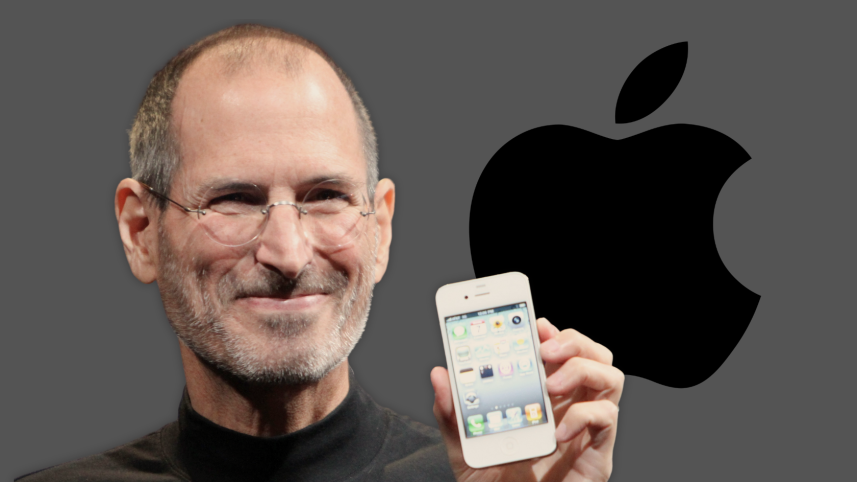
Under Jobs, Apple launched a series of products that defined new categories. The iPod, released in 2001, transformed how people bought and listened to music, especially through its integration with iTunes. The iPhone, unveiled in 2007, revolutionised mobile phones with its multi-touch screen and a mobile version of Mac OS X, later called iOS. It quickly outpaced rivals such as BlackBerry and, with the App Store introduced in 2008, set the template for the modern smartphone era.
The App Store followed in 2008, turning the iPhone into a platform and creating a vast third-party software ecosystem. However, not everything Apple launched was a success. The Lisa (1983), the first personal computer with a graphical user interface, was expensive and slow. The Apple III (1980) faced technical problems and poor sales. MobileMe (2008), a cloud-based service, suffered reliability issues and was later replaced by iCloud.
These failures were instructive, but the company’s hits, like the iMac, iPod, and iPhone, were transformative, redefining both Apple and the wider tech industry. Furthermore, Jobs' attention to detail became legendary. Inside the company, the culture under Jobs was intense, described by some as bordering on obsession, with a near-manic focus on product quality and design.
The Cook era and the ecosystem
After Steve Jobs died of pancreatic cancer in October 2011, Tim Cook took over as CEO. The transition was closely watched, but under Cook, Apple continued to grow. The company launched the Apple Watch in 2015 and AirPods in 2016, moved Macs to its custom Apple Silicon chips beginning with the M1 in 2020, and expanded its services business, including the App Store, Apple Music, iCloud, and Apple TV+.
Apple also made a major push into entertainment. Apple TV+ launched in November 2019, and in 2022, CODA became the first film from a streaming service to win the Academy Award for Best Picture. Shows like Severance and Ted Lasso have since become popular worldwide as well.
Today, Apple employs roughly 166,000 people. It has more than 2.5 billion active devices in use worldwide. Its market value has surpassed $3 trillion, making it one of the most valuable companies in the world.
The challenge ahead: artificial intelligence
The next 50 years may bring new challenges for Apple. Since the launch of ChatGPT in late 2022, the company has faced growing competition from rivals such as Alphabet and Microsoft, both of which are investing heavily in artificial intelligence. Apple has been slower to integrate generative AI into products like Siri, and analysts suggest the company may have been surprised by how quickly consumers adopted AI tools. Some competitors are also developing AI-driven devices that could potentially challenge aspects of the smartphone market.
Despite these pressures, Apple’s devices remain popular, and its services business continues to expand. The company has been increasing production outside China, with more iPhones now assembled in countries such as India. While the future may be uncertain, Apple remains capable of unexpected innovations, even as it navigates a rapidly evolving technology landscape.
References:
1. Apple's 50-year journey from garage to tech titan, March 30, 2026 - Reuters
2. Apple at 50: How a garage startup became a $3.5-trillion titan, March 31, 2026 - Los Angeles Times
 For all latest news, follow The Daily Star's Google News channel.


Comments