


NBR split : Rules of business approved
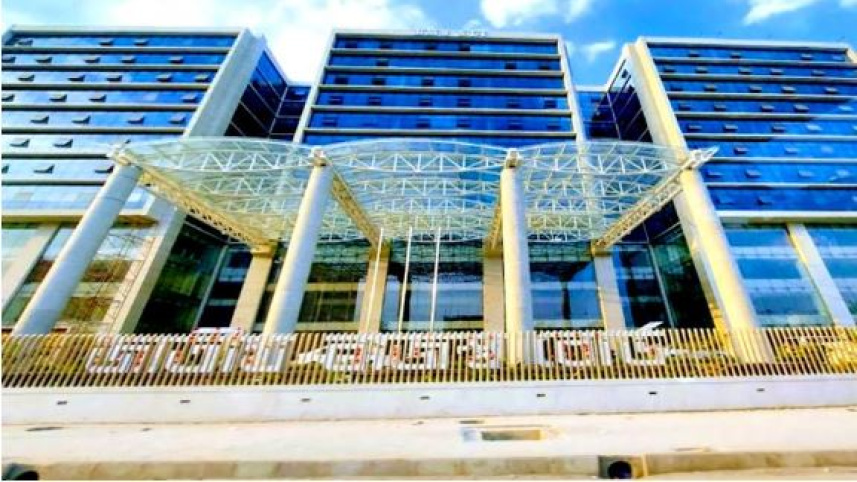
The interim government yesterday approved the rules of business for two new divisions formed by splitting the National Board of Revenue (NBR) -- Revenue Policy and Revenue Management -- as part of efforts to reform the country’s tax system.
A meeting of the National Implementation Committee for Administrative Reorganisation (NICAR) formally approved the rules. Chaired by Chief Adviser (CA) Muhammad Yunus, the meeting was held at his official residence, Jamuna.

“The two divisions are expected to begin operations in February separately,” CA’s Press Secretary Shafiqul Alam said at a briefing after the meeting, quoting NBR Chairman Md Abdur Rahman Khan.
“The decision for this separation was made quite some time ago, and a lot of work has already progressed accordingly. However, since approval by NICAR is required under government rules, it was formally approved on Tuesday,” he added.
The divisions will be under the finance ministry.
The rules of business are the formal guidelines that define the functions, responsibilities, operations, and decision-making procedures of the government ministries and divisions.
NBR’s split follows the promulgation of the Revenue Policy and Revenue Management Ordinance, 2025, which was issued in mid-May with the stated objective of modernising tax administration, enhancing revenue collection, and strengthening transparency and accountability.
Bangladesh currently has one of the lowest tax-to-GDP ratios, and reforms have long been urged by economists and multilateral lenders such as the International Monetary Fund (IMF) and the World Bank.
Under the new framework, the Revenue Policy Division will be tasked with framing tax legislation, setting tax rates, overseeing international tax treaties, and formulating strategies to prevent tax evasion and avoidance.
The division will also monitor revenue trends and assess emerging patterns of tax avoidance and evasion.
On the other hand, the Revenue Management Division will be responsible for the operational aspects of revenue administration, including the collection and enforcement of income tax, value-added tax (VAT) and customs duties. Its mandate will also cover audit functions and overall revenue management.
The move to reform the tax system is an initiative taken to comply with a condition set by the IMF, tied to a $5.5 billion loan to Bangladesh.
The interim government, initially after issuance of the ordinance, faced prolonged protests by NBR officials last year, which disrupted customs operations and tax collection for nearly two months, significantly affecting revenue inflows.
The agitation stemmed from concerns over administrative restructuring, career progression, and institutional autonomy.
During this period, work stoppages, sit-ins and limited cooperation by sections of the workforce affected income tax, VAT and customs operations, leading to delays in return processing, audits and clearance of imported goods.
Following the unrest, the government introduced amendments and enacted the Revenue Policy and Revenue Management Ordinance, 2025, on September 1 of last year.
According to the NBR officials, the newly staffed structure proposal called for a major expansion of the Revenue Policy Division, where the number of staff would rise from 117 to 287 -- a 145 percent increase -- to strengthen research, policy development, and economic analysis.
Meanwhile, the Revenue Management Division would grow by 28 percent, from 615 to 790 officials, to strengthen compliance, expand the tax base, and reduce evasion.
The plan also includes the removal of several outdated positions, such as hardware engineer, statistical investigator, draftsman, terminal operator, punch card operator, record sorter, and despatch-rider, reflecting a shift toward a more modern, technology-driven revenue system.
 For all latest news, follow The Daily Star's Google News channel.
Comments