


Manifesto expectations: End partisan influence in bureaucracy

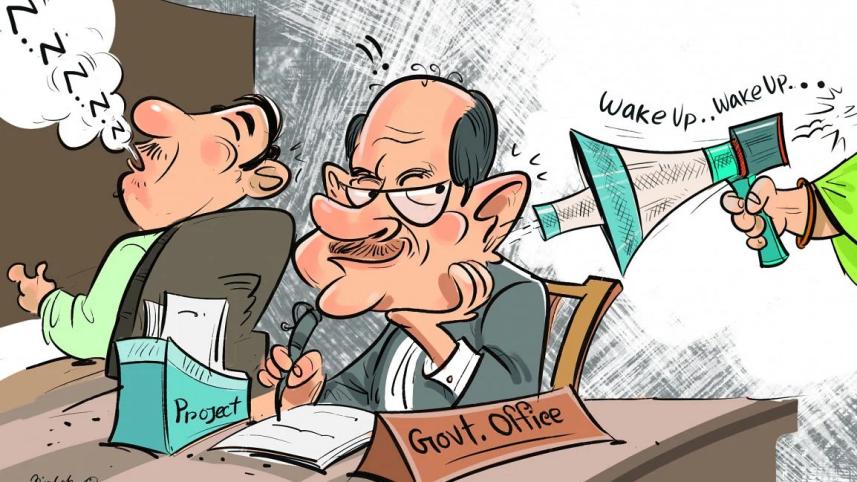
In their election manifestos, political parties should clearly commit to reforming public administration, leaving no scope for partisan loyalty in the bureaucracy, say former and serving government officials.
The parties should also outline how they will overhaul the recruitment process and implement a merit-based pay structure if they are voted to power. Efficiency and integrity should be the main criteria for promotion and posting, they say.

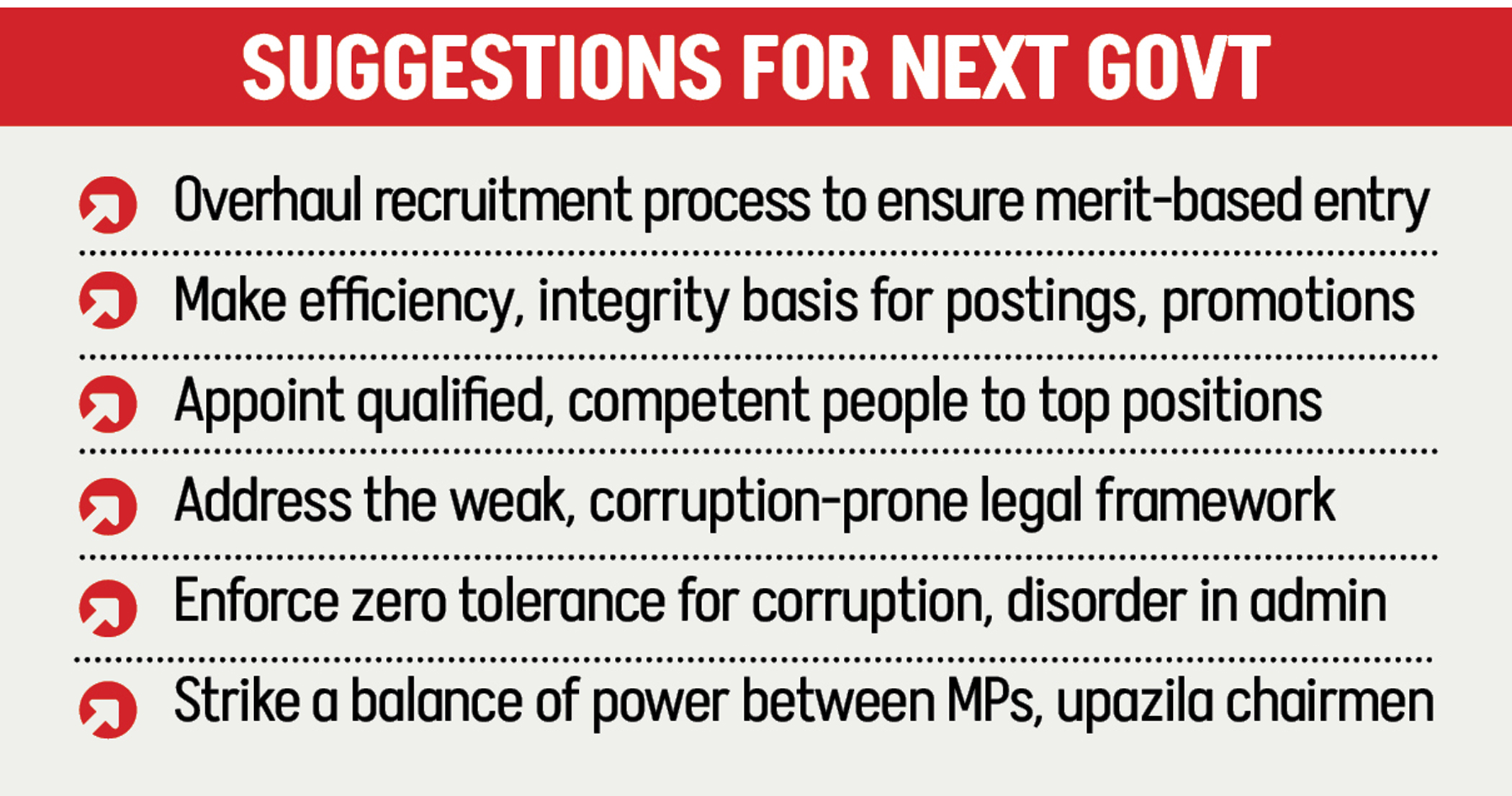
“Qualified and competent people must be appointed at all levels. Honesty and efficiency, not partisan loyalty, should be the criteria for appointing secretaries and heads of agencies as well as officials in the Public Service Commission, the Anti-Corruption Commission, and the Election Commission,” said former secretary Abdul Awal Mazumder.
Terming the current state of the civil service deplorable, he said no other civil service in Asia is performing so poorly. Political parties have the most important role in overcoming this situation, and in their election manifestos, they should make commitments to play their due part.
Mazumder, also former rector of Bangladesh Public Administration Training Centre, said that training institutions require major restructuring, and officers with a strong interest in training should be given priority for leadership roles.
Stressing the need for legal reforms, writer and former additional secretary Firoz Mia said this is the first requirement for restoring transparency and accountability in public administration.
The legal framework for public administration was inherently weak and was further undermined during the tenure of the previous government. If the next government wants to restore discipline in the administration, it must start with legal reform, he noted.
The existing Government Service Act and related rules leave ample scope for corruption. At present, many officials do not think twice before indulging in corruption, knowing that their jobs won’t be at risk no matter how grave their wrongdoings are, Firoz pointed out.
It is not possible to build a modern administration with laws and rules that facilitate corruption, he added.
Seeking anonymity, an official from the information cadre said the next government will need to focus on addressing the disparities in benefits and perks among cadre officers of the same rank.
It is natural that some officials will hold higher posts and enjoy more benefits, but who will secure those positions should be determined by examinations, said the official.
“Flattery of ministers or secretaries must not become a ladder to higher posts. We can have an efficient bureaucracy only after this practice stops.”
Echoing his words, a deputy secretary at the Cabinet Division said the next government must be committed to merit-based postings and promotions across all services.
Overly enthusiastic officials or those known as corrupt should not be favoured on political grounds, and skilled and honest officials must be protected, he said.
There must be zero tolerance against corruption and disorder in the civil service, he said, adding that someone’s political views or family background should never be a barrier to career advancement.
A senior assistant secretary at the public administration ministry stressed the need for striking a balance of power between a lawmaker and a upazila chairman in the field administration.
Conflicts between the two often prevent upazila nirbahi officers (UNOs) from performing their duties properly, he said, hoping that the next government will ensure an environment where UNOs can work independently.
Commitments must be made that government employees will not be used for political gains. “When politicians allow this, some bureaucrats become reckless,” he added.
A grade-10 officer at the Cabinet Division said cadre officers often receive promotions in greater numbers and earlier than expected, while many capable non-cadre officers are not promoted beyond the post of deputy secretary despite their outstanding performance.
 For all latest news, follow The Daily Star's Google News channel.
 “The system should be reformed to end this discrimination,” he told The Daily Star.
If the next government takes appropriate steps in this regard, capable non-cadre officers will be duly recognised, he added.
Talking to this newspaper, several lower-grade employees said they hope the next government will bring an end to the practice of providing benefits to officials who flatter those in power.
The manifestos of political parties should outline a fair, justice-based pay structure and a clear framework for promotions and postings, they said.
Giving an example of disparities in the pay structure, a grade-16 officer at the home ministry said an officer of Grade-5 and above (admin cadre) draws a high salary and also gets an interest-free car loan of Tk 30 lakh and Tk 50,000 a month as car allowance. In contrast, a peon working in the same office receives Tk 8,000-10,000 in monthly salary and allowances.
“This inequality must end,” the officer said.
Improvement in public service is not possible unless steps are taken to reduce pay discrimination among government employees, he added.
Comments