


Octane reserves now beyond storage capacity


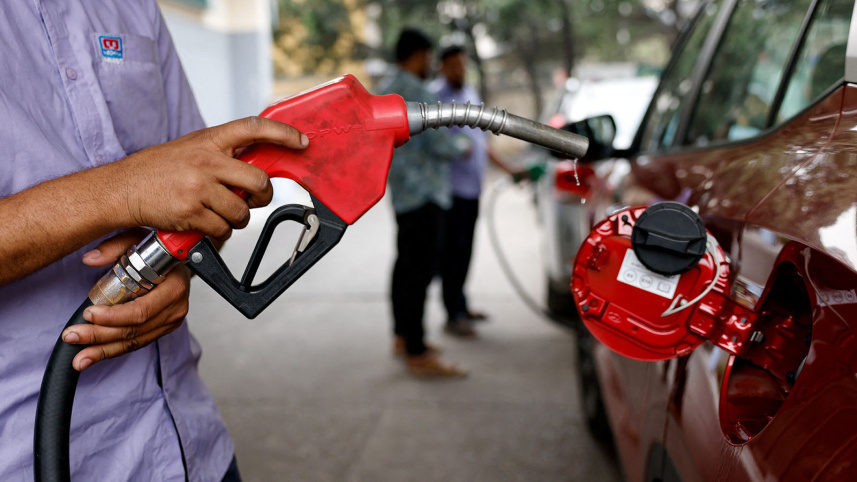
Bangladesh’s octane stock is set to reach near full storage capacity after a fresh consignment of 25,000 tonnes anchored at the outer anchorage of Chattogram Port tonight.
With the latest shipment and ongoing local production, total stock is expected to hit 55,500 tonnes, which is more than the country’s maximum storage capacity and enough to meet more than 45 days of demand.

Additionally, around 700 tonnes of octane are being produced locally in a day.
The country's total octane storage capacity is 53,000 tonnes across 16 depots, including 20,000 tonnes at Eastern Refinery (ERL) and 22,000 tonnes at Bangladesh Petroleum Corporation's main storage in Chattogram.
“The country has never witnessed such a high level of fuel stock at a time,” said Anindya Islam Amit, state minister for power, energy, and mineral resources.
The fuel demand for April and May has already been secured, and preparations for the June schedule are underway.
"We are fully prepared to meet the fuel demand for April and May," Amit added.
Amid the rising stock, the government has increased the octane supply to filling stations by 25 percent from the average daily release in the first half of April.
Currently, depots are supplying about 1,382 tonnes of octane daily, up from 1,115 tonnes between April 1 and 15.
Officials hinted at a further increase in supply due to lack of storage facilities after the unloading of the latest shipment.
In March, when the US-Israel war on Iran escalated, the average daily supply stood at 1,217 tonnes -- slightly higher than 1,193 tonnes of March last year.
At the time, the government had imposed a supply ceiling to match March 2025 demand levels following panic buying.
However, amid uncertainties over timely shipments and tightening stock margins, the BPC reduced daily supply by around 100 tonnes, though officials did not formally acknowledge the cut.
But the long queues still persist at filling stations in Dhaka and Chattogram. Motorcyclists and cars that run on octane were seen lining up from early morning, with many failing to get fuel after daily supplies to the pumps ran out.
The increased release aims to ease pressure at pumps, though restrictions on distribution may remain in place as stations need to serve as many customers as possible, said BPC officials.
In addition, the “fuel pass” system will be gradually introduced all over the country, they said.
As of today, the petrol stock stood at 19,500 tonnes, enough to meet demand for at least two weeks. Besides, there is regular production from local condensates in five fractionation plants.
Diesel stock stood at 81,600 tonnes, enough to meet a week’s demand. However, a total of 110,000 tonnes of diesel consignments in three shipments are awaiting unloading at Chattogram Port.
The refined fuel stocks are at a comfortable level, Amit said.
Jet fuel reserves, in particular, are sufficient for nearly six weeks, with adequate supply planned for April and May and preparations underway for June, he added.
 For all latest news, follow The Daily Star's Google News channel.
 ERL, the country’s lone refinery, is currently operating two of its four units, producing limited quantities of petrol and bitumen.
Crude oil stocks have run out after three consignments were delayed due to disruptions in the Strait of Hormuz following the outbreak of war.
However, the authorities have secured two new shipments via the Red Sea from Saudi Arabia’s Yanbu port. The shipments are expected next month.
“We hope ERL will not face a complete shutdown as the first consignment is scheduled to arrive in the first week of May. Meanwhile, we are utilising the downtime to carry out maintenance on two units,” said ERL Managing Director Md Sharif Hasnat.
ERL contributes only about one-fifth of the country’s total fuel supply, according to Amit.
To manage the situation, the government has approved increased imports of refined fuel to offset the shortfall, he said, adding that plans are underway to install a second unit at ERL with an annual refining capacity of 3 million tonnes by 2029.
The government is also preparing to float an international tender in May after finalising whether to go for foreign funding or domestic resources.
This will allow Bangladesh to diversify crude import sources beyond the Middle East, reduce exposure to global volatility and regional disruptions, he said.
ERL, which was established in 1968, has a refining capacity of 1.5 million tonnes, while the country’s annual demand exceeds 7 million tonnes of refined fuel.
Comments