


UNHCR, IOM warn of risks as Rohingyas take sea routes
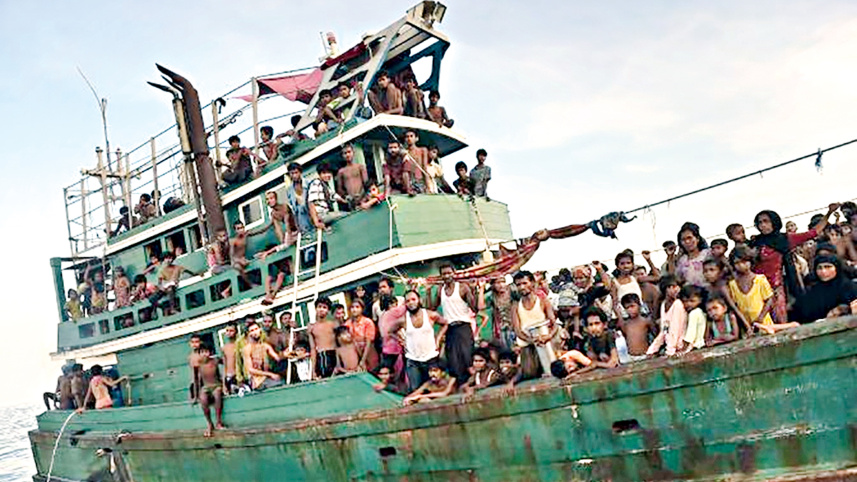
United Nations High Commissioner for Refugees (UNHCR) and International Organization for Migration (IOM) said they were deeply saddened by the boat capsize in the Andaman Sea, describing it as a stark sign of the dangers facing Rohingya refugees and other vulnerable people who resort to risky sea journeys in search of safety and opportunity.
At least 250 people, including Rohingya refugees and Bangladeshi nationals, have gone missing after the trawler capsized while heading to Malaysia from Teknaf, according to a joint statement issued yesterday by the two UN agencies.

The vessel, which left southern Bangladesh, reportedly sank due to heavy winds, rough seas and overcrowding, the statement said.
The agencies said the incident underscores the consequences of prolonged displacement and the lack of durable solutions to the Rohingya crisis.
They noted that ongoing violence in Myanmar’s Rakhine State has dimmed prospects for safe return.
At the same time, shrinking humanitarian assistance, harsh camp conditions and limited access to education and livelihoods are pushing refugees to take dangerous routes by sea.
False promises of better wages abroad and misinformation spread by smuggling networks are also luring both Rohingya refugees and Bangladeshi nationals into taking major risks, they said.
Such conditions, the agencies warned, are enabling smugglers and traffickers to exploit vulnerable people and put their lives in grave danger.
Calling for urgent international support, UNHCR and IOM urged the global community to strengthen solidarity and sustain funding for lifesaving assistance for Rohingya refugees in Bangladesh, alongside support for host communities.
As Bangladesh marks the new year, they said the latest tragedy highlights the need to address the root causes of displacement in Myanmar and create conditions for the voluntary, safe and dignified return of Rohingya refugees.
Without collective action, more lives will be lost at sea and along other deadly migration routes, the statement added.
 For all latest news, follow The Daily Star's Google News channel.
Comments