


Rammala Library: A heritage left to decay
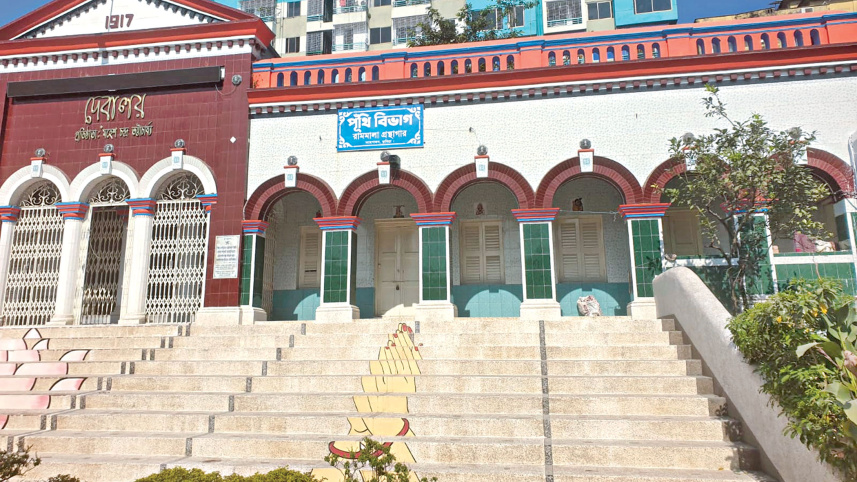
The century-old Rammala Library in Cumilla, home to thousands of ancient manuscripts and rare books, has been left languishing in neglect, with its invaluable collection gradually decaying for lack of proper preservation.
One of the oldest libraries in Bangladesh, it was established in 1912 at Maheshangan on the outskirts of Cumilla city, opposite the current Education Board office there.

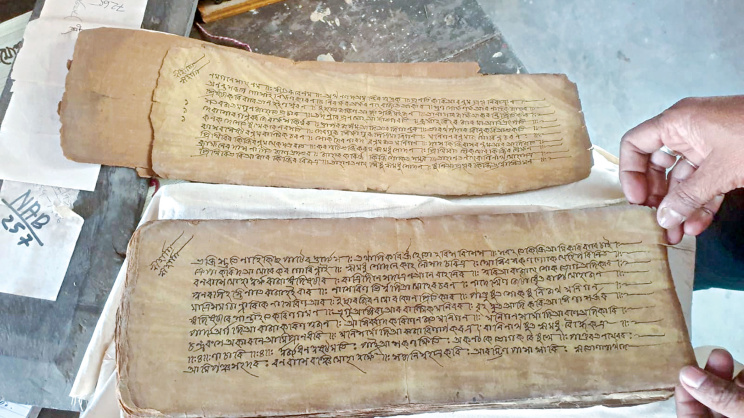
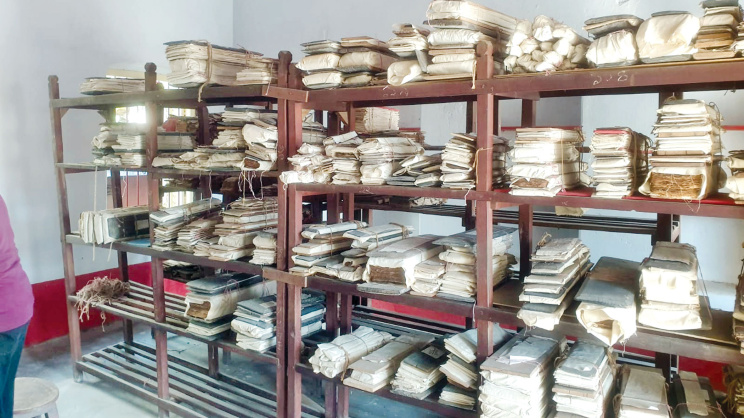
The library houses around 12,000 printed books on literature, culture, history, geography, philosophy, religion and other branches of knowledge, along with over 8,000 ancient manuscripts, known as punthi in Bangla. Most of the manuscripts are on literature from the medieval and early modern periods, roughly 1700-1900 AD.
“The Rammala Library and Maheshangan were once referred to as the Santiniketan of East Bengal. This library has a vast collection of rare and invaluable books and manuscripts that need to be preserved at any cost,” said Ahsanul Kabir, a local cultural figure.
“The library’s gradual decline began after the demise of scholar Dr Rashmohan Chatterjee in 1982. It has remained closed since the death of its in-charge Indukumar Singh in 2022,” he said.
Mahesh Chandra Bhattacharya (1858-1944), a noted scholar and philanthropist, founded the library in 1912 and named it after his mother Rammala Devi.
He also established the Rammala Hostel in 1916 for male students and the Nibedita Girls Hostel in 1919 for female students.
Mahesh died on February 10, 1944, in Varanasi, then British India, at the age of 86. Before his death, the childless philanthropist formed the Mahesh Charitable Trust to run his various institutions.
After the library was founded, Dr Rashmohan Chatterjee and Mahesh worked together to expand it. The library became a centre for researchers of ancient manuscripts, many of which were donated by local families.
In 1926, the students of Rammala Hostel accorded a reception to Nobel Laureate Rabindranath Tagore. Mahatma Gandhi and Subhas Chandra Bose also visited the place, among other eminent figures of the subcontinent.
At present, the library’s Manuscript Section preserves more than 8,000 ancient handwritten scriptures and cultural texts related to Sanatan faith and philosophy, covering topics such as the Vedas, Kabya, Byakaran, Astrology, History, Purana, Religion, Ramayana, Mahabharata, Satyanarayan Panchali, Satya Pirer Punthi, Shanir Panchali and others.
These manuscripts, written in Sanskrit and Bangla on palmyra palm leaves, bhojpatra, or bark of Himalayan birch trees, and Tulot, or cotton paper, have been collected from Tripura, Cumilla, Noakhali and Sylhet.
During a recent visit, this correspondent found the manuscripts in a dusty and derelict condition, putting them at risk of being lost forever.
Advocate Sarojendu Roy Kanu, chairperson of the trust, said he had heard that about 2,500 manuscripts had been preserved at Dhaka University through microfilms. However, it remains unknown where and how those are being kept, or whether any work is being carried out on them.
Sarojendu said the trust was trying to appoint a librarian but could not afford further renovation or development of the library.
“If the government takes initiatives to preserve and develop the invaluable assets of the library and to build a museum, we will welcome it,” he said.
“However, it must be done here in Cumilla, as this library is a part of our heritage,” he added.
 For all latest news, follow The Daily Star's Google News channel.
Comments