


‘Govt to self-finance Padma Barrage, Teesta Mega Plan’

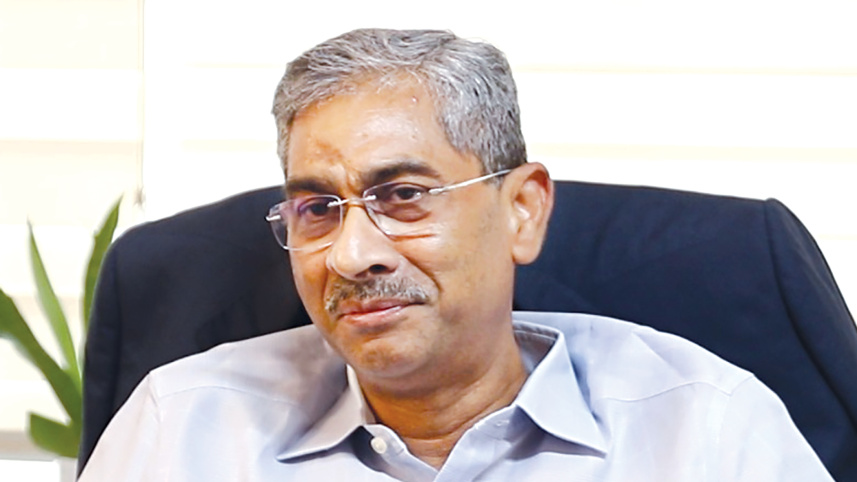
Technical teams from both Bangladesh and India are working on the renewal [of the treaty].
The government will construct the Padma Barrage and implement the Teesta Mega Plan with its own funds, Water Resources Minister Shahiduddin Chowdhury Anee has told The Daily Star in an exclusive interview.

He also expressed hope that the Ganges Water Sharing Treaty with India would be renewed before its expiry on December 11 this year.
When asked about New Delhi’s response to the renewal, he said India is a friendly neighbouring country and that Bangladesh’s relations with all its neighbours will remain strong.
“Technical teams from both Bangladesh and India are working on the renewal, with both sides maintaining constant communication.”
He said expert teams are working to incorporate new conditions, including additional guarantee clauses, into the treaty.
On the Padma Barrage project approved recently by the Executive Committee of the National Economic Council (ECNEC), the minister said the project was initiated in 2002 by the then prime minister Khaleda Zia.
Though a feasibility study was almost complete by 2013, the subsequent governments didn’t proceed with the project. “Why it was not implemented remains unclear,” Anee said, adding that the interim government reinitiated the project in January this year.
When Prime Minister Tarique Rahman went to Rajshahi ahead of the February 12 national election, he made an electoral pledge to build the barrage.
“We have taken up this project as per his commitment, and it will be implemented entirely with government funds.”
Steps have been taken to conduct a fresh feasibility study, and if necessary, more studies will be carried out before starting construction, he said, adding that an allocation will be made in the upcoming budget for this purpose.
It will take seven years to build the barrage at a cost of around Tk 35,000 crore, with an average annual allocation of Tk 5,000 crore.
“I believe we will be able to complete this project with our own funding if we can curb corruption. The amount is very little when compared with the huge sums laundered out of the country in the past.”
Stressing the project’s importance, the minister said the barrage is vital for around seven crore people across 24 to 26 districts that face severe floods during the monsoon and water scarcity in the dry season.
Under the project, a reservoir will be created in the Padma River to store water to support agriculture and fish production.
Asked whether Bangladesh had any talks with India about the barrage, he said, “This is a matter of domestic interest. There is no need to discuss it with them.”
Regarding China’s interest in funding the Teesta project, he said, “It will require half the amount needed for the barrage. Why do we have to take it from China?
He also said a more detailed study is needed before any proposal on the project is placed at an ECNEC meeting.
CANAL-DIGGING PROGRAMME
Regarding the ambitious programme of digging 20,000km of canals, he said that in line with the party’s electoral pledge, the PM inaugurated the drive at Shahpara canal in Dinajpur on March 16, with local MPs launching the work in their areas the same day.
 For all latest news, follow The Daily Star's Google News channel.
 “We took up a 180-day programme aimed at digging 1,500km of canals in the first six months,” the minister said, adding that more than 800km of 666 canals have already been dug.
“Over the next five years, we expect to exceed the 20,000km target, with a possible range of 24,000-25,000km.”
Drawing inspiration from the historic canal-digging campaign initiated by BNP founder Ziaur Rahman in the late 1970s, the programme aims to boost the rural economy and combat falling groundwater levels, he said.
Once complete, it will enable farmers to use surface water for irrigation and also recharge the groundwater table, especially in the northern region.
Some experts have observed that the excavated canals may again be filled up during the monsoon if proper methods are not followed for excavation.
Regarding this, the minister said three agencies -- Institute of Water Modelling (IWM), Centre for Environmental and Geographic Information Services (CEGIS), and Water Resources Planning Organisation (WARPO) -- are conducting surveys to determine the right methods for excavation and ways to properly link them with rivers to keep the water flow steady.
“We are also engaging union parishads and locals in the canal-digging programme to make it successful.”
On curbing pollution in rivers and canals, especially those in and around Dhaka, the minister said the programme has the potential to spur a social movement against waste dumping in water bodies.
“We are having discussions with the World Bank, JICA [Japan International Cooperation Agency], and other development partners to implement a project to free the Buriganga from pollution.”
The minister further said they would remove all illegal structures on canals and poorly planned culverts obstructing the natural flow of water.
Over the years, houses, shops, and markets have been built encroaching on many canals. Local influential people also put up barriers on canals for fish farming.
As the canal excavation drive continues, the authorities will dismantle all illegal structures and recover the encroached areas, Anee said.
“Some obstacles may arise, but we must overcome them,” he said, adding that deputy commissioners and the relevant government agencies will take necessary steps in such cases.
Comments