


Nepal court extends detention of ex-PM Oli in deadly protest probe
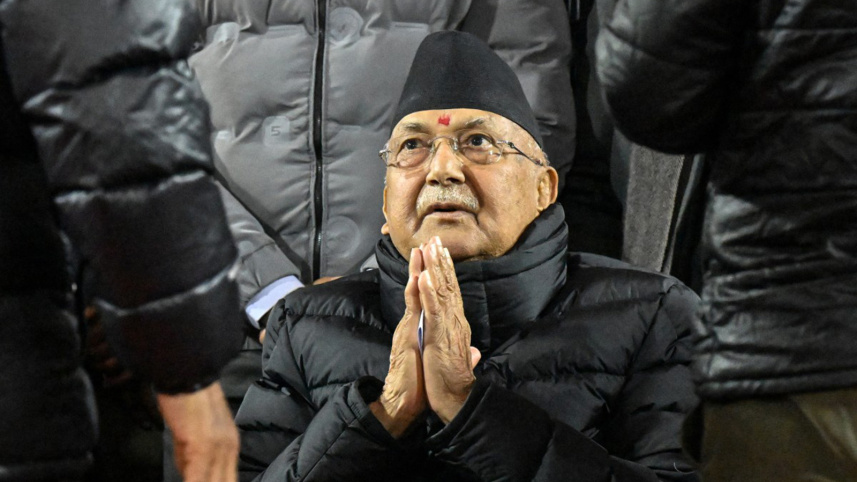
A Nepal court on Thursday extended the detention of former prime minister KP Sharma Oli and his ex-home minister for a further two days as investigators probe their alleged roles in a deadly crackdown on protests last year.
Police arrested Oli, 74, and former home minister Ramesh Lekhak on Saturday, a day after Prime Minister Balendra Shah was sworn in following the first elections since the September uprising that toppled Oli's government.

Authorities are investigating their alleged involvement in the crackdown on demonstrations in 2025 that killed at least 76 people.
Neither man has been formally charged and both deny responsibility for the violence.
"The court has granted two days extension," Kathmandu District Court information officer Deepak Kumar Shrestha told AFP.
The court decision said investigators required more time as Oli's statement was still being recorded.
The order marks the second extension after the court initially granted police five days' detention on Sunday.
Oli remains hospitalised, where he was admitted on Saturday for what police described as a procedural medical check‑up, adding that he suffers from heart and kidney problems.
On Monday, Nepal's Supreme Court ordered the government to explain Oli's arrest after his wife filed a petition claiming the detention was unlawful.
Police said on Thursday that they had submitted their response.
The arrests of Oli and Lekhak came after an inquiry commission recommended prosecuting the four-time ex-prime minister and other officials for failing to stop security forces from opening fire on demonstrators.
The commission's report said the statements given by the two men suggesting they did not know about the violence were part of a bid to shift responsibility and amounted to "criminal negligence".
Oli's CPN-UML Marxist party has described the arrests as "a vengeful act" and called for protests.
But Rabi Lamichhane, leader of the ruling Rastriya Swatantra Party, rejected that claim.
"The first right to receive justice belongs to the mother of the martyr; this cannot be called revenge," Lamichhane said Thursday as he addressed the opening session of parliament.
The unrest in early September began over a brief social media ban, but tapped into longstanding fury over economic hardship.
It spread nationwide the following day as parliament and government offices were set ablaze, resulting in the collapse of Oli's government.
Shah, a 35‑year‑old rapper-turned-politician, led the Rastriya Swatantra Party to a sweeping election victory on a platform of youth-driven political change and defeated Oli in his own constituency.
 For all latest news, follow The Daily Star's Google News channel.
Comments