


Rabindranath Tagore in analysis
Subrata Kumar Das is cheered by a commemorative journal
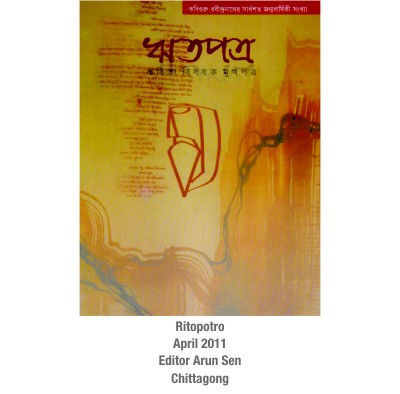
Ritopotro, a little magazine on poetry published from Chattagram (Chittagong in Anglican terms), has brought out a special issue on Rabindranath Tagore on the sesquicentennial birth anniversary of the Nobel winning Bengali poet. On this great occasion, which is being observed across the world through the initiative of the United National Educational Scientific and Cultural Organisation (UNESCO), scores of books and periodicals dealing with the works and life of this internationally acclaimed author and activist have flooded the West Bengal book markets. However, worthy publications on the poet are only a few from Bangladesh and among those Ritopotro can certainly draw the attention of many. The two basic categories of writings in the magazine are essays and poems. All the essays deal with Rabindranath's life and literature while the poems are dedicated to Rabindranath himself. The writers of the essays include Ahmed Rafiq, Karunamaya Goswami, Anupam Sen, Dr Maniruzzaman, Jotin Sarkar, Sanatkumar Saha, Ardhendu Chakravarty, Arun Dasgupta, Subhashchandra Datta, Mahadev Saha, Prakriti Chakravarty, Dr Kanailal Sen, Bhaswar Bandapadhyay, Nripendralal Das, Shahid Iqbal, Manabendra Bhattacharya, Tapomon Ghosh, Ananya Banerji, Tareq Reza, Tarok Roy, Pujon Ghosh, Nazimuddin Shyamal and the present contributor himself. The poets include Ashim Saha, Golam Kibria Pinu, Nitai Sen, Mridul Guha, Faujul Kabir, Shahnewaj Biplob, Nilanjon Bidyut, Chandan Chowdhury, Paritosh Haldar, Mahfuz Ripon, Muzahid Ahmed, Soumyo Sarkar, Ranjana Biswas, Murshida Ahmed, Nasir Ahmed, Amitava Chakravarty, Dulal Sarkar, Shihab Sarkar, Sathi Das, Khalid Ahsan, Mahful Parvez, Obayed Akash, Kamrul Hasan Badal, Tapan Bagchi, Anirban Roychowdhury, Khaled Mahmud Morshed, Monirul Monir, Rahel Rajib, and Arun Sen. Essayists and poets from both Bangladesh and West Bengal come forward to enriched studies of Rabindranath in these times. Ahmed Rafiq, the veteran literary activist and well known Tagore researcher, has focused on the poet's attitude towards the rural development of Bangladesh. On the other hand, Anupam Sen has analysed the relationship of Rabindranath with Kadambari Devi, his sister-in-law, a much-talked about personality impressing the poet in his teens hugely. Dr. Maniruzzaman has explored the many details related to Sanchayita, the anthology of Rabindra poems selected by the poet himself. It could be mentioned here that some Rabindra devotees published another anthology called Choyonika, before Sanchayita. The four plays by Rabindranath --- Acholayaton, Muktadhara, Roktakabi, Rather Roshi --- have been evaluated from a Marxist point of view by Jotin Sarkar, the elderly scholar of the country. Prof Sanatkumar Saha has pointed out the resemblances between T. S. Eliot's 'Preludes' and Rabindranath's 'Bashi'. The earlier odes of Rabindranath have been researched well in the essay by Arun Dasgupta, a noted journalist and veteran authority on Rabindranath from Chattagram. It is worth mentioning that analyses of Rabindranath's odes are a rarity and we believe the writer will finish his job by working on the later odes of the poet too and thus give readers a complete picture in this regard. Prakriti Chakravarty illustrates Rabindranath's deep affinity with and affection for his niece Indira Devi, to whom almost all the letters of Chhinopotro were written. Prof Nripendralal Das sketches the influences of the great maestro on the literature of Mujtaba Ali and thus has illuminated a less focused facet of Tagore research to readers. Among the many poems, the one by Ashim Saha is certainly a good read. Nasir Ahmed's 'Ponchishe Boishakh Mone Rekhe' is also instructive to read. Obayed Akash has contributed with his prose poem that has added novelty to the whole work. We remain hopeful that Ritopotro, an irregular but valuable publication from Chattagram, will draw further attention of the literary circles among Dhaka society and spur increased interest in Tagore studies. Arun Sen, the editor, has been expending huge efforts toward making the journal into document of literary excellence. He surely deserves appreciation from our literati.

 For all latest news, follow The Daily Star's Google News channel.
Comments