


Unapologetic Hasina names Selim to lead in her absence

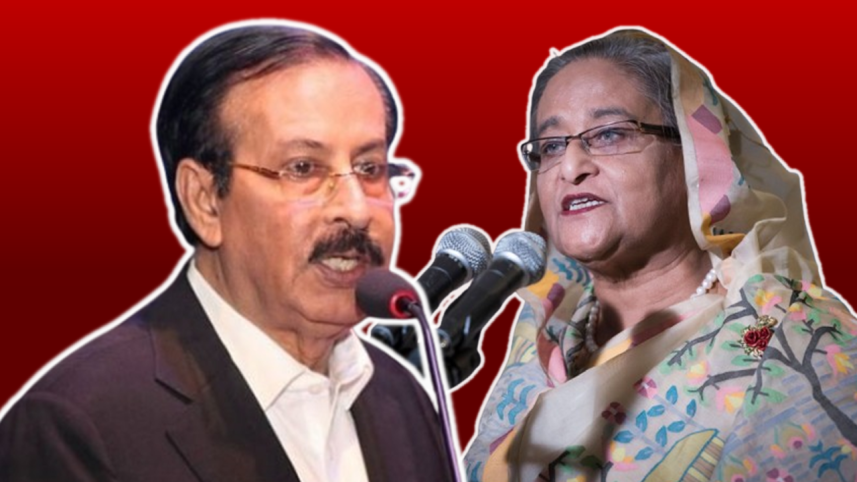
Bangladesh’s former prime minister Sheikh Hasina’s naming of Sheikh Fazlul Karim Selim as the Awami League chief in her absence puts to rest much speculation over the leadership of this party.
Although its activities are banned and Awami League remains a political pariah following a disastrous collapse in 2024, its alternative leadership has remained a topic of conjecture and discussion.

The ousted premier also put to rest another possibility during her interview with the Kolkata-based online news outlet. The Wall, when she explained that Selim was the senior-most praesidium member, while her sister Sheikh Rehana, who was considered a strong contender, had never really been involved in politics.
There are a couple of other features that are perhaps noteworthy in Hasina’s recent spurt of interviews -- the Hindu, Deutsche Welle and Hindustan Times among others -- besides her habitually unapologetic stance about the killing of hundreds of protesters during the 2024 July uprising and refusal to accept responsibility.
One is her premonition of being assassinated even while in the airport if she returns. Together with her concern for the danger of her party members (pointing out that she could not possibly urge others to come to Bangladesh since they might also suffer bodily harm), this appears to be a shift from Hasina’s "will go home come what may" position articulated in the previous interviews.
The Awami League chief told her interviewers that she was under the impression that she was going to her village in Tungipara in Gopalganj on August 5, 2024, and only learned later that she would be flying to India.
When asked by the Hindu whether she had met Indian Prime Minister Narendra Modi or former Congress leader Sonia Gandhi, Hasina evaded the question saying she had not even tried. But she strongly rejected the idea that her August 5 press conference marking two years of her flight from Dhaka was disruptive for Dhaka-Delhi relations, saying that she was surprised how a press conference could affect Bangladesh’s foreign relations. “Am I that powerful?” Hasina countered. She even drew parallels with the BNP chief and Bangladesh’s current Prime Minister Tarique Rahman, saying she had not asked the British government to shut down the BNP’s activities being run out of London.
Hardly hiding her indignation, Hasina’s comment that she had no idea why India had "supported" the national election in Bangladesh and "brought Tarique to power" betrays her perception (or the lack of it) of India’s remit in Bangladeshi affairs. The extent of authority that Hasina concedes to India, disturbing as it is, only points to dependence on the Indian establishment for her political future in Bangladesh.
 For all latest news, follow The Daily Star's Google News channel.
Comments