


Parallels: A unique architectural exhibition now showing at Aloki
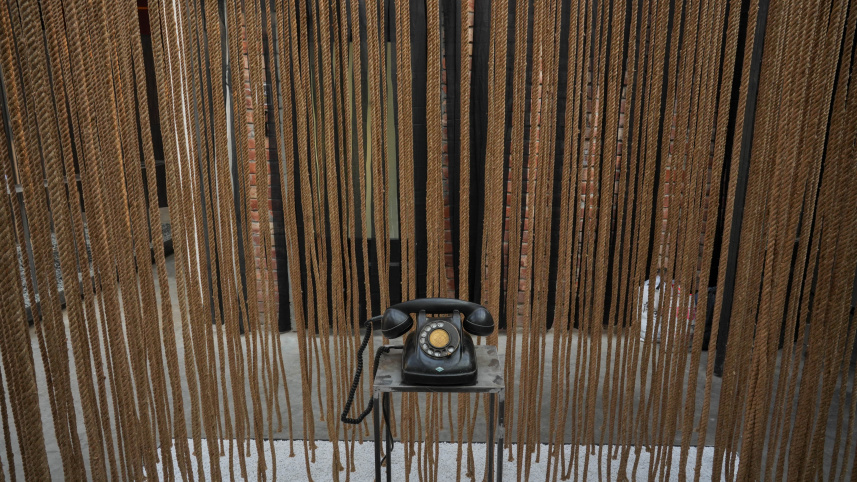
For the first time, the country’s eight contemporary architectural studios have come together to unveil a unique group exhibition at Aloki, Dhaka. As many of us perceive architecture as completed buildings, this showcase -- titled “Parallels” -- attempts to present the ideas and processes behind the design, using installation as a medium for thinking, questioning, and speculating.
Inaugurated on a crisp Saturday evening on 24 January, the exhibition arena brimmed with the presence of the architects, students, professionals, thinkers, and architecture enthusiasts alike. The show opened with the presence of veteran architect and professor Shamsul Wares and the curators: Mahmudul Anwar Riyaad and Mohammed Emran Hossain.

“This conscious effort to identify and share the genetic code of the practices of these eight studios at the very midpoint of their journey brings them to face the mirror, while offering visitors a thought-provoking experience,” commented curator architect Mahmudul Anwar Riyaad. “These are not the products of rigorous research but of profound experience and spontaneous expression, like quickly drawn self-portraits of eight architectural practices.”
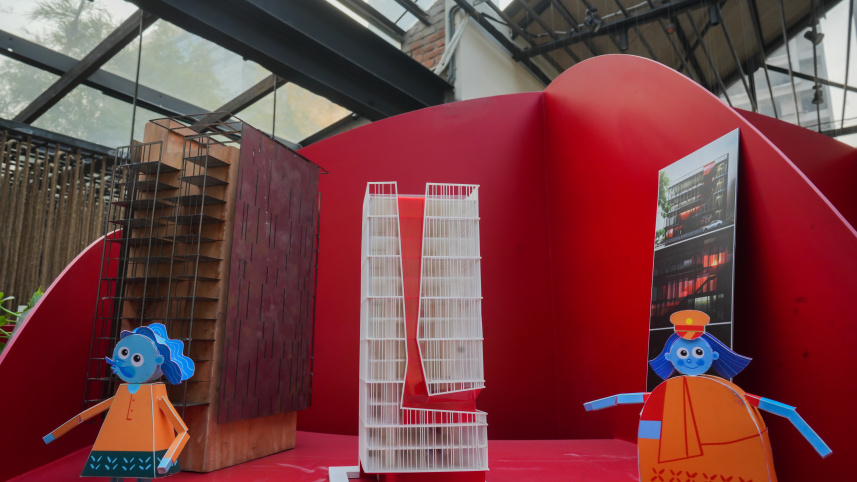
Meanwhile, one of the participants of the exhibition, architect Saiqa Iqbal Meghna, shared, “At a time when we often look to international platforms such as the Venice Architecture Biennale for critical exchange, this exhibition brings that spirit home.” Her project, in collaboration with architect Suvro Sovon Chowdhury, titled, “The Unbearable Lightness of Being”, introduced a temporary pavilion hovering over a waterbody, as if representing life with water in the monsoon delta.
Meghna also remarked how “Parallels” situates contemporary architectural practice in Bangladesh within a broader global conversation, while remaining grounded in its own cultural, climatic, and social realities.
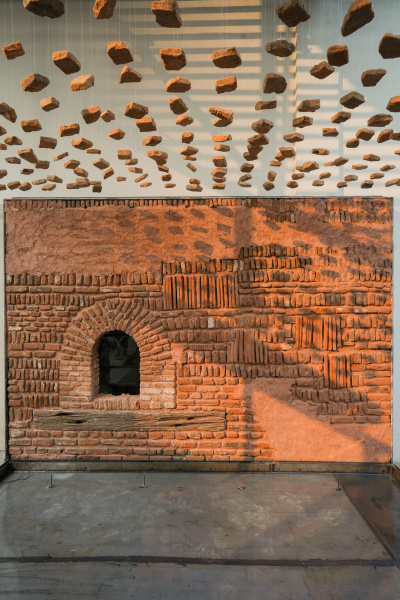
Immersive pieces such as “The Quiet Presence of Absence” by Cubeinside drew inspiration from the themes of space, emotion and human sense. “Memory Loop” by FORM.3 Architects featured relics from one of their significant studio projects: the reconstruction of Old Dhaka Central Jail -- exploring the interchange between space, memory, culture, and time.
“Confluence,” “The Red Elephant,” and “A Room Without Walls” also engaged the audience, as students of architecture particularly enjoyed the show and found it exciting. Aspiring architects discovered fresh perspectives and manifold ways of thinking.
From organic artefacts to technology-driven experiences, the show remained down-to-earth and tech-driven at the same time. For example, the Group of Architects and Thinkers (GOAAT) took the audience back to our Bengali roots by featuring a banyan tree at the heart of the city’s art gallery. On the other hand, Kazi Fida Architects captivated the visitors with a moody audiovisual installation.
The show also offered critical lectures discussing the evolution of architectural practice in both local and global contexts. “What is parallel? Two lines running side by side, yet never meeting,” stated Professor Shamsul Wares in his speech. “This exhibition illustrates how eight distinct groups may not say the same things, but they can have their own beliefs and thoughts.” He elaborated that the showcase reflects the individuality of modern society: being together in creative spirit while remaining confidently distinct.
“This is an opportunity for us to re-evaluate what it means to practice architecture in Bangladesh beyond conventional frameworks of social or political utility,” noted author Farhan S. Karim in his speech, an associate professor at Arizona State University.
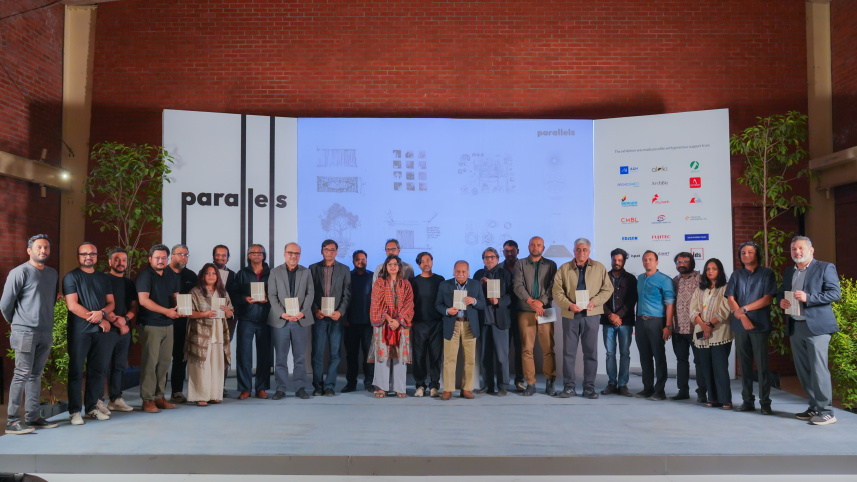
Finally, as the city grew chillier, the first day of the exhibition concluded with the launch of the book “Parallels.” As more round table discussions and engaging talks are scheduled, the showcase will remain open for all and will run until 29 January, from 11pm to 8:30pm.
Photos: Selim Mridul and Maruf Raihan
 For all latest news, follow The Daily Star's Google News channel.
Comments