Think different, pay dearly: The apple of our i at 50

A few years into the new millennium, electronic gadgets were already at the precipice of a new era, moving towards the sleek chic aesthetics.
Portable music players slipped into pockets, touch-screen phones felt like glimpses of the future and digital cameras miniaturised memory itself.

And at the core of it was one brand: Apple.
I grew up hearing of teens staging whimsical rebellions against parental pragmatism, juniors turning frugal ascetics overnight, seniors going for loans -- all in pursuit of a device with the logo of that bitten fruit.
There is something almost scriptural in its symbolism. The biblical apple, after all, was never about nutrition; it was about knowledge, temptation, transcendence, and consequence. Apple, the company, has mastered that allegory with unnerving precision. It offers not just utility, but initiation.
Apple, in the present age, is less a corporation than a condition of modern life. It has transcended commerce and entered culture.
Its devices sit not merely in our hands but in our habits, shaping gesture and expectation with an almost invisible authority. There is an elegance to its dominion. It rarely announces itself loudly, yet it is everywhere -- a curator of experience in a world drowning in excess.
That such an empire began in a garage feels, even now, like a carefully composed fable.
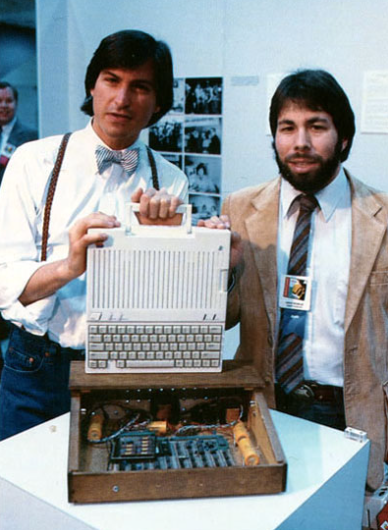
On this day 50 years ago, Steve Jobs and Steve Wozniak founded Apple Computer in the garage of Jobs’ parents’ home in California, USA.
The duo not only built machines, but reimagined the relationship between man and mechanism.
A fruit of two Steves that became a faith
Assisted briefly by Ronald Wayne, the two Steves initially assembled circuit boards in the garage.
The first machine, the Apple I, was less a finished product than an invitation -- a skeletal motherboard awaiting the user’s imagination.
Yet in the present world, Apple devices are not merely tools; they are extensions of identity.
Apple’s defining genius lay in merging aesthetics with engineering, making technology “user-centric” while embedding it within a tightly integrated ecosystem.
Hardware, software, services -- all are choreographed into a seamless continuum. The result is not just customer loyalty but something closer to liturgical adherence.
One does not merely use Apple; one belongs to it.
Apple’s design philosophy is famously minimalist, but its implications are maximalist.
 For all latest news, follow The Daily Star's Google News channel.
 Clean lines, intuitive interfaces, and an almost obsessive attention to detail create an illusion of effortlessness.
Yet, this simplicity is not accidental; it is curated complexity concealed beneath glass and aluminum. The user experiences ease; the system enforces control.
This is where Apple differs from its rivals. Others sell features. Apple sells a feeling -- of clarity, of control, of quiet superiority.
Economics of desire: Why the Apple costs more
Apple’s products are, by most industrial metrics, expensive -- sometimes extravagantly so.
Historically, Apple has pursued what analysts have called a “high-right” pricing strategy, privileging high margins alongside high desirability.
Even in the 1980s, internal doctrine aimed for profit margins upwards of 50 percent on certain products.
In contemporary terms, this translates into a premium ecosystem where consumers pay not only for hardware but for perceived reliability, status, and coherence.
The markup, then, is not merely about cost; it is about narrative.
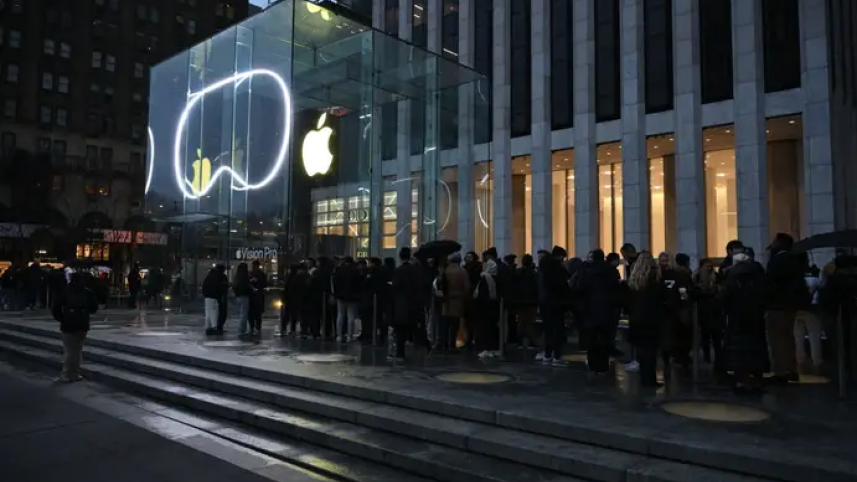
Apple has successfully convinced millions that its products are not commodities but artefacts -- objects that justify their price through experience.
To own an Apple device is to signal something. Not wealth alone, though that plays its part, but taste, discernment, perhaps even a certain creative aspiration.
Its logo has become a cultural shorthand, a semiotic flourish that communicates far more than function. It is, in effect, a badge of belonging to a global, digitally fluent “elite”.
Ecosystem or enclosure?
Apple’s ecosystem is both its triumph and its controversy.
Devices sync effortlessly; services interlock with elegant inevitability.
But this very cohesion can feel like a walled garden.
Critics argue that such integration limits interoperability and locks users into a single corporate universe. Supporters counter that it ensures security, reliability, and a superior user experience.
Both are correct.
Apple’s ecosystem is simultaneously liberating and confining.
Fifty years on: Question of the next bite
At 50, Apple is no longer the insurgent; it is the establishment.
Valued in the trillions and embedded in the sinews of global life, it now confronts a different challenge: can it still surprise?
The frontier today is artificial intelligence. Here, Apple appears curiously measured, even hesitant, as competitors race ahead. Analysts suggest that its next defining act must reconcile its ethos of human-centric design with the algorithmic ambitions of the AI age.
And yet, one suspects Apple will not rush. It never has. It waits, refines, and then arrives with something that feels less like invention and more like inevitability.
The biblical apple promised knowledge at a cost. Apple Inc.’s version promises convenience at a price more subtle -- dependence, devotion, perhaps even a quiet surrender of autonomy.
And still, we bite. Not out of ignorance, but out of desire.

Instagram rolls out PG-13 filters to shield teen users
Tech titans promise watermarks to expose AI creations

A new digital font brings back the letterpress typeface of old Bangla books

Bigolas Dickolas and the power of a heartfelt ‘Read this NOW’

Hogwarts Legacy: The game does what the book couldn't
Musk to cut Twitter executive, board members’ pay; monetise tweets: Report
Nokia to allow employees to work remotely for three days a week
Nokia says margins at networks business will be zero in 2021
From hate speech to nudity, Facebook's oversight board picks its first cases